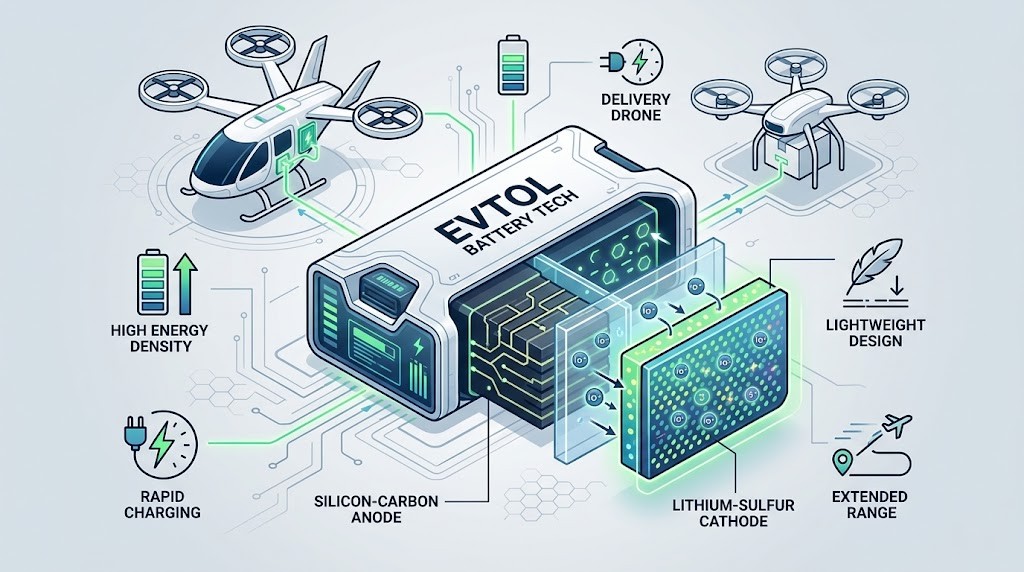
米国のバッテリー材料開発企業であるXBM USAとSiCAM Technologiesが、次世代の高エネルギー密度を実現する「シリコン硫黄電池プラットフォーム」の開発に向けて提携を発表しました。この取り組みは、海外依存度の高い従来の電池サプライチェーンを刷新し、米国国内での調達・製造を強化することを目指した画期的なプロジェクトとなっています。
【提携の概要と主要ポイント】
- 提携企業: XBM USA LLC と SiCAM Technologies, Inc. の共同取り組み。
- 技術の組み合わせ:
- SiCAM社: 低コストなシリコンカーボン(Si-C)複合負極材料(アノード)。
- XBM社: リチウム硫黄(Li-S)正極材料(カソード)および先進的なセル技術。
- 初期のターゲット用途: eVTOL(電動垂直離着陸機)やドローンなど、高エネルギー密度かつ軽量性が求められるeモビリティ向け。
【技術的な特長と背景】
- シリコン硫黄(Si-S)システムの優位性:
- 従来のリチウムイオン電池(LIB)と比較して、理論上のエネルギー密度が大幅に高い次世代のプラットフォームです。
- 豊富な国内資源と副産物の活用:
- ケイ素は地殻で2番目に豊富な元素であり、硫黄は米国の石油精製の副産物です。
- XBM社のLi-S正極は、米国で豊富に産出される製紙パルプ製造の副産物であるリグニンから製造されます。
- SiCAM社の革新的な負極製造:
- 多くの企業がシランガスを用いるCVDプロセスを採用する中、SiCAM社は流動床化学気相成長法(FB-CVD)プロセスでクロロシラン(TCS)を使用しています。これにより、充電時のシリコン膨張(約300%)に起因する問題を軽減する一次構造を形成します。
- XBM社の正極技術:
- 硫黄やリグニンを活用し、硫黄利用率、サイクル寿命、セルレベルのエネルギー密度の向上を図っています。
【関連情報の補足】
- サプライチェーンの現状と地政学的背景:
- 現在、アジア(特に中国)は世界の電池セルおよび材料サプライチェーンの約80%から95%を支配しています。米国をはじめとする各国では、経済安全保障および環境負荷低減の観点から、サプライチェーンの国内回帰や「フレンド・shoring(同盟国間での調達)」が急務となっています。
- 次世代電池における「硫黄」と「シリコン」のポテンシャル:
- リチウム硫黄電池は、従来のコバルトやニッケルといった高価で採掘に環境負荷がかかる金属への依存を減らせるため、持続可能な次世代バッテリーの本命の一つとして研究が進められています。また、シリコン負極は黒鉛(グラファイト)に比べて容量が格段に大きい一方、充放電時の膨張収縮による劣化が課題とされてきましたが、今回のSiCAM社のような新プロセスによる解決アプローチが実用化の鍵を握るとされています。
XBM and SiCAM Form Technical Alliance to Develop Ultra-High Energy Density Silicon-Sulfur Batteries for eVTOLs and Drones
XBM USA and SiCAM Technologies, US-based battery material developers, have announced a partnership to develop a next-generation silicon-sulfur battery platform capable of achieving ultra-high energy density. This initiative represents a milestone project aimed at reshaping the traditional battery supply chain—which heavily relies on foreign sourcing—and strengthening domestic procurement and manufacturing within the United States.
Overview and Key Highlights of the Partnership
- Partner Companies: Joint effort between XBM USA LLC and SiCAM Technologies, Inc.
- Combination of Technologies:
- SiCAM: Low-cost silicon-carbon (Si-C) composite anode materials.
- XBM: Lithium-sulfur (Li-S) cathode materials and advanced cell technology.
- Initial Target Applications: Lightweight e-mobility applications requiring high energy density, such as eVTOLs (Electric Vertical Takeoff and Landing aircraft) and drones.
Technical Features and Background
- Advantages of the Silicon-Sulfur (Si-S) System: A next-generation platform offering significantly higher theoretical energy density compared to conventional lithium-ion batteries (LIBs).
- Utilization of Abundant Domestic Resources and Byproducts:
- Silicon is the second most abundant element in the Earth’s crust, while sulfur is a byproduct of US petroleum refining.
- XBM’s Li-S cathodes are manufactured using lignin, a byproduct derived from paper pulp production, which is abundantly produced in the US.
- SiCAM’s Innovative Anode Manufacturing:
- While many companies utilize chemical vapor deposition (CVD) processes with silane gas, SiCAM employs trichlorosilane (TCS) in a fluidized bed chemical vapor deposition (FB-CVD) process. This forms a primary structure that mitigates structural issues caused by the 300 percent silicon expansion during charging cycles.
- XBM’s Cathode Technology:
- By utilizing abundant industrial byproducts like sulfur and lignin, XBM aims to improve sulfur utilization, cycle life, and cell-level energy density.
Supplementary Context
- Current Supply Chain State and Geopolitical Background:
- Currently, Asia (particularly China) controls approximately 80 to 95 percent of the global battery cell and material supply chain. Countries including the US face an urgent need to re-shore supply chains or pursue friend-shoring to ensure economic security and reduce environmental impacts.
- Potential of Sulfur and Silicon in Next-Generation Batteries:
- Lithium-sulfur batteries are widely researched as a leading sustainable candidate for next-generation energy storage, as they reduce reliance on expensive, environmentally damaging metals like cobalt and nickel. While silicon anodes offer far higher capacity than traditional graphite, performance degradation caused by expansion and contraction during charge/discharge cycles has historically been a key challenge. Process solutions like SiCAM’s new approach are considered critical to enabling practical commercialization.


コメント