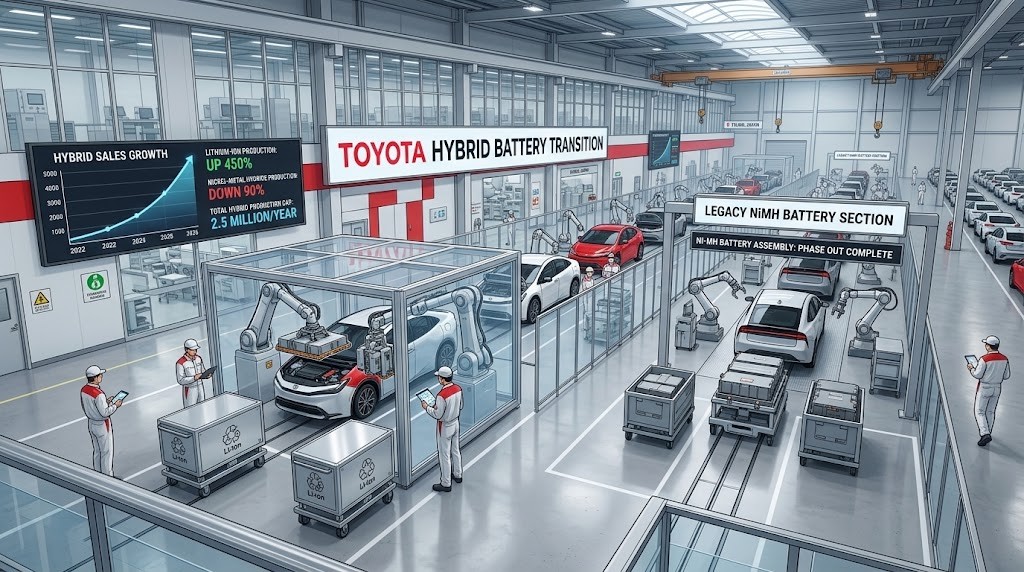
トヨタ自動車は、世界的な電動化戦略においてハイブリッド車(HEV)の重要性をさらに高めています。2027年から2028年にかけて、国内の大型バッテリー生産ラインを次世代型へ刷新し、ニッケル水素電池から高効率なリチウムイオン電池への移行と供給力拡大を進める方針を明らかにしました。本記事の要点と、その背景にある市場動向について詳しく解説します。
1. バッテリー刷新の概要とねらい
- 生産ラインの切り替え: トヨタは、国内で約60万台分の生産能力を持つハイブリッド用バッテリーラインを2027年から2028年にかけて次世代型へ移行します。
- 技術的な変更: 従来のニッケル水素電池を主軸としていた一部の車種(シエンタ、アクア、RAV4など)を含め、より高効率なリチウムイオン電池へ段階的に移行します。
- コスト削減と性能向上: 新型電池への切り替えにより、1台あたり数万円規模のコスト低減を見込みつつ、バッテリーの小型化・軽量化・出力および充放電性能の向上の両立を図ります。
2. 急増するHEV需要と販売動向
- 販売台数の急拡大: トヨタ・レクサスにおけるHEVの年間世界販売台数は、急激な伸びを見せています。
- 2023年: 344万台
- 2024年: 422万台
- 2025年: 458万台
- 2026年(見込): 503万台(暦年で初めて500万台を突破)
- 地域別の高いHEV比率: 2027年3月期の予測では、販売全体に占めるHEVの比率は北米・中国で55パーセント、日本で58パーセント、欧州で66パーセントに達すると見込まれています。
- 背景: バッテリーEV(BEV)市場の成長ペースが地域によって異なる中、インフラ整備を必要とせず実用性と高い燃費改善効果を誇るHEVへの根強い需要が、今回の巨額投資を後押ししています。
3. 全固体電池との違いについて
- 2027年から2028年に実用化が目指されているBEV向けの「全固体電池」と、今回のHEV向け次世代リチウムイオン電池の生産ライン転換は別軸の取り組みです。全固体電池については、BEVへの導入が優先して進められています。
4. 【関連情報・背景の追加】次世代HEVを取り巻く自動車業界の動向
- 競合他社の動き: トヨタだけでなく、世界の自動車メーカー各社も電動化の過渡期においてHEVのラインナップを再強化しています。BEVの普及スピードが地域や経済状況によって鈍化する中、現実的な環境対応車としてHEVの収益性と販売基盤を固める動きが主流になっています。
- 「プリウス」誕生からの30年: 1997年の初代プリウス発売以来、トヨタはハイブリッド技術を磨き続けてきました。誕生から約30年が経過した現在、HEVは「過渡期のつなぎ」ではなく、同社のグローバル販売を支える核心的なパワートレインとして完全に定着しています。今後登場する新型カローラなどのフルモデルチェンジや大幅改良において、この次世代バッテリーがどの車種から初搭載されるのかが大きな注目点となります。
出典:https://news.yahoo.co.jp/articles/cacda6a9b250cbd26231ccb7819d85d65d967427?page=1
[Toyota] Aiming to Surpass 5 Million Annual Sales! Revamping HEV Batteries to Next-Generation Types Starting in 2027
Toyota Motor Corporation is further elevating the importance of hybrid electric vehicles (HEVs) in its global electrification strategy. The company announced plans to revamp its large-scale domestic battery production lines to next-generation systems between 2027 and 2028, transitioning from nickel-metal hydride batteries to highly efficient lithium-ion batteries while expanding supply capacity. Below is a detailed overview of the key points of this announcement and the market trends behind it.
1. Overview and Objectives of the Battery Overhaul
- Production Line Transition: Toyota will convert domestic hybrid battery production lines with a capacity of approximately 600,000 units per year to next-generation lines between 2027 and 2028.
- Technical Changes: The company will gradually transition to more efficient lithium-ion batteries across models that currently rely on nickel-metal hydride batteries, including the Sienta, Aqua, and RAV4.
- Cost Reduction and Performance Enhancement: By switching to the new batteries, Toyota expects to reduce costs by tens of thousands of yen per vehicle, while simultaneously achieving smaller size, lighter weight, and improved output as well as charge-discharge performance.
2. Rapidly Growing HEV Demand and Sales Trends
- Rapid Expansion of Sales Volume: Global annual sales of Toyota and Lexus HEVs are showing steep growth:
- 2023: 3.44 million units
- 2024: 4.22 million units
- 2025: 4.58 million units
- 2026 (Forecast): 5.03 million units (surpassing 5 million units for the first time in a calendar year)
- High HEV Share by Region: For the fiscal year ending March 2027, HEVs are projected to account for 55 percent of total sales in North America and China, 58 percent in Japan, and 66 percent in Europe.
- Background: As the growth pace of the battery electric vehicle (BEV) market varies by region, strong demand for HEVs—which deliver practical usability and high fuel efficiency improvements without requiring charging infrastructure—is driving this major investment.
3. Distinction from All-Solid-State Batteries
- The transition of HEV production lines to next-generation lithium-ion batteries is a separate initiative from the development of all-solid-state batteries for BEVs, which are aimed for commercialization between 2027 and 2028. Development of all-solid-state batteries prioritizes deployment in BEVs.
4. Industry Trends Surrounding Next-Generation HEVs
- Competitor Movements: Beyond Toyota, global automakers are re-strengthening their HEV lineups during this electrification transition. As the adoption speed of BEVs slows depending on regional and economic factors, solidifying the profitability and sales base of HEVs as realistic eco-friendly vehicles has become a primary trend.
- 30 Years Since the Prius Debut: Since launching the first-generation Prius in 1997, Toyota has continuously refined its hybrid technology. Nearly 30 years later, HEVs have firmly established themselves not as a temporary stopgap, but as a core powertrain supporting Toyota’s global sales. Attention is now focused on which vehicle—such as the next-generation Corolla during its upcoming full model change or major redesign—will be the first to feature this new battery.

コメント