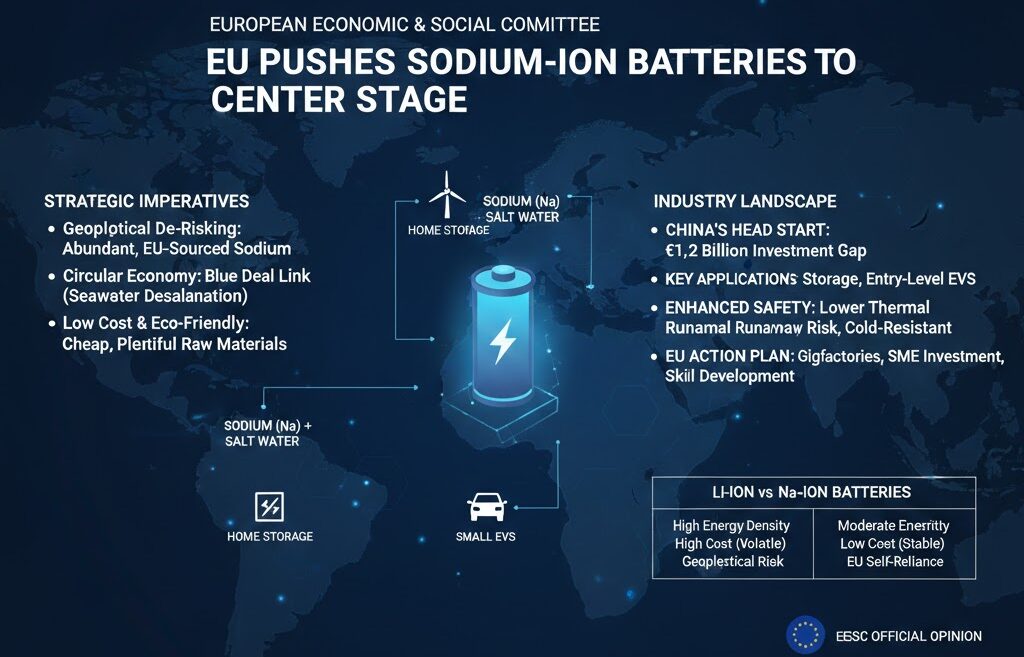
欧州経済社会委員会(EESC)は、ナトリウムイオン電池をEUの産業・エネルギー政策の「中心」に据えるべきだとする公式意見を採択しました。現在主流のリチウムイオン電池に代わる、あるいは補完する戦略的技術として、欧州の競争力を左右する鍵になると位置づけています。
勧告の背景と戦略的意義
- 脱・地政学的リスク: リチウムは供給源が限られ、特定の国(中国など)への依存が課題です。対してナトリウムは地球上に広く存在し、欧州域内でも容易に調達可能なため、サプライチェーンの脆弱性を解消できます。
- ブルーディールとの連携: EESCは、海水の淡水化プロセスで発生するナトリウムを利用する「循環型ソリューション」を強調しています。これを「ブルーディール(水資源の戦略的活用)」の一環として位置づけ、未利用資源を産業へ転換することを目指しています。
- 低コストと環境性: 原材料が安価で豊富(塩水など)なため、リチウム電池よりも製造コストを抑えられ、環境負荷も低いという利点があります。
【関連情報】ナトリウム電池の現状と業界トレンド
- 中国の圧倒的な先行:中国は過去10年間で約12億ユーロ(約2,000億円)を投資し、知的財産と生産能力の両面で世界をリードしています。欧州がこの差を埋めるには、研究開発から大規模生産(ギガファクトリー)への迅速な移行が急務となっています。
- 主な用途とメリット:
- 固定用蓄電池: 重量はリチウムより重くなる傾向がありますが、コストが低いため、再生可能エネルギー(太陽光・風量)の家庭用・産業用ストレージに最適です。
- 小型・低価格EV: 航続距離よりも価格の安さが重視されるエントリーモデルの電気自動車での採用が期待されています。
- 安全性: リチウムイオン電池と比較して熱暴走のリスクが低く、極端な低温環境下でも性能が落ちにくい特性を持っています。
- 欧州の行動計画:EESCは、未使用の工業用地をナトリウム電池のギガファクトリーへ転換することや、中小企業への投資、スキル習得のための官民連携を求めています。
まとめ:リチウム電池とナトリウム電池の比較
| 項目 | リチウムイオン電池 | ナトリウムイオン電池 |
| 主な原材料 | リチウム、コバルト (希少) | ナトリウム、塩 (豊富・安価) |
| エネルギー密度 | 高い (長距離EV向け) | 中程度 (短距離EV、蓄電向け) |
| コスト | 高い (相場変動が激しい) | 低い (安定供給が可能) |
| 安全性 | 発火リスクの管理が必要 | 比較的高い、低温に強い |
| 供給安定性 | 特定国への依存度が高い | 欧州域内で自給自足が可能 |
EESC Strongly Endorses Sodium-Ion Batteries: Urgent Proposal to Close the Gap with China
The European Economic and Social Committee (EESC) has adopted an official opinion stating that sodium-ion batteries should be placed at the “center” of the EU’s industrial and energy policy. The committee positions this as a strategic technology that will determine Europe’s competitiveness, serving as an alternative or complement to current mainstream lithium-ion batteries.
Background and Strategic Significance of Recommendations
- Reducing Geopolitical Risk: Lithium has limited sources, creating a challenge of dependence on specific countries like China. In contrast, sodium is abundant worldwide and easily sourced within Europe, which can eliminate supply chain vulnerabilities.
- Linkage with the “Blue Deal”: The EESC emphasizes a “circular solution” using sodium derived from seawater desalination. This is positioned as part of the “Blue Deal” (strategic water resource management), aiming to transform untapped resources into industrial solutions.
- Low Cost and Eco-friendliness: Because raw materials like saltwater are cheap and abundant, production costs are lower than lithium batteries, and the environmental impact is also reduced.
[Related Information] Current Status and Trends of Sodium Batteries
- China’s Massive Lead: Over the past decade, China has invested approximately 1.2 billion EUR in R&D, leading the world in both intellectual property and production capacity. For Europe to close this gap, an urgent transition from R&D to large-scale production (Gigafactories) is required.
- Main Applications and Benefits:
- Stationary Storage: While tending to be heavier than lithium, their low cost makes them ideal for residential and industrial storage of renewable energy (solar and wind).
- Small, Affordable EVs: Adoption is expected in entry-level electric vehicles where low price is prioritized over long driving range.
- Safety: They have a lower risk of thermal runaway compared to lithium-ion batteries and maintain performance even in extremely low temperatures.
- Europe’s Action Plan: The EESC calls for converting unused industrial sites into sodium battery Gigafactories, investing in SMEs, and fostering public-private partnerships for skill development.
Summary: Comparison Between Lithium-Ion and Sodium-Ion Batteries
| Item | Lithium-Ion Battery | Sodium-Ion Battery |
| Main Materials | Lithium, Cobalt (Scarce) | Sodium, Salt (Abundant/Cheap) |
| Energy Density | High (For long-range EVs) | Moderate (Short-range EVs, Storage) |
| Cost | High (Volatile market prices) | Low (Stable supply possible) |
| Safety | Requires fire risk management | Relatively high, cold-resistant |
| Supply Stability | High dependence on specific countries | Self-sufficiency possible in the EU |

コメント