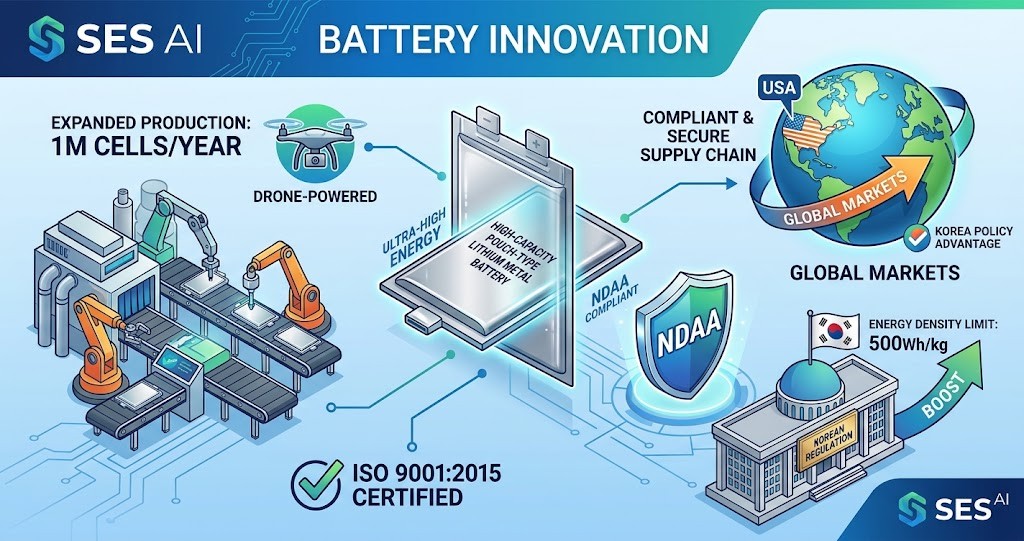
次世代バッテリーの開発を手がける米国企業SES AI(セスAI)は、韓国・忠州(チュンジュ)にある自社工場にて、ドローン向けバッテリーの生産能力を年間100万セル規模へ大幅に拡大するとともに、品質管理の国際規格「ISO 9001:2015」の認証を取得しました。
要約ポイント
- 品質管理の国際標準化(ISO 9001取得) 原材料の受入検査から製造、検査、製品追跡(トレーサビリティー)、継続的な改善活動に至る一連のプロセスが国際規格に適合していると評価されました。
- 年間100万セル規模へ増産 忠州工場では、ドローンの飛行性能を左右する「高エネルギー密度」かつ「高出力密度」なリチウム金属電池およびリチウムイオン電池(パウチ型)を製造しています。
- 米国国防権限法(NDAA)への準拠 米国のNDAA(National Defense Authorization Act)基準に適合したバッテリーセルを供給できる体制を整えており、米国をはじめとするグローバル市場への輸出を見込んでいます。
- 韓国の規制緩和による追い風 韓国政府が二次電池の輸出管理基準(エネルギー密度)を500Wh/kgに引き上げたことで、同社製セルの輸出手続きや規制対応における優位性が高まっています。
関連補足情報
- SES AI(旧 SES / Solid Energy System)とは マサチューセッツ工科大学(MIT)発のベンチャー企業で、液体電解質と固体を組み合わせたハイブリッド型の「リチウム金属電池」開発で業界をリードする存在です。自動車メーカー(GMやヒョンデなど)との協業でも知られています。
- リチウム金属電池のメリットとドローン市場 従来のリチウムイオン電池に比べ、エネルギー密度を飛躍的に高められる技術です。航続時間の短さが課題とされるドローン分野において、バッテリーの軽量化と長距離飛行を同時に実現するキーテクノロジーとして期待されています。
- NDAA(米国国防権限法)準拠の重要性 米国政府および関連機関・調達先では、安全保障上のリスクを回避するため、特定の国やメーカーに依存した部品・電池の使用を規制しています。忠州工場で製造されるサプライチェーンは、この規制をクリアできるため、米国の産業用・防衛用ドローン市場へ参入する上で強力なアドバンテージとなります。
- 「500Wh/kg」の持つ意味 一般的な車載用リチウムイオン電池のエネルギー密度は250〜300Wh/kg程度です。今回韓国政府が基準値を500Wh/kgに引き上げたことは、超高エネルギー密度を持つ次世代電池の実用化と輸出促進を後押しする動きといえます。
出典:https://www.logi-today.com/1004868
US-Based SES AI Expands Drone Battery Production Capacity in South Korea: Strengthening Global Supply with ISO Certification and US NDAA Compliance
US-based next-generation battery developer SES AI has significantly expanded its production capacity for drone batteries to 1 million cells annually at its plant in Chungju, South Korea. The facility has also earned “ISO 9001:2015” certification, the international standard for quality management systems.
Key Summary Points
- International Standardization of Quality Management (ISO 9001 Certification) The plant’s end-to-end processes—from raw material receiving inspection to manufacturing, testing, product traceability, and continuous improvement activities—were evaluated and confirmed to comply with international standards.
- Production Expansion to 1 Million Cells Annually The Chungju plant manufactures pouch-type lithium-metal and lithium-ion battery cells featuring high energy density and high power density, which are critical factors influencing drone flight performance.
- Compliance with the US National Defense Authorization Act (NDAA) The facility is equipped to supply battery cells that comply with US NDAA standards, with plans to export to global markets, including the United States.
- Tailwinds from South Korean Regulatory Easing The South Korean government raised the export control threshold for rechargeable battery energy density to 500 watt-hours per kilogram, enhancing the company’s advantage in export procedures and regulatory compliance for its South Korean-made cells.
Additional Background Information
- About SES AI (formerly SES / Solid Energy Systems) An MIT spinoff company and an industry leader in developing hybrid lithium-metal batteries that combine liquid and solid electrolytes. The company is also well known for its collaborations with major automakers such as GM and Hyundai.
- Advantages of Lithium-Metal Batteries and the Drone Market Compared to traditional lithium-ion batteries, this technology dramatically improves energy density (amount of stored energy per unit weight). In the drone industry, where short flight times remain a challenge, it is expected to serve as a key technology that achieves both battery weight reduction and longer flight range.
- Significance of NDAA Compliance To mitigate security risks, the US government and its procurement partners regulate the use of components and batteries originating from specific foreign countries or manufacturers. Because the Chungju plant’s supply chain meets these regulatory standards, it holds a strong competitive advantage for entering the US commercial and defense drone markets.
- The Meaning of “500 watt-hours per kilogram” Typical lithium-ion batteries used in electric vehicles have an energy density of around 250 to 300 watt-hours per kilogram. The South Korean government raising the threshold to 500 watt-hours per kilogram serves as a supportive measure that fosters the commercialization and export of ultra-high energy density next-generation batteries.
コメント