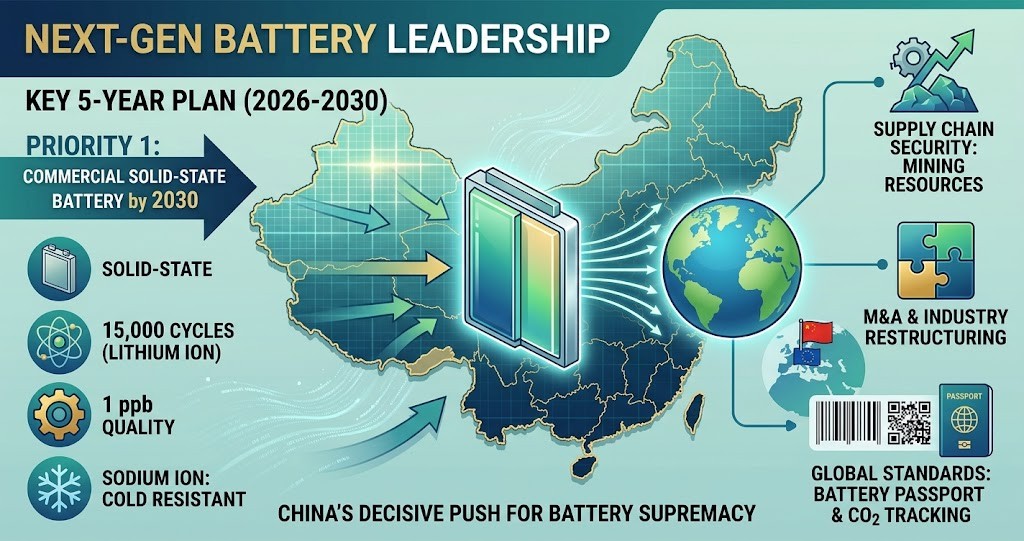
電気自動車(NEV)およびバッテリー市場で世界をリードする中国が、次世代電池の主導権確保に向けて国家レベルの長期ロードマップを提示しました。工業情報化部(MIIT)をはじめとする政府7機関は、2026年から2030年を対象とする「第15次5カ年計画」におけるバッテリー産業発展方針を発表し、2030年までに全固体電池の本格的な初期商業利用を実現することを最優先目標に掲げました。
従来のリチウムイオン電池における生産能力過剰を抑制しつつ、全固体電池やナトリウム電池、超急速充電技術といった次世代領域への移行を急ぐことで、グローバルな技術優位性とサプライチェーンの覇権を揺るぎないものにする狙いがあります。
中国の次世代バッテリー5カ年計画(2026〜2030年)要点整理
1. 次世代電池の技術目標(全固体・ナトリウム・リチウム)
- 全固体電池の商業化(最優先事項):
- 2030年までの本格的な初期実用化を標榜。
- イオン伝導率の向上、界面抵抗の改善、サイクル安定性の確保、コスト最適化を推進。
- リチウム金属負極・アノードフリー(負極フリー)設計、静水圧プレスなどの製造設備の大型化・規模拡大を支援。
- 既存・次世代電池の性能基準:
- 長寿命リチウムイオン電池の充放電サイクル目標:15,000回。
- 主要メーカーの製品不良率目標:1 ppb(10億分の1)レベルの超高精度製造技術。
- ナトリウムイオン電池:耐寒性・高エネルギー密度・安価な資源調達性を生かし、補完的な電力用・蓄電用(ESS)電池として育成。
2. サプライチェーン強化と産業再編
- 業界再編の推進: 過剰な設備投資を抑え、企業の合併・再編(M&A)を支援することで競争力のある主要企業への集約を促進。
- 上流資源の確保: 国内のリチウム、コバルト等の重要鉱物資源の探査・開発を加速させ、地政学リスクを低減。
3. 環境規制対応とグローバル標準化(バッテリーパスポート)
- トレーサビリティの導入: NEV向けバッテリーにデジタルID管理システムを導入。
- 国際規格への適合: 欧州の「バッテリーパスポート」制度やカーボンフットプリント(CO2排出量データ)の相互承認を見据え、国際的な環境規制に対応したデータ基盤を構築。
- リサイクル体制: 販売量に応じた回収システム構築を義務化。主要な輸出先市場(欧州等)での現地リサイクル拠点建設を促進。
主要領域・目標と関連バックグラウンド比較
| 区分 | 第15次5カ年計画における主要目標 | 関連背景・市場の文脈 |
|---|---|---|
| 全固体電池 | 2030年までの初期商業化 ・リチウム金属負極/アノードフリー導入 ・静水圧プレス等の製造技術確立 | 日韓欧(トヨタ、Samsung SDI等)が2027〜2029年の量産化を狙う中、国家規模で対抗策を強化。 |
| リチウムイオン | 15,000サイクル / 不良率 1 ppb | 既存技術の極限までの性能向上と高品質化により、コスト・耐久性面での参入障壁をさらに高める。 |
| 補完技術 | ナトリウム電池 / フロー電池 | リチウム価格の変動リスク緩和と、寒冷地対応・低コストな大規模ESS需要に対応。 |
| 自動車市場目標 | 2030年に乗用車販売のNEV比率70% | 直前に発表された「インテリジェントコネクテッドNEV計画」と連動し、国内需要を強固なベースに設定。 |
| 環境・輸出対応 | デジタルID / バッテリーパスポート | 欧州バッテリー規制(電池のCO2算出やトレーサビリティ義務化)に対する参入障壁を回避。 |
今後の展望と影響
- 「素材」から「量産・標準化」への全速力シフト: CATLやBYD、Sunwodaなどの主要メーカーに対し、実証実験から製造プロセスのスケールアップへの移行を全面的に強力バックアップする方針が明確になりました。
- 日韓・欧米勢への牽制: トヨタや韓国勢(Samsung SDI等)が2027年以降の全固体電池量産計画を進める中、中国は莫大な国内NEV市場(販売シェア70%目標)を背景に、実用化とサプライチェーンの双方で先行逃げ切りを図っています。
China Announces Target for Initial Commercial Use of All-Solid-State Batteries by 2030 in 15th Five-Year Plan — A National-Level Next-Gen Battery Roadmap
China, the global leader in the new energy vehicle (NEV) and battery markets, has unveiled a long-term, national-level roadmap to secure dominance in next-generation battery technologies. Seven government agencies, led by the Ministry of Industry and Information Technology (MIIT), released the battery industry development guidelines under the “15th Five-Year Plan” covering 2026 to 2030, designating the realization of full-scale initial commercial use of all-solid-state batteries by 2030 as a top priority.
While curbing overcapacity in conventional lithium-ion battery production, China aims to accelerate the transition to next-generation domains—such as all-solid-state batteries, sodium-ion batteries, and ultra-fast charging technology—thereby solidifying its global technological leadership and supply chain dominance.
Key Highlights of China’s 5-Year Next-Gen Battery Plan (2026–2030)
1. Technological Targets for Next-Gen Batteries (Solid-State, Sodium, Lithium)
- Commercialization of All-Solid-State Batteries (Top Priority):
- Target initial commercial application by 2030.
- Drive improvements in ionic conductivity, interfacial resistance, cycle stability, and cost optimization.
- Support large-scale scaling of manufacturing equipment, including lithium-metal anode / anode-free designs and isostatic pressing systems.
- Performance Standards for Existing and Next-Gen Batteries:
- Life-cycle target for long-life lithium-ion batteries: 15,000 charge-discharge cycles.
- Product defect rate target for major manufacturers: Ultra-high precision manufacturing at the 1 ppb (parts per billion) level.
- Sodium-ion Batteries: Leverage advantages in cold resistance, energy density, and low-cost resource availability to foster them as complementary batteries for power and energy storage systems (ESS).
2. Supply Chain Reinforcement & Industry Consolidation
- Promoting Industry Consolidation: Curb excess capital expenditure and support corporate mergers and acquisitions (M&A) to consolidate capacity into leading, competitive enterprises.
- Securing Upstream Resources: Accelerate domestic exploration and development of critical mineral resources like lithium and cobalt to mitigate geopolitical risks.
3. Regulatory Compliance & Global Standardization (Battery Passport)
- Implementation of Traceability: Introduce a digital ID management system for NEV batteries.
- Alignment with International Standards: Build a data infrastructure tailored for global environmental regulations, anticipating European “Battery Passport” mandates and mutual recognition of carbon footprint data.
- Recycling Framework: Mandate battery collection systems proportional to sales volumes. Encourage the construction of localized recycling facilities in key export markets such as Europe.
Key Areas, Targets, and Market Background Comparison
| Category | Key Targets in 15th Five-Year Plan | Relevant Background & Market Context |
| All-Solid-State Batteries | Initial commercialization by 2030 ・Adopt lithium-metal anodes / anode-free designs ・Establish manufacturing techs like isostatic pressing | Strengthening national-level countermeasures as Japanese, Korean, and European rivals (Toyota, Samsung SDI, etc.) target mass production around 2027–2029. |
| Lithium-ion | 15,000 cycles / 1 ppb defect rate | Raising entry barriers in cost and durability by pushing existing technologies to their performance limits. |
| Complementary Tech | Sodium-ion / Flow batteries | Mitigating lithium price volatility risks and meeting demand for low-cost, cold-resistant, large-scale ESS. |
| Automotive Target | 70% NEV share of domestic passenger car sales by 2030 | Linked with the recently announced “Intelligent Connected NEV Plan,” setting a robust base of domestic demand. |
| Sustainability & Export | Digital ID / Battery Passport | Bypassing trade barriers tied to European battery regulations (mandatory CO2 footprint tracking and traceability). |
Future Outlook & Impact
- Full-Throttle Shift from “Materials” to “Mass Production & Standardization”: Provides clear, comprehensive state backing for major manufacturers like CATL, BYD, and Sunwoda to transition from pilot trials to scaling up manufacturing processes.
- Countering Japanese, Korean, and Western Competitors: As Toyota and South Korean battery makers (such as Samsung SDI) push forward with mass production plans for 2027 and beyond, China is leveraging its massive domestic NEV market ( targeting a 70% sales share) to seize early dominance in both commercial deployment and supply chain infrastructure.

コメント