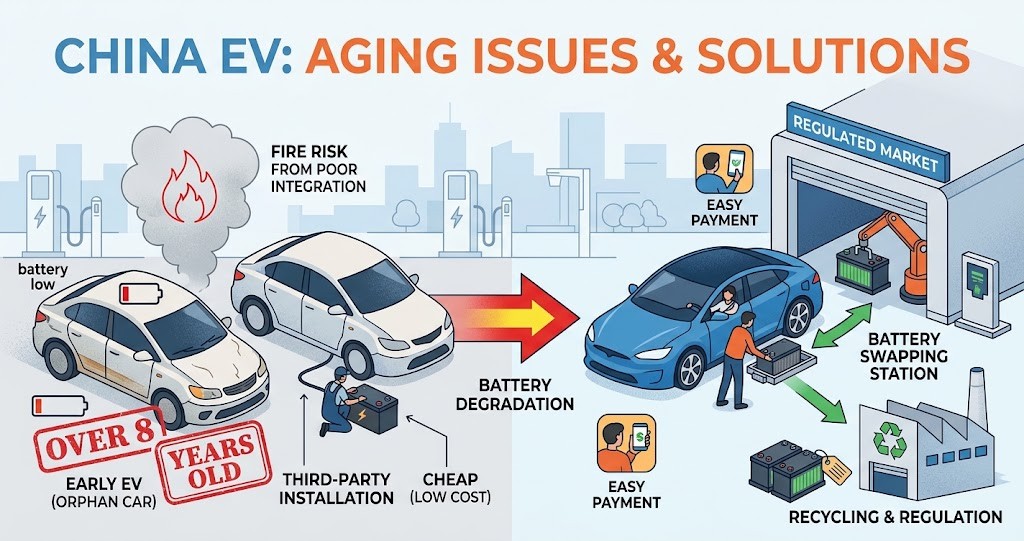
世界で最も急速に電気自動車(EV)が普及した中国において、急速な市場拡大の裏で「初期型EVの老朽化」と「バッテリー交換コストの高騰」という新たな課題が表面化しています。ニュースの要点と、業界の背景やリスク、今後の市場展望などの関連情報をまとめて解説します。
ニュースの要点
- 後付けバッテリーの台頭: 中国の中古EV市場で、正規ルート(数万元)よりも格安(約36万〜48万円で約160km延長)に航続距離を延ばせるサードパーティ製の「後付け追加バッテリー」サービスが急増しています。
- 初期EVの一斉老朽化: 2016年前後の普及期に販売されたEVが8年の保証期限を迎えつつあり、配車サービス車や経営破綻メーカーの「孤児車」を中心に安価な延命措置への需要が高まっています。
- 深刻な安全・法規リスク: 後付け電池は車両のバッテリー管理システム(BMS)や熱管理と統合されておらず、中古セルの使用による発火事故リスクや、構造変更に伴う違法改造問題が懸念されています。
- 規制強化と対策: 中国政府は電池の識別コード化や使用済み電池の再利用規制を強化する一方、正規修理情報の開放や「バッテリー交換(車電分離)モデル」の推進で対応を図っています。
関連情報・解説
1. 「車電分離(バッテリー交換方式)」とサブスクモデル 後付けバッテリー問題を解決するビジネスモデルとして期待されるのが、車体とバッテリーを切り離して販売する「車電分離」です。
- NIO(蔚来汽車)やCATLの取り組み: ユーザーはバッテリーを所有せず、月額定額(サブスクリプション)で利用します。劣化や技術更新の心配がなく、ステーションで数分で満充電電池に交換できます。
- 課題: 交換ステーションの建設・維持に膨大な初期投資が必要であり、メーカーごとの規格標準化が進まない点が普及の壁となっています。
2. バッテリーの「カスケード利用(段階的再利用)」市場 EV用としては劣化して使えなくなったバッテリーも、出力要求が低い定置型蓄電池(家庭用・産業用ポータブル電源など)や低速EV向けとしては十分再利用可能です。中国政府がカスケード利用の規制を強めている背景には、小規模な改造業者が粗悪なリサイクルセルを「EV用の後付けバッテリー」として不適切に転用・再流用することを防ぐ狙いがあります。
3. 世界のEV市場が追随する「老朽化問題」の先行事例 中国が今直面している「保証切れEVの残価設定」や「高額なバッテリー交換費用」の問題は、数年以内に欧米や日本のEV市場でも確実に発生する課題です。正規のセル単位・モジュール単位での修繕(リビルト)体制の確立や、中古EVの適正なバッテリー健全性(SoH)評価基準の整備が、世界的なEV市場持続可能性の鍵となります。
Extending Range by 160 km for 300,000 Yen: The Reality of Rapidly Spreading Unofficial “Aftermarket Batteries” in China’s Used EV Market
In China, the world’s fastest-growing electric vehicle (EV) market, new challenges—namely the aging of early-generation EVs and skyrocketing battery replacement costs—are coming to light behind rapid market expansion. Below is a summary of the key news points and related contextual information, including industry background, risks, and future market outlooks.
Key Highlights of the News
- Rise of Aftermarket Batteries: In China’s used EV market, third-party “aftermarket add-on battery” services are surging. They extend driving range at a fraction of the cost of official routes (extending range by roughly 160 km for about 360,000 to 480,000 yen, compared to official replacements costing tens of thousands of yuan).
- Simultaneous Aging of Early EVs: EVs sold during the initial adoption boom around 2016 are reaching the end of their eight-year warranty periods. Demand for low-cost life-extension measures is spiking, particularly for ride-hailing fleet vehicles and “orphan cars” left behind by bankrupt manufacturers.
- Severe Safety and Legal Risks: Aftermarket batteries are not integrated into the vehicle’s battery management system (BMS) or thermal management systems. Concerns are growing over fire risks from using second-hand cells and illegal vehicle modification issues.
- Tightening Regulations and Countermeasures: The Chinese government is reinforcing regulations by implementing unique identification codes for batteries and restricting used battery reuse. Simultaneously, it is promoting the release of official repair technical data and encouraging the “battery swap (decoupled vehicle and battery)” model.
Related Context and Analysis
1. The “Vehicle-Battery Decoupling (Battery Swap)” and Subscription Model
The “vehicle-battery decoupling” model, which sells the vehicle body and battery separately, is gaining traction as a business solution to the aftermarket battery problem.
- Initiatives by NIO and CATL: Users do not own the battery; instead, they use it via a monthly subscription. This eliminates concerns over degradation and technology obsolescence, allowing users to swap for a fully charged battery at a station in just a few minutes.
- Challenges: Swap stations require massive initial capital investments to build and maintain, and the lack of standardized battery pack specs across different manufacturers remains a barrier to widespread adoption.
2. The Battery “Cascade Utilization (Second-Life Reuse)” Market
Batteries that have degraded beyond usability for EVs can still be repurposed for applications with lower power requirements, such as stationary energy storage systems (residential/industrial portable power supply) or low-speed EVs. The Chinese government’s tightening of cascade utilization regulations aims to prevent small-scale modifiers from inappropriately repurposing low-quality recycled cells into unofficial EV aftermarket batteries.
3. A Precedent for the Global EV Market’s Upcoming “Aging Challenge”
The issues China faces today—residual value estimation for out-of-warranty EVs and exorbitant battery replacement costs—will inevitably hit EV markets in Europe, the US, and Japan within a few years. Establishing official repair frameworks at the individual cell or module level (rebuilding) and setting up proper State of Health (SoH) evaluation standards for used EV batteries will be critical to the long-term sustainability of the global EV market.

コメント