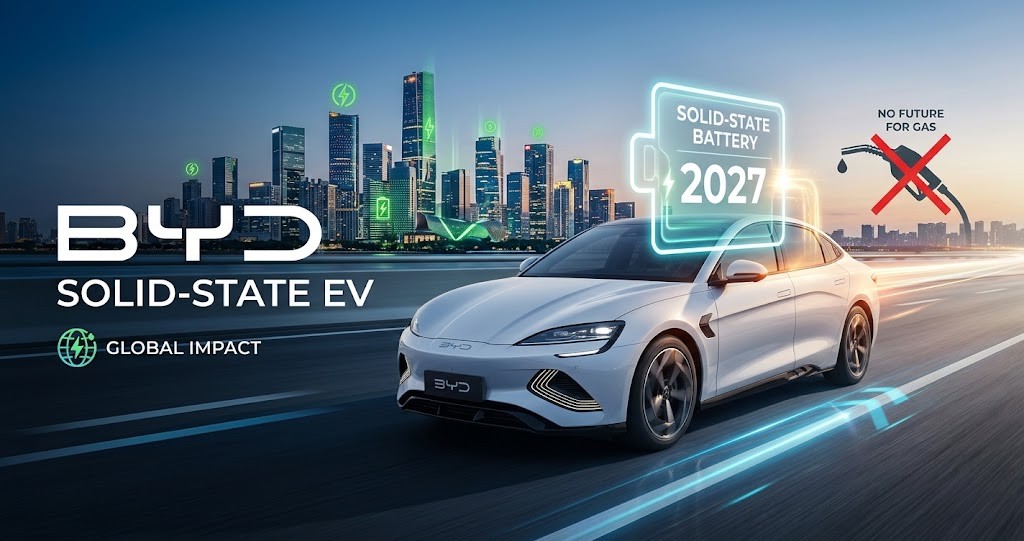
EV(電気自動車)市場で世界的な存在感を増す中国のBYDが、次世代電池技術の決定打とされる「全固体電池」の量産化に向け、具体的な動きを見せています。本記事は、BYDのステラ・リー執行副総裁が外媒インタビューで語った最新の技術展望、ガソリン車に対する強い見解、そしてグローバル市場での実績をもとに、EVシフトの将来像をまとめたものです。
BYDの全固体電池搭載車発表と今後の展開
1. 全固体電池搭載車の発表計画とタイムライン
- 発表計画: BYDのステラ・リー執行副総裁は、全固体電池技術を搭載した量産車を世界で初めて発表する計画を明らかにしました。実現すれば商用車両へ導入する世界初の自動車メーカーとなります。
- 投入時期: 報道では「来年」または「2027年」とされていますが、2026年9月時点からの換算として実質的に同じ時間枠(2027年頃)を指している可能性が高いとみられています。具体的な車種名やエネルギー密度、コスト、航続性能などの詳細は未公表です。
- 開発アプローチ: 主に「硫化物系全固体電池」を技術軸とし、電池化学だけでなく製造能力や生産装置設計の開発も同時に進める垂直統合戦略を採っています。
2. 充電技術(フラッシュ充電)の進化とガソリン車への影響
- 急速充電技術: BYDは2026年3月に第2世代ブレードバッテリーとフラッシュ充電技術を発表しました。最大出力は1500 kWに達し、バッテリー残量10 %から70 %までの充電をわずか5分で完了できる性能を持ちます。
- ガソリン車の見通し: 中国国内でフラッシュ充電が普及することでガソリン車の生存空間は急速に縮小し、「中国においてガソリン車に未来はない」と判断しています。海外市場の電動化移行は数年遅れるものの、最終的には同じ結末をたどると指摘しています。
3. 海外市場における経済的優位性(ブラジルの実例)
- 市場シェア: ブラジルでは「Dolphin Surf」が好調で、現地でのBYD総販売の約50 %を占めています。Uberやタクシーなどの営業車としての需要が高い状況です。
- コストメリット: 充電コストはガソリン給油の約20 %(2割)にとどまり、走行距離の長いドライバーにとってガソリン車をはるかに上回る経済的メリットを提供しています。
【補足】関連情報・業界背景
- 全固体電池(Solid-State Battery)の特徴: 従来の液体リチウムイオン電池で使用される液体電解液を「固体電解質」に置き換えた電池です。漏液や発火のリスクが著しく低いため「高い安全性」を誇るほか、エネルギー密度を飛躍的に高められるため「航続距離の飛躍的な延長」や「動作温度範囲の拡大」が可能となります。
- 硫化物系電解質の特徴と課題: BYDが軸とする「硫化物系」は、固体電解質の中でもイオン伝導性が高く、大電流を流しやすい(急速充電・高出力に適している)というメリットがあります。一方で、空気中の水分と反応して有害な硫化水素が発生しやすい点や、製造コストの高さが課題とされており、BYDが注力する「装置設計と製造プロセスの自社開発」が課題解決の鍵になるとみられています。
- グローバルな開発競争: 全固体電池を巡っては、日本のトヨタ自動車なども2020年代後半の本格実用化を目指して開発を進めており、主要自動車メーカーおよび電池メーカーによる「次世代電池の主導権争い」が世界的に激化しています。
出典:https://finance.biggo.jp/news/a0e9dd04-2c2a-4ec7-bcac-17bc24326f62
BYD to Unveil World’s First Solid-State Battery EV by 2027: “Gasoline Cars Have No Future in China”
China’s BYD, which continues to expand its global presence in the electric vehicle (EV) market, is making concrete moves toward the mass production of solid-state batteries, considered the ultimate game-changer in next-generation battery technology. Based on a foreign media interview with BYD Executive Vice President Stella Li, this article summarizes the future outlook of the EV shift, covering the latest technological perspectives, strong stances on gasoline vehicles, and achievements in global markets.
BYD’s Solid-State Battery Vehicle Unveiling and Future Outlook
1. Unveiling Plans and Timeline for Solid-State Battery Vehicles
- Unveiling Plans: BYD Executive Vice President Stella Li revealed plans to unveil a mass-production vehicle equipped with solid-state battery technology for the first time in the world. If realized, BYD will become the first automaker to introduce this technology into commercial vehicles.
- Launch Timing: Reports mention either “next year” or “2027,” but as of September 2026, both likely refer to essentially the same timeframe (around 2027). Specific details such as model names, energy density, cost, and driving range remain undisclosed.
- Development Approach: Focusing primarily on sulfide-based solid-state batteries, BYD adopts a vertical integration strategy that advances battery chemistry alongside manufacturing capabilities and production equipment design.
2. Evolution of Charging Technology (Flash Charging) and Impact on Gasoline Vehicles
- Fast-Charging Technology: In March 2026, BYD announced its second-generation Blade Battery and flash charging technology. Delivering a maximum output of 1500 kW, it is capable of charging the battery from 10 % to 70 % in just 5 minutes.
- Outlook for Gasoline Vehicles: As flash charging spreads across China, the room for gasoline vehicles to survive is shrinking rapidly, leading to the assessment that “gasoline vehicles have no future in China.” While the transition to electrification in overseas markets may lag by a few years, it will ultimately follow the same outcome.
3. Economic Advantages in Overseas Markets (Brazil Example)
- Market Share: In Brazil, the Dolphin Surf is performing strongly, accounting for approximately 50 % of BYD’s total local sales. Demand is particularly high for commercial use, such as Uber and taxis.
- Cost Advantages: Charging costs remain at only about 20 % of refueling with gasoline, providing substantial economic benefits over gasoline vehicles for high-mileage drivers.
Supplementary Information: Industry Background
- Characteristics of Solid-State Batteries: These batteries replace the liquid electrolyte used in conventional liquid lithium-ion batteries with a solid electrolyte. Beyond boasting high safety due to significantly reduced risks of leakage and fire, they dramatically increase energy density, enabling substantial extensions in driving range and wider operating temperature ranges.
- Characteristics and Challenges of Sulfide-Based Electrolytes: The sulfide-based technology focused on by BYD offers high ionic conductivity among solid electrolytes, making it suitable for high currents (ideal for fast charging and high output). Conversely, challenges include high manufacturing costs and the tendency to produce harmful hydrogen sulfide when reacting with moisture in the air. BYD’s focus on in-house development of equipment design and manufacturing processes is viewed as key to addressing these issues.
- Global Development Competition: Competition surrounding solid-state batteries is intensifying worldwide. Major automakers and battery manufacturers—including Japan’s Toyota Motor Corporation, which aims for full-scale commercialization in the late 2020s—are fiercely competing for leadership in next-generation battery technology.

コメント