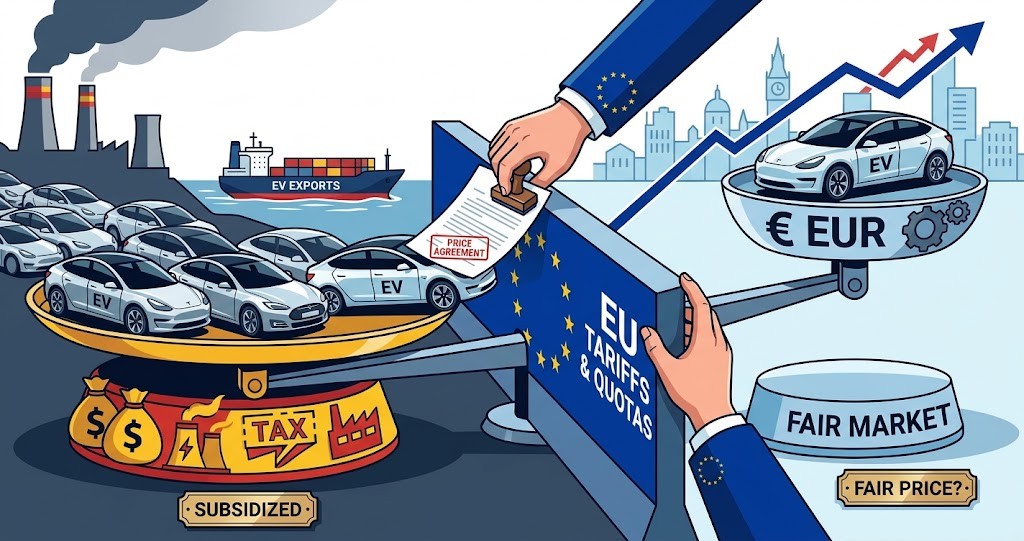
EU(欧州連合)による中国製電気自動車(EV)への関税上乗せおよび市場管理措置を背景に、中国製EVの圧倒的な低価格が生み出される構造と、それに対する国際社会の対応についての記事の要約および関連情報を以下にまとめました。
記事内容のまとめ
- 価格決定プロセスの不公正さ EUが問題視しているのはEVの最終価格そのものではなく、融資、土地、税制優遇、研究開発費、電池および原材料調達に至るまで、中国政府による広範な支援が市場の公平な競争条件をゆがめている点です。
- OECDによる調査結果(2026年公表) 2005年から2024年にかけて中国企業が受けた政府支援はOECD加盟国企業の3倍から8倍に達し、中国企業の世界市場シェア拡大の約60%が補助金に起因すると分析されています。
- 企業国籍ではなく「生産地と支援」を対象化 EUの規制は企業国籍を問わず「中国で製造され政府支援を受けたEV」すべてが対象となります。そのため、中国工場で製造されたテスラやフォルクスワーゲン(VW)グループの車両も対象に含まれます。
- 追加関税と「価格約束(Price Undertaking)」制度の運用 EUは相殺関税に加え、企業が一定価格以上での販売や輸入数量の制限、EU域内での投資などを約束することで関税を免除する「価格約束」を導入し、車1台ごとの販売流通まで詳細に管理し始めています。
- 中国企業の対抗策と問題の複雑化 規制を回避するため、中国メーカー(BYDなど)は関税対象外のプラグインハイブリッド車(PHEV)の比率を高めるほか、欧州現地での生産工場設置を進めています。
関連情報・背景解説
- 相殺関税(Countervailing Duties)の仕組み 輸出国の政府から直接的・間接的な補助金を受けている製品に対し、輸入国がその補助金相当額を上限として課す不当廉売対策の関税です。WTO(世界貿易機関)の協定に基づき認められた正当な防衛措置ですが、課税の根拠となる政府支援の実態調査において、中国側の情報開示不足が双方の主張の隔たりとなっています。
- 日本の自動車産業への影響と選択 日本市場においてもBYDをはじめとする中国製EVの参入が進んでいます。日本政府は現時点でEUのような相殺関税措置を講じておらず、購入補助金支給の要件として急速充電インフラ整備や災害時の電源供給能力などを考慮する「排出削減等評価」を導入するにとどまっています。安価な選択肢を享受する消費者のメリットと、国内自動車産業の雇用・技術基盤を守る保護策とのバランスが今後の重要な検討課題となります。
出典:https://news.yahoo.co.jp/articles/e1821aa74b4eb0c3f6be04679090b643bf29aa4b
Summary: Behind the Low Prices of Chinese EVs and Key Points of EU Countermeasures
Below is a summary of the article and relevant background information concerning the structure behind the overwhelmingly low prices of Chinese electric vehicles (EVs) and the international response to them, against the backdrop of tariff increases and market control measures imposed by the European Union (EU) on Chinese-made EVs.
Key Points from the Article
- Unfairness of the Pricing Process What the EU takes issue with is not the final price of EVs itself, but the fact that extensive support from the Chinese government—ranging from financing, land, tax incentives, and R&D costs to the procurement of batteries and raw materials—distorts fair competitive conditions in the market.
- OECD Survey Results (Published in 2026) The government support received by Chinese companies between 2005 and 2024 reached 3 to 8 times that of companies in OECD member countries, with analysis indicating that approximately 60 percent of Chinese companies’ global market share expansion can be attributed to subsidies.
- Targeting “Production Location and Support” Rather Than Corporate Nationality EU regulations apply to all EVs manufactured in China that may be affected by government support, regardless of corporate nationality. As a result, vehicles produced in Chinese factories by Tesla or the Volkswagen (VW) Group are also covered.
- Implementation of Additional Tariffs and “Price Undertaking” Framework In addition to countervailing duties, the EU has introduced “price undertakings”—a framework where companies can be exempted from additional tariffs by committing to sell above a set minimum price, limit import volumes, or invest within the EU—allowing the EU to manage sales and distribution down to individual vehicles.
- Countermeasures by Chinese Companies and Growing Complexity To circumvent regulations, Chinese automakers (such as BYD) are increasing the proportion of plug-in hybrid vehicles (PHEVs), which are exempt from tariffs, and advancing plans to establish local manufacturing plants in Europe.
Relevant Background Information
- Mechanism of Countervailing Duties Countervailing duties are trade remedies levied on products that receive direct or indirect subsidies from exporting governments, capped at the estimated amount of the subsidy. While recognized as a legitimate protective measure under WTO (World Trade Organization) agreements, a gap in claims remains due to insufficient information disclosure from the Chinese side during investigations into the actual extent of government support.
- Impact on Japan’s Automotive Industry and Future Choices Chinese EVs, including those from BYD, are increasingly entering the Japanese market. The Japanese government has not implemented countervailing duties like the EU, limiting its actions to evaluating emission reduction capabilities—such as fast-charging infrastructure development and emergency power supply capabilities—as conditions for purchase subsidies. Balancing the consumer benefits of affordable choices with protective measures to safeguard the domestic auto industry’s employment and technology base will be a key issue moving forward.
コメント