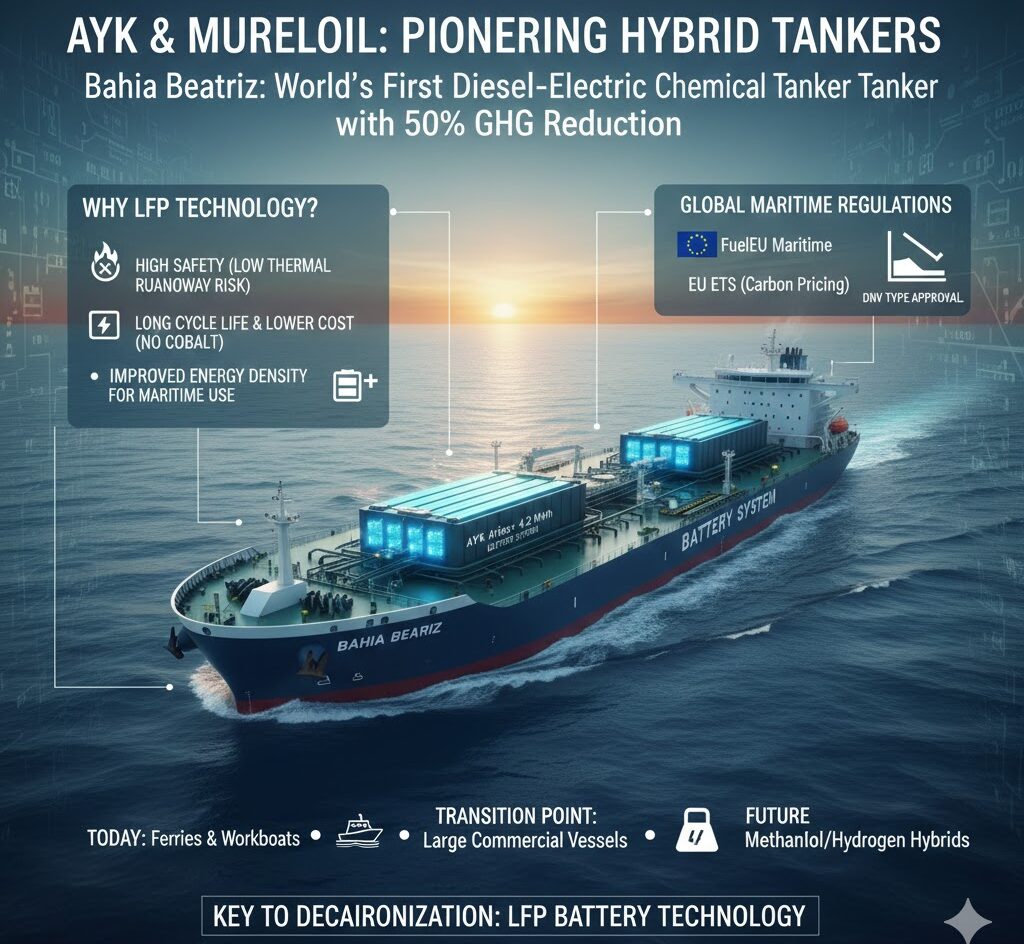
船舶用バッテリー分野で急成長を遂げるAYK社は、スペインのMureloil社と、8000重量トン型ケミカルタンカー「Bahia Beatriz」向けの蓄電池システム供給契約を結びました。これは姉妹船「Bahia Candela」への導入成功に続く第2弾のプロジェクトです。
本プロジェクトの主な特徴
- 世界初の試み: ディーゼル電気ハイブリッドシステムを搭載した世界初のタンカーとなります。
- 排出削減効果: 温室効果ガス(GHG)排出量を最大50%削減。港湾内ではフル電動(ゼロエミッション)航行が可能です。
- システム規模: 4.2 MWhの「Aries+」バッテリーシステムを搭載。
- 輸送能力の拡大: バイオ燃料およびメタノールの輸送能力が倍増し、持続可能な海洋燃料供給を支えます。
業界の転換点:フェリーからタンカーへ
これまで船舶の電動化は、短距離を航行するフェリーや作業船が中心でした。しかし、今回の大型タンカーへの導入成功は、エネルギー密度の向上とコスト低下により、大型商船でもバッテリーが実用的な解決策になったことを示しています。
関連補足:AYK社が採用する「LFP」技術の優位性
AYK社は、従来の主流であったNMC(ニッケル・マンガン・コバルト)ではなく、LFP(リン酸鉄リチウム)技術を採用しています。
なぜLFPなのか?
- 高い安全性: LFPは熱暴走のリスクが低く、火災の危険性が極めて低いため、安全基準が厳しい船舶(特に危険物を積むタンカー)に適しています。
- 長寿命とコスト: 充放電サイクル寿命が長く、原材料に高価なコバルトを使用しないため、投資回収期間(ROI)を短縮できます。
- エネルギー密度の向上: 以前はLFPは重くて嵩張るのが欠点でしたが、AYK社の技術により、船舶用途でも十分なエネルギー密度を確保できるようになりました。
海運業界を取り巻く規制環境(背景)
船主が急速にバッテリー導入を進める背景には、欧州を中心とした厳しい環境規制があります。
- FuelEU Maritime: 船舶が使用するエネルギーの温室効果ガス強度を段階的に削減することを義務付け。
- EU ETS (排出量取引制度): 船舶の排出量に応じた課金が始まり、炭素削減が直接的なコスト削減につながる構造になっています。
- DNV型式承認: AYK社のシステムは、海事界で最も権威のあるDNV(デ・ノルスケ・ベリタス)の承認を取得しており、国際的な信頼性を担保しています。
船舶用バッテリー比較表
| 項目 | NMC(従来型) | LFP(AYK社採用) |
| 主な材料 | ニッケル、コバルト等 | 鉄、リン酸 |
| 熱安定性(安全性) | 低い(熱暴走注意) | 高い(極めて安全) |
| サイクル寿命 | 中程度 | 非常に長い |
| コスト | 高い | 比較的安価 |
今後の展望
AYK社は中国・珠海工場の生産能力を背景に、スペインの代理店VULKAN社と連携して欧州市場でのシェアを拡大しています。今後はタンカーだけでなく、さらに大型の商船や、メタノール・水素などの次世代燃料船とのハイブリッド化も加速すると予想されます。
注記: 本レポート内の数値(4.2 MWh、50%削減など)は、AYK Energy社による公式発表に基づいています。
出典:https://www.aykenergy.com/newsinfo/1106730.html
The Era of Electric Tankers Arrives: AYK Energy Charts a New Course for Maritime Future
AYK Energy, the world’s fastest-growing marine battery manufacturer, has signed a second contract with Spanish shipowner Mureloil. The agreement involves supplying a battery energy storage system for the Bahia Beatriz, an 8000 DWT chemical tanker. This follows the successful implementation on its sister ship, the Bahia Candela.
Key Features of the Project
- A World First: These represent the first tankers in the world to be equipped with a diesel-electric hybrid propulsion system.
- Emission Reduction: Greenhouse gas (GHG) emissions can be reduced by up to 50 percent. Furthermore, the vessels can operate on full electric power (zero emissions) during port operations.
- System Scale: Each vessel is equipped with a 4.2 MWh “Aries+” battery system.
- Expanded Capacity: This project doubles Mureloil’s capacity to transport biofuels and methanol, strengthening the supply chain for sustainable marine fuels.
Industry Turning Point: From Ferries to Tankers
Until recently, maritime electrification was largely confined to short-distance ferries and workboats. The successful integration into large tankers proves that batteries have become a practical solution for large commercial vessels due to increased energy density and decreasing costs.
Related Insight: Advantages of “LFP” Technology Adopted by AYK
AYK Energy utilizes Lithium Iron Phosphate (LFP) technology rather than the traditionally dominant Nickel Manganese Cobalt (NMC).
Why LFP?
- Superior Safety: LFP has a much lower risk of thermal runaway and fire, making it ideal for vessels with strict safety standards, such as tankers carrying hazardous cargo.
- Long Life and Cost Efficiency: LFP offers a longer cycle life and does not use expensive cobalt, which helps shorten the Return on Investment (ROI) period.
- Improved Energy Density: While LFP was previously criticized for being heavy and bulky, AYK’s technology ensures sufficient energy density for demanding marine applications.
Regulatory Landscape in the Shipping Industry
The rapid adoption of batteries by shipowners is driven by stringent environmental regulations, particularly in Europe:
- FuelEU Maritime: Mandates a gradual reduction in the greenhouse gas intensity of energy used by ships.
- EU ETS (Emissions Trading System): A carbon pricing mechanism where ships are charged for their emissions, making carbon reduction a direct cost-saving measure.
- DNV Type Approval: AYK’s systems have received type approval from DNV, the world’s leading classification society, ensuring international trust and safety.
Marine Battery Comparison Table
| Item | NMC (Conventional) | LFP (Adopted by AYK) |
| Primary Materials | Nickel, Cobalt, etc. | Iron, Phosphate |
| Thermal Stability | Low (Thermal runaway risk) | High (Extremely safe) |
| Cycle Life | Moderate | Very Long |
| Cost | High | Relatively Inexpensive |
Future Outlook
Leveraging the production capacity of its Zhuhai factory in China and collaborating with its Spanish partner VULKAN, AYK Energy is expanding its market share across Europe. Moving forward, hybridization is expected to accelerate not only for tankers but also for larger commercial ships and vessels using next-generation fuels like methanol and hydrogen.
Note: Figures in this report (4.2 MWh, 50 percent reduction, etc.) are based on official announcements from AYK Energy.
コメント