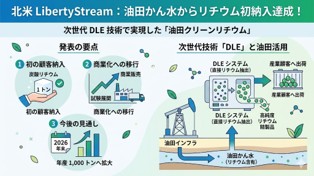
北米のリチウム開発企業である LibertyStream Infrastructure Partners Inc. が、大きなマイルストーンを達成しました。同社はテキサス州の油田地帯において、従来の鉱山開発とは全く異なる「油田かん水(廃水)」からリチウムを抽出・精製するシステムを稼働させ、米国の産業顧客向けに最初のリチウム製品(炭酸リチウム 1トン)を納入したと発表しました。
今回の発表の要点と、それを支える次世代技術「DLE」の背景について分かりやすく解説します。
- 1. 発表の要点(プレスリリースより)
- 2. 【関連情報】なぜ「油田の廃水」からリチウムが採れるのか?
- 3. LibertyStream Infrastructure Partners について
- まとめ:今後の注目点
- 1. Key Takeaways from the Announcement (From the Press Release)
- 2. [Context] Why Can Lithium Be Extracted from “Oilfield Wastewater”?
- 3. About LibertyStream Infrastructure Partners
- Summary: Key Points to Watch Moving Forward
1. 発表の要点(プレスリリースより)
- 初の顧客納入を達成: テキサス州ハワード郡にあるSelect Water Solutions社の敷地内施設から、顧客の要求仕様を満たした最初の炭酸リチウム 1トンを出荷・納入。
- 生産モデルの実証: 現場での試験展開フェーズから、実際の「商業販売」フェーズへの移行に成功。これにより、パーミアン盆地やバッケン盆地など、全米の大規模油田へのモデル展開リスクが大きく低減された。
- 今後の見通し: 2026年3月に予定より早く精製ユニットの建設を完了。順調な操業背景から、2026年末までに年間最大1,000トンの炭酸リチウム生産能力を達成できる見込み。
- 経営陣(アレックス・ワイリー CEO)のコメント:「必要な技術仕様を満たした最初の1トンの納入は、チームにとって大きな節目です。現在、多くの電池グレードおよび工業グレードの顧客向けに生産を続けており、年内の規模拡大に向けて順調に進んでいます。」
2. 【関連情報】なぜ「油田の廃水」からリチウムが採れるのか?
今回のニュースの革新性を理解するための背景知識です。
① 注目される「DLE(直接リチウム抽出)」技術とは
従来の主流なリチウム採取法(塩湖の水を広大な敷地で何ヶ月も天日干しする「蒸発法」や、鉱山を削る「鉱石法」)とは異なり、吸着剤や分離膜を使って液体から短時間で直接リチウム成分だけを抽出する技術です。
② 油田かん水(産業廃棄水)の有効活用
石油や天然ガスを採掘する際、地中深くからリチウムなどのミネラルを大量に含んだ膨大な「地下水(かん水)」が一緒に汲み上がります。これまでは単なる「産業廃棄物」として処理されていましたが、LibertyStream社はここに目をつけました。
| 項目 | 従来の塩湖・鉱山開発 | 同社の油田インフラ活用モデル |
| 環境負荷 | 広大な土地の占有、大量の水消費、環境破壊が課題。 | すでに掘られている油田の廃水を使うため、追加の環境破壊がほぼない。 |
| コスト(CAPEX) | ゼロからのインフラ建設に莫大な費用と数年の歳月がかかる。 | 既存の石油・ガスインフラを直接利用できるため、初期投資を大幅に削減。 |
| 生産スピード | 天日干しに数ヶ月〜1年以上かかる。 | DLE技術により、数日〜数週間で精製可能。 |
3. LibertyStream Infrastructure Partners について
- 企業概要: 北米で初めて「油田かん水」からの炭酸リチウム商業生産を目指すリチウム開発・技術企業。
- 上場市場: TSXベンチャー証券取引所(TSXV: LIB)、米OTCBK(OTCQB: VLTLF)、フランクフルト証券取引所(FSE: I2D)。
- 戦略: 経営陣が持つ石油・天然ガス(炭化水素)分野の豊富な経験を活かし、既存のエネルギーインフラに独自のDLE(直接リチウム抽出)技術を組み込むことで、低コスト・低リスクでのリチウム量産化を図る。
まとめ:今後の注目点
これまでリチウムのサプライチェーンは中国や南米に大きく依存していましたが、環境負荷が低く、かつ国内で完結する「油田クリーンリチウム」の商業化は、米国の経済安全保障の観点からも極めて重要です。
今後は、2026年末に向けた「年産1,000トン規模」へのスピード拡大と、電気自動車(EV)向けとなる「電池グレード(高純度)」の安定供給体制を確立できるかが注目のポイントとなります。
LibertyStream Achieves First Shipment of Lithium Carbonate from Oilfield Brine, Marking a Major Step for the US Clean Energy Transition
North American lithium development and technology company LibertyStream Infrastructure Partners Inc. has achieved a major milestone. Operating a system that extracts and refines lithium from “oilfield brine (wastewater)”—a method entirely different from traditional mining—the company announced it has delivered its first lithium product (1 ton of lithium carbonate) to a US industrial customer in the Texas oil patch.
Below is an easy-to-understand breakdown of the key points from the announcement and the background of DLE (Direct Lithium Extraction), the next-generation technology supporting this breakthrough.
1. Key Takeaways from the Announcement (From the Press Release)
- First Customer Delivery Achieved: Shipped and delivered the first 1 ton of lithium carbonate, meeting the customer’s required technical specifications, from its co-located facility at Select Water Solutions’ site in Howard County, Texas.
- Production Model Validated: Successfully transitioned from the on-site pilot deployment phase to actual “commercial sales.” This significantly de-risks the rollout of their extraction and refining model across major US oilfields, including the Permian and Bakken basins.
- Future Outlook: Completed construction of the refining unit ahead of schedule in March 2026. Backed by steady operations, the company is on track to achieve an annual production capacity of up to 1,000 tons of lithium carbonate by the end of 2026.
- Executive Commentary (Alex Wylie, CEO):“The delivery of the first ton of lithium carbonate meeting the necessary technical specifications represents another major successful milestone for the entire LibertyStream team. We continue to produce lithium carbonate for a number of battery-grade and industrial-grade customers, and with production now well underway, we are on track for our year-end scale-up.”
2. [Context] Why Can Lithium Be Extracted from “Oilfield Wastewater”?
Here is the essential background knowledge to understand the innovative nature of this news.
(1) What is the Spotlighted “DLE (Direct Lithium Extraction)” Technology?
Unlike conventional, mainstream lithium extraction methods—such as the “evaporation method” (which requires drying salt lake brine in vast solar ponds for months) or the “hard-rock method” (which involves mining ore)—DLE uses adsorbents or separation membranes to directly extract lithium from liquids in a very short time.
(2) Utilizing Oilfield Brine (Industrial Wastewater)
When extracting oil and natural gas, massive amounts of underground water (“brine”) containing high concentrations of minerals like lithium are pumped up from deep underground. Historically treated as mere industrial waste, LibertyStream targeted this untapped resource.
| Feature | Conventional Salt Lake / Hard-Rock Mining | The Company’s Co-located Oilfield Infrastructure Model |
| Environmental Impact | Faces challenges like massive land use, heavy water consumption, and environmental degradation. | Uses wastewater from already drilled oil wells, resulting in virtually no additional environmental disruption. |
| Cost (CAPEX) | Requires immense capital and years of construction to build infrastructure from scratch. | Directly utilizes existing oil and gas infrastructure, drastically reducing initial capital expenditures. |
| Production Speed | Solar evaporation takes several months to over a year. | DLE technology enables refining to be completed in days to weeks. |
3. About LibertyStream Infrastructure Partners
- Company Overview: A lithium development and technology company aiming to become one of the first in North America to commercially produce lithium carbonate from oilfield brine.
- Listed Markets: TSX Venture Exchange (TSXV: LIB), US OTCQB (OTCQB: VLTLF), and Frankfurt Stock Exchange (FSE: I2D).
- Strategy: Leverages management’s extensive experience in the hydrocarbon (oil and gas) sector to deploy proprietary DLE technology directly into existing energy infrastructure, driving low-cost, low-risk lithium mass production.
Summary: Key Points to Watch Moving Forward
While the lithium supply chain has historically relied heavily on China and South America, the commercialization of low-impact, domestically sourced “clean oilfield lithium” is critical from the perspective of US economic and energy security.
Moving forward, all eyes will be on whether the company can successfully accelerate its scale-up toward the “1,000-ton annual capacity” by the end of 2026, and establish a stable supply chain for high-purity, battery-grade lithium tailored for electric vehicles (EVs).
コメント