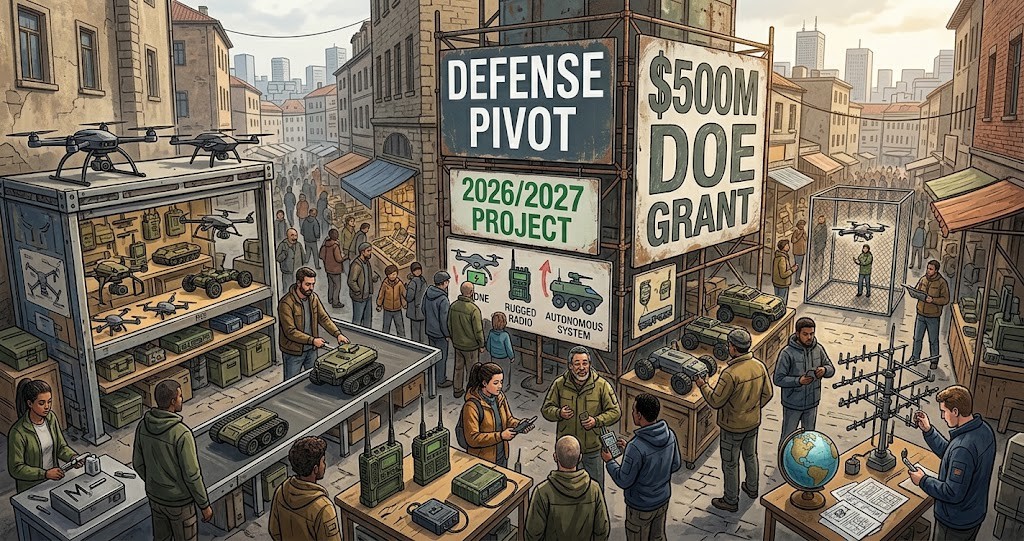
米国政府によるEV・バッテリー補助金の削減(いわゆる「One Big Beautiful Bill」)を受け、苦境に立たされた米国の電池スタートアップ企業が「防衛分野」に活路を見出しています。ドローン、歩兵無線、自律システムなどの安全保障用途への需要急増と、エネルギー省(DOE)による5億ドルの助成金交付が、企業側の新たな成長の糧となっています。
ニュースの主要ポイント
- 防衛需要へのシフト: EV市場の急速な減速に伴い、スタートアップ企業は軍事・防衛用途(ドローン、魚雷、歩兵装備など)向けバッテリー供給への依存を強めています。
- エネルギー省による5億ドル支援: 米国エネルギー省は、外国依存度の低減と国家安全保障の強化を理由に、国内のバッテリーサプライチェーン構築へ向けて大規模助成を発表しました。
- 主要スタートアップへの資金配分:
- Coreshell: 冶金用シリコン負極材の生産拡大のため、5000万ドルの助成金を獲得。防衛関連企業ADS Venturesとの連携も強化。
- Lilac Solutions: 塩水からのリチウム抽出施設(ユタ州)建設に向け、1億ドルを獲得。2028年までに年間5000トンの炭酸リチウム生産を目指す。
- Nth Cycle: リサイクル電池からのリチウム・ニッケル化合物精製施設建設のため、1億ドルを獲得。
背景・関連知識
- 補助金削減の背景(One Big Beautiful Bill): トランプ政権下の新法案(One Big Beautiful Bill)により、インフレ抑制法(IRA)時代に手厚かったEV補助金や電池生産インセンティブが大幅に縮小・廃止されました。これにより車載電池市場の短期的成長が鈍化しています。
- 車載市場と防衛市場の規模比較: 国防兵站局(DLA)の年間バッテリー購入額(約2億ドル)に対し、米国の自動車向けバッテリー市場規模は年間約180億ドル(Mordor Intelligence試算)と依然として大きな開きがあります。防衛用途は命綱であるものの、長期的な主戦場は依然として自動車分野にあります。
- 地政学的リスクと国産化(オンショアリング): バッテリー原材料や精製技術における中国依存を脱却するため、防衛分野での国内サプライチェーン確保は米政府にとって最優先の安全保障課題となっています。
US Battery Startups Pivot to Defense Sector Amid EV Slowdown: US DOE Grants 500 Million Dollars in Support
Following the US government’s cuts to EV and battery subsidies (under the so-called “One Big Beautiful Bill”), struggling US battery startups are finding a lifeline in the defense sector. The surging demand for national security applications—such as drones, infantry radios, and autonomous systems—along with 500 million dollars in funding from the Department of Energy (DOE), is providing fresh momentum for these companies.
Key Points of the News
- Shift to Defense Demand: Faced with a sharp deceleration in the EV market, startups are increasingly turning to military and defense applications, supplying batteries for drones, torpedoes, infantry equipment, and more.
- 500 Million Dollars Support from the DOE: Citing the need to reduce reliance on foreign supply chains and strengthen national security, the US Department of Energy announced major grant funding to build a domestic battery supply chain.
- Funding Allocations to Key Startups:
- Coreshell: Awarded 50 million dollars to scale up production of metallurgical silicon anodes. It has also deepened collaboration with defense-focused firm ADS Ventures.
- Lilac Solutions: Secured 100 million dollars to construct a lithium extraction facility from brine in Utah, aiming to produce 5,000 tons of lithium carbonate annually by 2028.
- Nth Cycle: Received 100 million dollars to build a refining facility that produces high-purity lithium and nickel compounds from recycled lithium-ion batteries.
Background and Related Context
- Background of Subsidy Cuts (“One Big Beautiful Bill”): Under the Trump administration’s new legislation (the “One Big Beautiful Bill”), generous EV tax credits and battery production incentives introduced under the Inflation Reduction Act (IRA) were significantly scaled back or eliminated, slowing short-term growth in the automotive battery market.
- Market Size Comparison (Automotive vs. Defense): Annual battery purchases by the Defense Logistics Agency (DLA) stand at around 200 million dollars, whereas the US automotive battery market is estimated at nearly 18 billion dollars annually (according to Mordor Intelligence). While defense acts as a vital bridge, the automotive sector remains the primary long-term battlefield.
- Geopolitical Risks and Onshoring: Reducing reliance on China for raw materials and processing technology makes securing domestic defense supply chains a top national security priority for the US government.
コメント