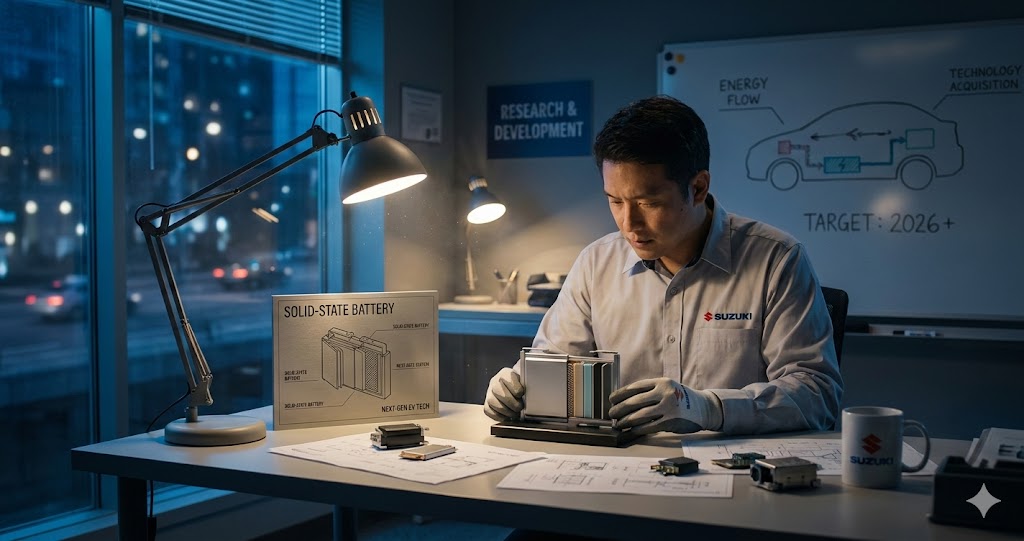
スズキは2026年3月4日、カナデビア株式会社と全固体電池事業の譲渡契約を締結したと発表しました。これにより、スズキは次世代EV(電気自動車)の基幹技術となる全固体電池の開発・製造基盤を自社で保有することになります。
契約の骨子
- 譲渡予定日: 2026年7月1日
- 譲渡内容: 全固体電池の技術開発、販売権、実証設備一式
- 財務影響: カナデビアは2026年7〜9月期に74億円の譲渡益を特別利益として計上予定(譲渡価額は非公表)
全固体電池とは?(関連情報)
次世代電池の「本命」とされる全固体電池には、従来の液体リチウムイオン電池と比較して以下のようなメリットがあります。
- 高い安全性: 電解質が固体の不燃性物質であるため、発火や液漏れのリスクが極めて低い。
- 急速充電・高出力: イオンの移動速度が速いため、充電時間の短縮が可能。
- エネルギー密度: 液体型より多くのエネルギーを蓄えられるため、航続距離の大幅な向上が期待できる。
両社の背景と狙い
スズキ:技術基盤の確保
スズキは、小型車や二輪車において「軽くて小さい」ことを強みとしています。全固体電池は高温耐性や長寿命という特性があり、過酷な環境で使用されるSUVや小型商用車への応用も期待されます。
「全固体電池は将来の重要な選択肢の一つ。技術基盤を持つことは必要不可欠」(スズキ公式コメント)
カナデビア:戦略的撤退と集中
カナデビア(旧日立造船)は2006年から開発を続け、すでに半導体装置向けなど産業用での実績を持っていました。しかし、車載向けの量産化には巨額の投資が必要となるため、資本力のあるスズキへ事業を託す形となりました。
自動車各社の全固体電池 導入目標
国内メーカー各社は、2020年代後半の実用化に向けてしのぎを削っています。
| メーカー | 実用化・量産目標時期 |
| スズキ | 今回の譲渡により量産技術の確立を加速 |
| トヨタ自動車 | 2027〜2028年度にEV用を市場投入予定 |
| 日産自動車 | 2028年度までの実用化を目指す |
| ホンダ | 2020年代後半の実用化を目標 |
今後の注目点
今後は、研究段階から「低コストでの量産技術」を確立できるかが最大の焦点となります。スズキが得意とするコスト競争力を全固体電池にも適用できれば、EV市場における同社の存在感は一気に高まる可能性があります。
出典:https://www.nikkei.com/article/DGXZQOUC046XP0U6A300C2000000/
Suzuki Enters Solid-State Battery Business: Full Acquisition of Technology and Facilities from Kanadevia
On March 4, 2026, Suzuki Motor Corporation announced that it has signed an agreement to acquire the solid-state battery business from Kanadevia Corporation. Through this acquisition, Suzuki will establish its own in-house foundation for the development and manufacturing of solid-state batteries, a core technology for next-generation electric vehicles (EVs).
Key Details of the Agreement
- Scheduled Transfer Date: July 1, 2026
- Scope of Transfer: Technology development, sales rights, and a full set of demonstration facilities for solid-state batteries.
- Financial Impact: Kanadevia expects to record a gain on business transfer of 7.4 billion yen as extraordinary income in the July-September quarter of 2026 (the actual transfer price remains undisclosed).
What are Solid-State Batteries? (Related Information)
Considered the “ultimate” next-generation battery, solid-state batteries offer several advantages over conventional liquid lithium-ion batteries:
- High Safety: Using a non-flammable solid electrolyte significantly reduces the risk of fire or leakage.
- Fast Charging and High Power: Faster ion movement enables shorter charging times.
- Energy Density: They can store more energy than liquid-type batteries, which is expected to significantly extend vehicle driving range.
Background and Strategic Goals
Suzuki: Securing a Technological Foundation
Suzuki’s strength lies in making vehicles “light and small” for its compact cars and motorcycles. Solid-state batteries, known for their high-temperature resistance and long life, are expected to be applied to SUVs and small commercial vehicles used in harsh environments.
“Solid-state batteries are one of the most important options for the future. Possessing this technological foundation is indispensable.” (Official statement from Suzuki)
Kanadevia: Strategic Withdrawal and Focus
Kanadevia (formerly Hitachi Zosen) has been developing this technology since 2006 and already has a track record in industrial applications, such as semiconductor equipment. However, because mass production for automotive use requires massive investment, the company decided to entrust the business to Suzuki, which possesses the necessary capital.
Solid-State Battery Roadmaps of Japanese Automakers
Major domestic manufacturers are competing to commercialize this technology by the late 2020s.
| Manufacturer | Target Timing for Commercialization / Mass Production |
| Suzuki | Accelerating the establishment of mass-production technology through this acquisition. |
| Toyota | Plans to introduce EV-use batteries to the market in FY2027-2028. |
| Nissan | Aims for commercialization by FY2028. |
| Honda | Targets commercialization in the late 2020s. |
Future Outlook
The primary focus moving forward will be whether “low-cost mass-production technology” can be established from the current research stage. If Suzuki can apply its signature cost-competitiveness to solid-state batteries, its presence in the EV market could increase dramatically.

コメント