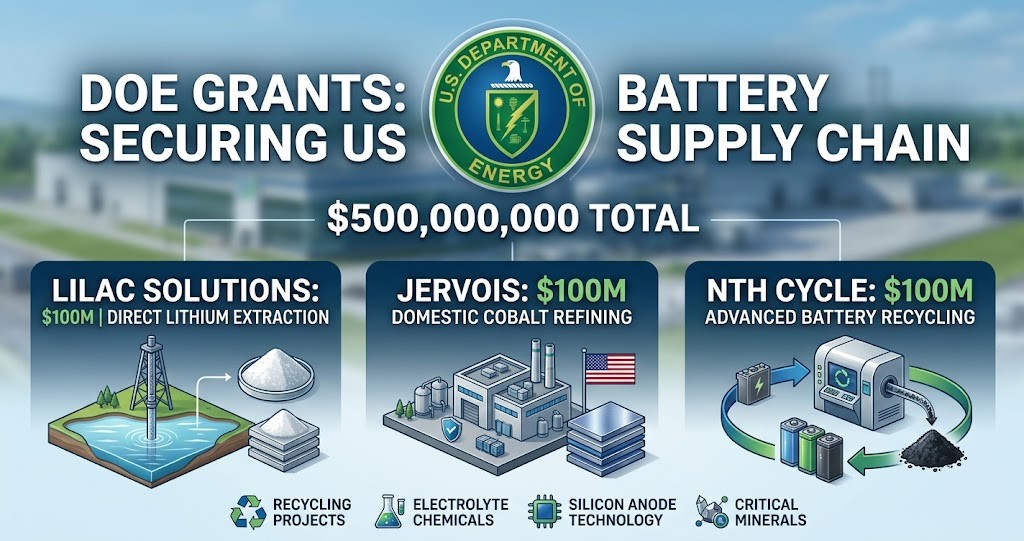
米エネルギー省(DOE)は、国内でリチウムやコバルトなどの重要鉱物採掘・精製および電池関連事業を展開する7社に対し、総額500,000,000ドルの補助金を交付することを決定しました。本措置は、電池材料加工・電池製造プログラムの第3次公募に基づくもので、数百件の申請の中から選出されました。米国における鉱物・電池素材の精製・加工能力を底上げし、サプライチェーンの国内回帰を図る狙いがあります。
1. 主な交付対象企業とプロジェクト内容
- Lilac Solutions(100,000,000ドル交付)
- 事業内容: 独BMW等が出資するリチウム抽出技術企業。ユタ州のGreat Salt Lakeに直接リチウム抽出(DLE)・加工施設を建設。
- 目標: 2028年までに稼働を開始し、年間5,000トンのリチウム生産を目指す。
- Jervois(100,000,000ドル交付)
- 事業内容: アイダホ州に大規模コバルト鉱床を保有。電池や電子機器、防衛用兵器に不可欠なコバルトの精製施設を建設(米国唯一の国内精製拠点となる予定)。
- 背景: 市況低迷により破産手続きを経て非公開化された経緯があるものの、DOEのRobertson次官補は「幅広い産業で高い需要があり、国内供給の拡大に寄与する」と支援の意義を説明。将来的に海底鉱物資源(深海団塊)の処理施設として活用される可能性も提示されています。
- Nth Cycle(100,000,000ドル交付)
- 事業内容: 大手資源商社Trafiguraが出資する電池リサイクル企業。「ブラックマス(電池用金属くず)」の精製・処理施設を整備。
- その他の交付企業(各50,000,000ドル交付)
- Princeton NuEnergy: 電池の正極部品の再処理・リサイクル。
- Arcanum Ventures: 電池電解液向け化学品の生産。
- Coreshell Technologies: 黒鉛(グラファイト)の代わりにシリコンを用いた高容量負極材の開発。
関連情報・補足解説
- ブラックマス規制とリサイクル体制の内製化トランプ政権下において、再利用可能な重要金属を含むブラックマスの国外輸出禁止措置が導入されました。DOE側は「今回の資金供与自体は輸出禁止と直接連動したものではない」としつつも、原料回収からリサイクル・処理に至る全工程を全米国内で完結させる「エコシステム」の構築を目指しています。
- 採掘(上流)から精製・中流(ミッドストリーム)へのシフト米国内では鉱山採掘(上流)の計画が進む一方で、鉱石を電池級素材に加工する「精製・加工(中流)」能力が最大のボトルネックとなっていました。中国が世界の鉱物精製シェアの大半を占める中、今回の支援は採掘だけでなく中流工程や再資源化(リサイクル)のインフラ確保に焦点を当てています。
- 市場への影響今回補助金を受ける7社はいずれも非上場企業ですが、米国政府が中流精製やリサイクル能力の整備を最重視している姿勢が明確になりました。この方針は、同分野で連携する上場鉱山会社や素材メーカーにとっても中長期的な追い風になると見られています。
出典:https://jp.reuters.com/world/us/ZVWVYJ6INBOZZEP5HALMU2GTCY-2026-08-20/
US Government Invests 500,000,000 USD to Build Domestic Supply Chain for Critical Minerals and Battery Materials
The US Department of Energy (DOE) has awarded a total of 500,000,000 USD in grants to seven companies developing critical mineral extraction, refining, and battery-related projects within the United States. Selected from hundreds of applications under the third round of the Battery Materials Processing and Battery Manufacturing program, this initiative aims to boost domestic refining and processing capacity for minerals and battery materials, reinforcing supply chain reshoring efforts.
1. Key Grant Recipients and Project Details
- Lilac Solutions (100,000,000 USD Grant)
- Business Description: A lithium extraction technology company backed by Germany’s BMW and other investors. Constructing a direct lithium extraction (DLE) and processing facility at the Great Salt Lake in Utah.
- Target: Aiming to begin operations by 2028 with a production capacity of 5,000 metric tons of lithium per year.
- Jervois (100,000,000 USD Grant)
- Business Description: Owner of a major cobalt deposit in Idaho. Constructing a cobalt refining facility—set to become the only domestic refining facility in the US—producing cobalt essential for batteries, electronics, and defense weaponry.
- Background: Despite undergoing prepackaged bankruptcy proceedings and going private due to low market prices, Assistant Secretary Robertson of the DOE highlighted the grant’s rationale, stating that demand for cobalt remains strong across various industries and the funding aims to expand domestic supply. Robertson also noted the facility could potentially process deep-sea mineral nodules in the future.
- Nth Cycle (100,000,000 USD Grant)
- Business Description: A battery recycling firm backed by major commodities trader Trafigura. Establishing a refining and processing facility for “black mass” (battery scrap metal).
- Other Recipients (50,000,000 USD Grant Each)
- Princeton NuEnergy: Reprocessing and recycling battery cathode components.
- Arcanum Ventures: Producing chemicals for battery electrolytes.
- Coreshell Technologies: Developing high-capacity battery anodes using silicon instead of graphite.
Related Information and Supplementary Context
- Black Mass Export Ban and Onshoring Recycling Capabilities Under the Trump administration, an export ban was imposed on black mass containing reusable critical metals. While the DOE stated that this funding is not directly tied to the export prohibition, it reflects a broader strategy to establish an end-to-end domestic ecosystem encompassing raw material recovery, recycling, and processing.
- Shift from Mining (Upstream) to Refining and Processing (Midstream) While mining projects (upstream) continue to advance in the United States, refining and processing capacity (midstream)—converting raw ore into battery-grade materials—has served as the primary bottleneck. With China holding a dominant share of global mineral refining, this financial support focuses on securing infrastructure for midstream processing and recycling alongside raw extraction.
- Market Impact Although all seven recipients of these grants are private companies, the funding underscores the US government’s prioritization of midstream refining and recycling capabilities. This policy direction is expected to provide long-term tailwinds for publicly traded mining companies and material manufacturers collaborating within this sector.
コメント