次世代のエネルギー貯蔵技術として期待を集める「固体電池(全固体電池)」。これまで主にEV(電気自動車)や小型ウェアラブル機器での活用が注目されてきましたが、その用途は「人間の体内」という最も安全性が問われる医療現場へと広がりを見せています。
本稿では、フランスの固体電池メーカーであるITEN(アイテン)社が推進する、生命維持に直結する「クラスIII埋め込み型医療機器」向けバッテリーの開発プログラムについて、業界背景などの関連情報を交えて詳しく解説します。
- 1. ITEN社が目指す「心臓ポンプ向け」固体電池の概要
- 2. オールセラミック構造がもたらす安全性と利点
- 3. 患者の「生活の質(QoL)」を高める急速充電と長寿命
- 4. 競合環境と関連情報(業界内での位置づけ)
- 5. 【関連情報】医療×固体電池市場の背景と展望
- まとめ
- 1. Overview of ITEN’s Solid-State Battery for Heart Pumps
- 2. Safety and Benefits Offered by the All-Ceramic Structure
- 3. Fast Charging and Long Lifespan to Boost Patient Quality of Life (QoL)
- 4. Competitive Landscape and Market Positioning
- 5. Background and Future Outlook of the Medical Solid-State Battery Market
- Summary
1. ITEN社が目指す「心臓ポンプ向け」固体電池の概要
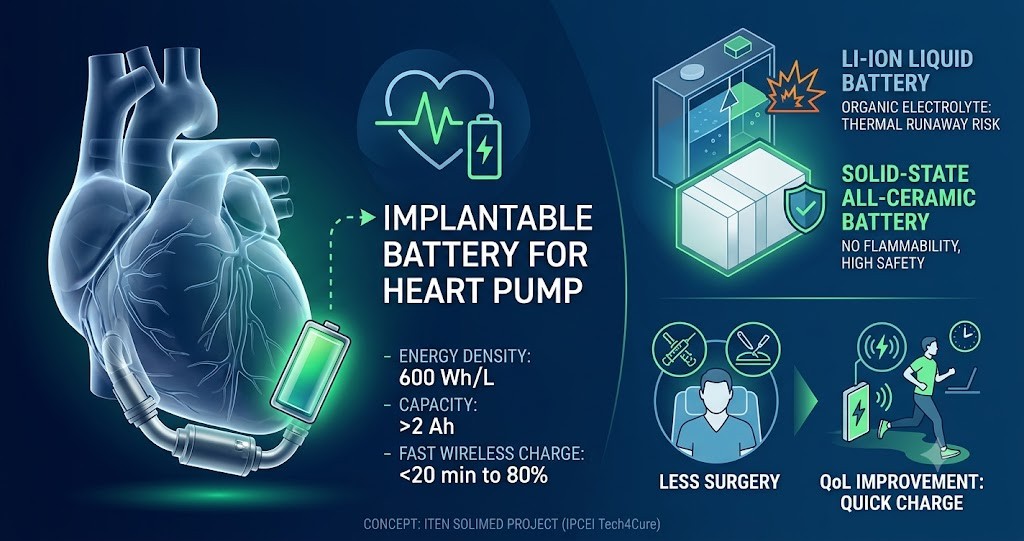
フランスに拠点を置くITEN社は、欧州の助成イニシアチブ(IPCEI Tech4Cure)傘下の「SOLIMEDプロジェクト」を通じて、クラスIII(心臓補助ポンプや神経刺激装置など)の埋め込み型医療機器向け全固体電池の開発を開始しました。
主な開発目標スペック
- エネルギー密度: 600 Wh/L(ワット時毎リットル)
- 電池容量: 2 Ah(アンペアラ)以上
- 急速充電: 経皮(皮膚越し)のワイヤレス充電により、20分未満で80%まで回復
これまで同社はスマートコンタクトレンズ用電源などの小型機器向けで成果を上げてきましたが、本プロジェクトにより高出力・大容量が必要とされる心臓補助機器市場へと大きく足を踏み出します。
2. オールセラミック構造がもたらす安全性と利点
従来の液式リチウムイオン電池は、有機電解液を使用しているため発火や「熱暴走」のリスクが課題でした。人体の内部で使用される医療用インプラントにおいて、このリスクは極めて致命的です。
ITEN技術の強み
- 熱暴走・可燃性の完全排除: 電極・電解質ともに有機材料を使わない全固体・オールセラミック構造を採用。
- 体積変化の防止: 充放電に伴うセルの膨張・収縮が極めて少なく、体内で組織を圧迫するリスクを低減。
- 生体適合性パッケージ: 従来の重いチタン製外装ケースに代わり、生体適合性のある樹脂(オーバーモールド材料)でカプセル化する設計を模索。
3. 患者の「生活の質(QoL)」を高める急速充電と長寿命
体内に埋め込んだバッテリーの寿命が尽きると、交換のために患者は再度外科手術を受けなければなりません。
ITENの技術は以下の改善をもたらします:
- 手術頻度の削減: 電池自体の長寿命化により、バッテリー交換手術のリスクと患者への負担を大幅に軽減。
- ストレスのないワイヤレス充電: 数時間かかっていた充電をわずか20分程度に短縮し、日常生活への影響を最小限に抑える。
4. 競合環境と関連情報(業界内での位置づけ)
医療用微小電池の分野では、英国のIlika(イリカ)社などの競合も存在しますが、両者はターゲットとする市場の出力規模で明確に棲み分けがなされています。
医療用固体電池の比較
| 項目 | ITEN社(フランス) | Ilika社(英国 / Stereax M300) |
| 主な用途 | 心臓補助ポンプ、高出力神経刺激 | 胃刺激、迷走神経刺激、低出力神経調節 |
| 想定容量 | 2 Ah(2,000,000 uAh)以上 | 300 uAh(マイクロアンペアラ) |
| 電力要求 | ハイパワー(ワットレベルの連続駆動) | ロー〜ミドルパワー(マイクロ〜ミリワット) |
5. 【関連情報】医療×固体電池市場の背景と展望
- 医療機器クラス分類における「クラスIII」の重み医療機器はリスクに応じて分類され、「クラスIII」は「生命維持に不可欠、または体内への長期導入」を意味する最も規制の厳しいカテゴリーです。ここへ参入することは、極めて高い品質基準と信頼性を証明することを意味します。
- 欧州の「技術主権(テクノロジカル・ソブリンティ)」欧州連合(EU)はバッテリー技術をアジア企業に依存している現状を打開するため、IPCEI(欧州共通利益重要プロジェクト)等を通じて域内での技術革新を後押ししています。今回のTech4Cureイニシアチブも、医療・エネルギー両分野における欧州の技術自給率向上という側面を持っています。
- 小型・長寿命化が拓く次世代医療心臓ポンプにとどまらず、将来的に「全人工心臓」「脳深部刺激療法(DBS)」「骨再生刺激装置」など、常時電力を必要とする多種多様な生体埋め込みデバイスの小型化・高性能化へ波及することが期待されています。
まとめ
ITEN社が進めるオールセラミック固体電池の開発は、発火リスクをゼロにしつつ、高容量と急速充電を両立させる革新的なアプローチです。
この技術が実用化されれば、心臓ポンプなどを装着する患者の手術リスクが激減し、ワイヤレス充電によってより自由な日常を送ることができるようになります。医療分野における全固体電池は、単なる電源の進化を超えて「人の生命と生活の質を守るキーテクノロジー」として大きな一歩を踏み出しています。
Solid-State Batteries Enter the Human Body! ITEN Challenges the Next-Generation Battery for Heart Pumps
Solid-state batteries are drawing major attention as a next-generation energy storage technology. While their applications have primarily focused on electric vehicles (EVs) and small wearable devices, their scope is now expanding into the medical field—specifically inside the human body, where safety requirements are most stringent.
This article provides a detailed look into the development program for Class III implantable medical device batteries led by French solid-state battery manufacturer ITEN, complete with relevant industry background and insights.
1. Overview of ITEN’s Solid-State Battery for Heart Pumps
France-based ITEN has launched a development program for all-solid-state batteries targeted at Class III implantable medical devices, such as cardiac assist pumps and neurostimulators, through the SOLIMED project under the European funding initiative IPCEI Tech4Cure.
Key Target Specifications
- Energy Density: 600 Wh/L (Watt-hours per liter)
- Battery Capacity: 2 Ah (Ampere-hours) or more
- Fast Charging: Recovers 80% charge in less than 20 minutes via transcutaneous (through the skin) wireless charging
While ITEN previously achieved breakthroughs in powering small devices like smart contact lenses, this project marks a major step into the cardiac assist market, which demands high power and large capacity.
2. Safety and Benefits Offered by the All-Ceramic Structure
Conventional liquid lithium-ion batteries rely on organic liquid electrolytes, making fire hazards and thermal runaway major challenges. In medical implants used inside the human body, such risks can be catastrophic.
Strengths of ITEN’s Technology
- Complete Elimination of Thermal Runaway and Flammability: Adopts an all-solid, all-ceramic structure using no organic materials in either the electrodes or the electrolyte.
- Prevention of Volume Changes: Cell expansion and contraction during charging and discharging are extremely low, reducing the risk of compressing tissue inside the body.
- Biocompatible Packaging: Explores encapsulating the battery subsystem in biocompatible resin (overmolding materials) as an alternative to traditional, heavy titanium cases.
3. Fast Charging and Long Lifespan to Boost Patient Quality of Life (QoL)
When an implanted battery reaches the end of its life, patients must undergo surgery again to replace it.
ITEN’s technology brings the following improvements:
- Fewer Surgeries: Extending battery lifespan significantly reduces surgical risks and patient burden associated with battery replacement procedures.
- Stress-Free Wireless Charging: Shortens charging time from several hours to roughly 20 minutes, minimizing disruptions to daily life.
4. Competitive Landscape and Market Positioning
In the medical micro-battery sector, competitors such as UK-based Ilika exist, but the two companies target distinctly different power requirements.
Comparison of Medical Solid-State Batteries
| Item | ITEN (France) | Ilika (UK / Stereax M300) |
| Primary Applications | Heart assist pumps, high-power neurostimulation | Gastric stimulation, vagus nerve stimulation, low-power neuromodulation |
| Target Capacity | 2 Ah (2,000,000 uAh) or more | 300 uAh (microampere-hours) |
| Power Demand | High power (continuous watt-level operation) | Low to medium power (microwatts to milliwatts) |
5. Background and Future Outlook of the Medical Solid-State Battery Market
Significance of “Class III” Medical Devices
Medical devices are classified based on risk. Class III represents the most strictly regulated category, reserved for life-sustaining equipment or long-term implants. Entering this market signifies meeting exceptionally high standards for quality and reliability.
Europe’s “Technological Sovereignty”
To reduce dependence on Asian manufacturers for battery technologies, the European Union is driving regional innovation through initiatives like IPCEI (Important Projects of Common European Interest). The Tech4Cure initiative also serves to enhance European self-reliance across both the medical and energy sectors.
Next-Generation Healthcare Unlocked by Miniaturization and Longevity
Beyond heart pumps, this technology is expected to drive miniaturization and performance gains across a wide range of continuous-power implantable devices, including total artificial hearts, deep brain stimulation (DBS) devices, and bone growth stimulators.
Summary
ITEN’s development of all-ceramic solid-state batteries represents an innovative approach that eliminates fire risk while achieving both high capacity and fast charging.
Once commercialized, this technology will drastically reduce surgical risks for patients using heart pumps and allow them to enjoy greater freedom in daily life thanks to fast wireless charging. In healthcare, solid-state batteries are taking a major leap forward—evolving beyond simple power sources to become a key technology for protecting human life and enhancing quality of life.
コメント