近年、航空分野の脱炭素化(クリーンエアモビリティ)に向けて、電動垂直離着陸機(eVTOL: electric Vertical Take-Off and Landing、いわゆる「空飛ぶクルマ」)の開発が世界中で加速しています。eVTOLの本格的な実用化・普及における最大の技術的ボトルネックは、機体の重量を左右する電池のエネルギー密度と、万が一の故障時でも搭乗員の命を守る極めて高い安全性の両立です。
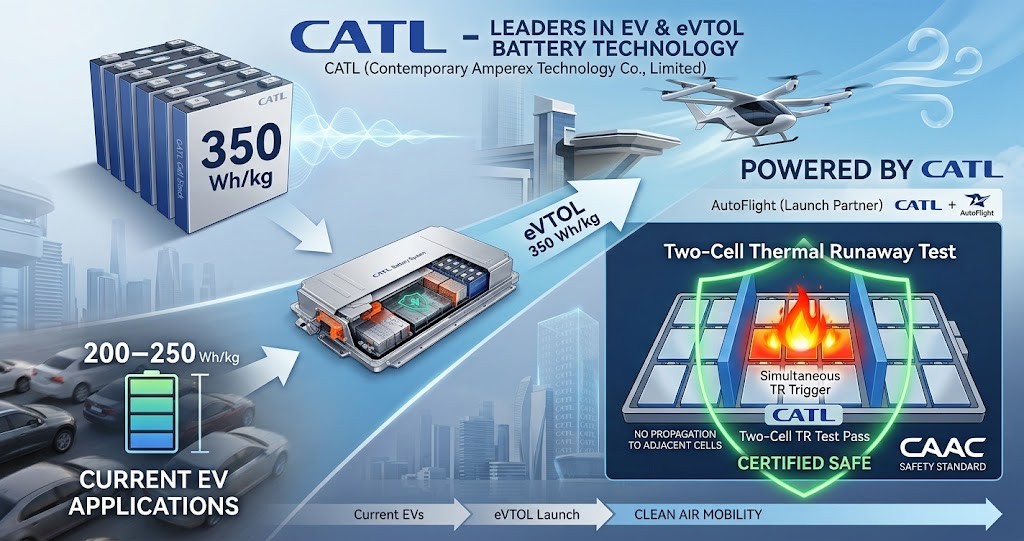
一般的に、現在の電気自動車(EV)向けリチウムイオン電池のエネルギー密度は 200〜250 Wh/kg 程度ですが、航空機が実用的な航続距離と積載量を獲得するには 300〜350 Wh/kg 以上の高いエネルギー密度が必要とされています。しかし、エネルギー密度を高めるほどセルの化学的安定性は低下し、熱暴走(発火・爆発)のリスクが高まるという相克の関係にあります。
こうした中、車載用電池の世界最大手である中国のCATL(寧徳時代)は、自社が誇る最先端の電池技術と巨大な資金力を背景に、車載(EV)領域から航空・船舶といった高付加価値分野への事業多角化を急速に押し進めています。
以下に、同社が発表したeVTOL向け航空機用バッテリーシステムの最新成果と関連する市場背景をまとめます。
CATLによるeVTOL向け350Wh/kgバッテリー開発の要点
1. 350Wh/kgの超高エネルギー密度と量産体制の確立
- エネルギー密度の達成:旅客用eVTOL向けに、エネルギー密度 350 Wh/kg を有する角型セルバッテリーシステムを開発しました。これは一般的なEV用バッテリーを大幅に上回る性能です。
- 量産体制:同バッテリーシステムはすでに量産体制が整っています。
- 初期顧客と資本提携:中国のeVTOL開発企業であるAutoFlight(峰飛航空科技)が最初の供給先となります。CATLは単なる供給契約にとどまらず、2024年8月に戦略的投資家としてAutoFlightへ数億ドル規模の出資を行っています。
2. 世界初、厳格な「2セル同時熱暴走試験」に合格
航空業界では過酷な安全基準が求められます。特にバッテリーパック内で1つのセルが発火した際、隣接する他のセルへ炎や熱が広がる「熱伝播(サーマルプロパゲーション)」をいかに防ぐかが型式証明(耐空性認証)の大きな鍵となります。
- 試験内容:中国民用航空局(CAAC)の関与のもと、バッテリーパックの中央部および角部において、隣接する2つのセルを意図的に同時に熱暴走させる過酷なテストを実施しました(通常は1セルのみをトリガーとするテストが一般的です)。
- 結果:いずれのテストにおいても、熱暴走は他のセルへ一切伝播しませんでした。
- 意義:このエネルギー密度(350 Wh/kg)の角型セルを使用した航空機用バッテリーシステムとして、規定の安全試験に合格したのは世界初となります。商業飛行の最終承認にはさらなる認証手続きが必要ですが、民間航空の安全要件を満たすための重要な足がかりを築きました。
3. 主力EV事業の圧倒的シェアと多角化戦略
CATLは、既存の車載用バッテリー市場で世界首位の座を強固にしつつ、航空機や電動船舶といった新領域への展開を進めています。
- EV市場でのシェア:SNE Researchのデータによると、CATLは2026年上半期に世界中のEVおよびハイブリッド車向けに 242.7 GWh のバッテリーを供給しました。
- 成長率と市場占有率:前年同期比 25.3% 増を記録し、世界市場シェアは 39.9% に達しています。競合のBYDと合わせると、中国トップ2社で世界市場の過半数を占める構造となっています。
まとめと今後の展望
CATLによる350 Wh/kgクラスの航空機用バッテリーの開発および過酷な安全試験の突破は、eVTOLの実用化に向けた大きなマイルストーンです。
航空分野は、バッテリーに求められるエネルギー密度と安全性に対するハードルが最も高い領域の一つであり、ここで培われた技術や高い安全基準は、将来的にEV用バッテリーの性能向上や安全性強化にも還元されることが期待されます。量産体制が整ったことで、今後はAutoFlightをはじめとする機体メーカーでの実機搭載と、中国民用航空局(CAAC)等による商業運航に向けた最終的な型式証明の取得プロセスが最大の注目点となります。
出典:https://cnevpost.com/2026/08/09/catl-aviation-battery-clears-key-safety-test/
CATL Develops 350 Wh/kg Battery for eVTOLs: Passes World’s First Simultaneous Two-Cell Thermal Runaway Test
In recent years, the development of electric vertical takeoff and landing (eVTOL) aircraft—commonly known as “flying cars”—has been accelerating worldwide to support decarbonization in aviation (clean air mobility). The primary technical bottleneck in achieving the practical commercialization and widespread adoption of eVTOLs lies in balancing energy density, which directly impacts aircraft weight, with exceptionally high safety standards to protect passenger lives in the event of a failure.
Generally, current lithium-ion batteries for electric vehicles (EVs) have an energy density of around 200 to 250 Wh/kg. However, aircraft require a higher energy density of 300 to 350 Wh/kg or more to achieve practical flight ranges and payload capacities. The tradeoff is that higher energy density reduces the chemical stability of the cells, elevating the risk of thermal runaway (fire and explosion).
Against this backdrop, CATL, the world’s largest automotive battery manufacturer, is leveraging its cutting-edge battery technology and extensive financial resources to rapidly expand beyond EVs into high-value sectors such as aviation and marine transport.
Below is a summary of the latest achievements in CATL’s aviation battery system for eVTOLs and the relevant market context.
Key Highlights of CATL’s 350 Wh/kg eVTOL Battery Development
1. Ultra-High Energy Density of 350 Wh/kg and Mass Production Readiness
- Energy Density Achievement: CATL developed a prismatic cell battery system with an energy density of 350 Wh/kg for passenger eVTOLs, significantly outperforming standard EV batteries.
- Mass Production Readiness: Mass production setup for this battery system is already complete.
- Initial Customer and Capital Alliance: Chinese eVTOL developer AutoFlight will be the first customer. Beyond a supply agreement, CATL invested several hundred million dollars as a strategic investor in AutoFlight in August 2024.
2. World’s First to Pass Rigorous Simultaneous Two-Cell Thermal Runaway Test
The aviation industry demands rigorous safety standards. Preventing thermal propagation—the spread of fire and heat to neighboring cells when one cell ignites inside a battery pack—is crucial for type certification (airworthiness approval).
- Test Details: Under the involvement of the Civil Aviation Administration of China (CAAC), rigorous tests were conducted by intentionally triggering simultaneous thermal runaway in two adjacent cells at both the center and corners of the battery pack (standard tests typically trigger only one cell).
- Results: Thermal runaway did not propagate to any other cells in any of the tests.
- Significance: CATL became the world’s first to pass mandated safety tests for an aviation battery system using prismatic cells with an energy density of 350 Wh/kg. While additional certification procedures are required for commercial flight approval, this achievement establishes an essential foundation to meet civil aviation safety standards.
3. Dominant EV Market Share and Diversification Strategy
CATL continues to strengthen its position as the global leader in the automotive battery market while expanding into new sectors such as aviation and electric vessels.
- EV Market Share: According to SNE Research data, CATL supplied 242.7 GWh of batteries for EVs and hybrid vehicles globally in the first half of 2026.
- Growth and Market Dominance: CATL recorded a 25.3% year-over-year increase, securing a 39.9% global market share. Combined with BYD, the top two Chinese manufacturers account for over half of the global market.
Conclusion and Future Outlook
CATL’s development of a 350 Wh/kg class aviation battery and its success in passing rigorous safety tests represent a major milestone toward the practical deployment of eVTOLs.
Aviation presents some of the highest hurdles regarding battery energy density and safety. The technologies and safety standards developed in this sector are expected to feed back into enhancing the performance and safety of EV batteries in the future. With mass production capabilities established, key areas to watch include actual aircraft integration by manufacturers like AutoFlight and the final type certification process with regulatory bodies such as the CAAC for commercial operation.


コメント