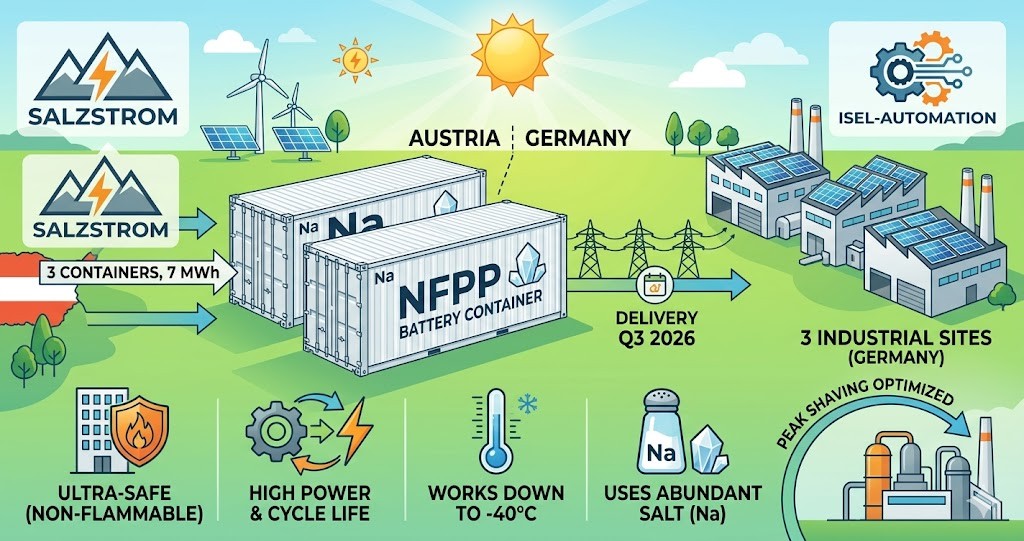
オーストリアの蓄電システムメーカー「ザルツストロム(Salzstrom)」社は、ドイツの研究開発企業「Isel-automation」社から、総容量7メガワット時(MWh)となるリン酸鉄ナトリウム(NFPP)電池蓄電システム3基を受注し、商業生産を開始したと発表しました。
受注額は数百万ユーロ(7桁台)にのぼり、2026年第3四半期に納入される予定です。
プロジェクトの概要
- 設置場所: ドイツのIsel-automation社の3つの工業拠点(各拠点に約500キロワットの太陽光発電設備が導入済み)。
- 導入設備: 容量2.3メガワット時のバッテリーコンテナを各拠点に1基ずつ、計3基設置。
- 総貯蔵容量: 1.25メガワット(MW)/ 7メガワット時(MWh)。
- ザルツストロム社の役割: システム全体の計画、コンポーネント選定、電力変換システム(PCS)およびエネルギー管理システムの供給・導入、試運転から長期管理までをトータルで担当。
【関連情報】なぜ「リン酸鉄ナトリウム電池」が注目されているのか?
このニュースの背景にある技術的な強みと、業界での位置づけを解説します。
1. ナトリウムイオン電池とは?
現在主流の「リチウムイオン電池」は、リチウムやコバルトといった世界的に埋蔵量が偏り、価格が変動しやすいレアメタルに依存しています。 一方、ナトリウムは地球上に豊富に存在する「塩(ナトリウム)」を主原料とするため、低コストで資源枯渇の心配がないという最大のメリットがあります。今回採用された「NFPP(リン酸鉄ナトリウム)」は、その中でも安定性と寿命に優れた次世代の組成です。
2. リチウム電池を凌駕する3つの圧倒的メリット
ザルツストロム社のCEOが語るように、この電池には従来の普及型リチウム電池(LFPなど)と比べて非常に優れた特性があります。
- 極めて高い安全性(不燃性): 電池セルそのものが燃えない性質を持っているため、火災リスクが厳しく制限される工業地帯や商業施設でも安全に設置できます。
- 劣化に強く、高電流(ピークシェービング)に最適: 工場などで電力を一時的に大量消費する際の「ピークカット(ピークシェービング)」を行っても、リチウム電池ほど急速に劣化しません。
- マイナス40度でも動作し、維持費が安い: 摂氏マイナス40度という極寒環境でも放電が可能です。従来の電池のように「冬場にバッテリーを温めるためのヒーター」や、逆に「夏場に冷やすための強力なエアコン」がほとんど不要なため、運用のための電気代(Opex)を大幅に削減でき、システム全体の効率が向上します。
今後の見通し
今回の受注は、実験室レベルだったナトリウムイオン電池が、ついに「ヨーロッパの厳しい商業基準を満たす大型コンテナサイズ」として実用化された歴史的な節目と言えます。
主なターゲットは、エネルギー消費の多い産業・商業企業です。太陽光発電の自家消費を最大化し、電力網への接続コストを抑えたい企業にとって、安全で安価、そして環境負荷の低い「塩の電池」は、リチウムイオン電池に代わる強力な選択肢として今後急速に普及していく可能性があります。
A European First! Salzstrom Secures Large-Scale Commercial Order for Sodium Iron Phosphate Batteries
Austrian energy storage system manufacturer Salzstrom has announced that it has secured an order for three sodium iron phosphate (NFPP) battery energy storage systems with a total capacity of 7 megawatt-hours (MWh) from German R&D company Isel-automation, and has commenced commercial production. The order value is in the seven-figure euro range, with deliveries scheduled for the third quarter of 2026.
Project Overview
- Installation Sites: Three industrial sites owned by Isel-automation in Germany (each site already has approximately 500 kilowatts of solar power generation capacity installed).
- Equipment to be Deployed: One battery container with a capacity of 2.3 megawatt-hours will be installed at each site, totaling three units.
- Total Storage Capacity: 1.25 megawatts (MW) / 7 megawatt-hours (MWh).
- Salzstrom’s Role: Fully responsible for the overall project management, including the planning and selection of all components, the supply and implementation of the power conversion system (PCS) and energy management system, as well as plant commissioning and long-term management.
[Related Information] Why are Sodium Iron Phosphate Batteries Attracting Attention? This section explains the technical strengths and industry positioning behind this news.
1. What are Sodium-ion Batteries? Currently mainstream lithium-ion batteries rely on rare metals like lithium and cobalt, which have geographically concentrated reserves and are prone to price volatility. In contrast, sodium-ion batteries utilize sodium (salt), which is abundantly available across the globe, as their primary raw material. This provides the ultimate advantage of low costs and zero concerns regarding resource depletion. The NFPP (sodium iron phosphate) chemistry adopted for this project is a next-generation composition known for its exceptional stability and long lifespan.
2. Three Overwhelming Advantages That Surpass Lithium Batteries As highlighted by Salzstrom’s CEO, this battery possesses remarkable characteristics compared to conventional, mass-market lithium batteries (such as LFP):
- Extremely High Safety (Non-flammable): Because the battery cells themselves are inherently non-flammable, they can be safely installed in industrial zones and commercial facilities where fire risks are strictly regulated.
- Highly Resistant to Degradation and Ideal for High Currents (Peak Shaving): Even when performing “peak shaving” to manage temporary spikes in heavy power consumption at factories, these batteries do not degrade as rapidly as lithium batteries.
- Operates at Minus 40 Degrees and Offers Low Maintenance Costs: The batteries can discharge even in extreme environments as low as minus 40 degrees Celsius. This largely eliminates the need for heaters to warm the batteries in winter or powerful air conditioning to cool them in summer, drastically reducing operating expenses (Opex) and boosting overall system efficiency.
Future Outlook This order marks a historic milestone where sodium-ion batteries, once confined to the laboratory level, have finally been commercialized as large-scale containerized solutions that meet Europe’s stringent commercial standards.
The primary targets are industrial and commercial enterprises with high energy consumption. For companies looking to maximize their solar self-consumption and optimize grid connection costs, this safe, affordable, and low-environmental-impact “salt battery” is highly likely to spread rapidly in the future as a powerful alternative to lithium-ion batteries.
コメント