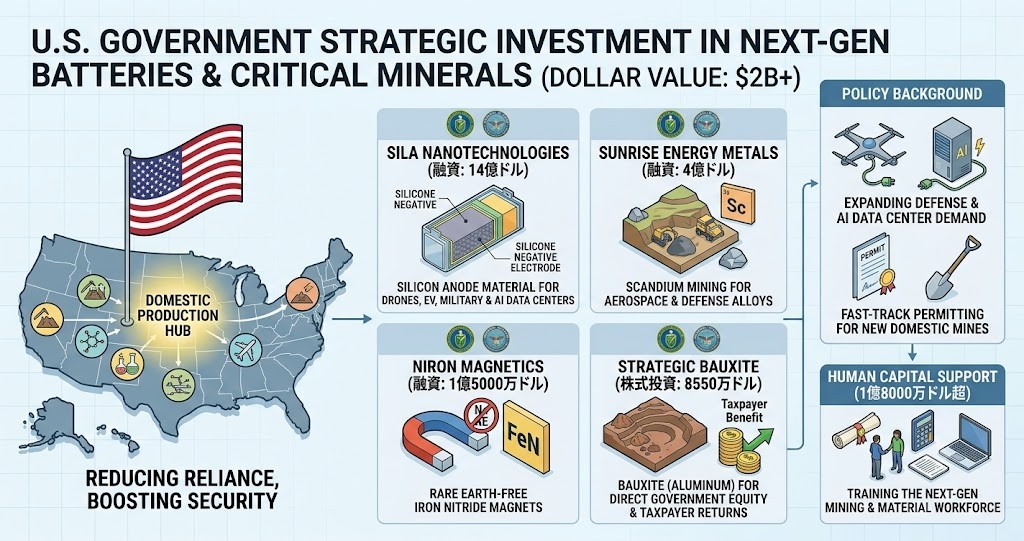
米国政府は、次世代電池および重要鉱物の国内生産能力を劇的に引き上げるため、20億ドル(約3,000億円超)を超える直接融資や株式出資を実施すると発表しました。従来のエネルギー省(DOE)による民間支援に加え、国防総省(DoD)が直接的な資金供給の主体として前面に出ており、中国依存度の高いサプライチェーンを抑え、安全保障上の危機を回避する狙いが鮮明になっています。本レポートでは、今回決定された主要企業への支援策と、その背景にある技術的・産業的インパクトについて解説します。
1. 主要な資金供給案件と対象企業
トランプ政権は急速な許認可手続きを進め、約160件・総額約400億ドル規模の鉱物資源取引を完了させました。今回の20億ドル超の支援における主な投資先は以下の通りです。
- Sila Nanotechnologies社(14億ドルの融資)
- 対象分野: 次世代電池材料(シリコン系負極材)
- 目的: ドローンやEV、軍事用デバイス、AIデータセンター電源向けの大容量電池生産を支援。
- Sunrise Energy Metals社(4億ドルの融資)
- 対象分野: スカンジウム採掘
- 目的: 航空宇宙産業および防衛用途向け軽量合金用素材の確保。
- Niron Magnetics社(1億5,000万ドルの融資)
- 対象分野: レアアース(希土類)不使用磁石
- 目的: 中国がシェアの大半を握るネオジム磁石等への依存を脱却し、窒化鉄を用いた脱レアアース磁石の商用化を推進。
- Strategic Bauxite社(8,550万ドルの株式投資)
- 対象分野: ボキサイト(アルミニウム精錬の主原料)
- 特徴: 米国政府が直接株式を取得する形態をとり、将来的な企業価値向上による税収還元(納税者利益)を視野に入れた構造。
- 人材育成支援(1億8,000万ドル超)
- エネルギー省や大学機関を通じ、次世代の鉱業・材料分野における技術者・労働者の育成に配慮。
2. 政策の背景と課題
- AIデータセンターおよび防衛産業の急拡大 大容量バッテリー需要はEV用途にとどまらず、エッジAI搭載ドローンや生成AIを支えるデータセンター向けバックアップ電源(ESS)へと急速に広がっており、国内確保が急務となっています。
- 許認可の高速化と新鉱山開拓 規制緩和に伴い、1950年代以来最速のペースで国内鉱山が開拓されています。
- 実用化・技術的障壁の懸念 巨額資金投入の一方で、鉱山や素材プラントの立ち上げには数年単位の時間が必要であり、技術的トラブルやコスト高によるプロジェクト失敗リスクへの配慮も課題とされています。
【関連情報・補足】専門的な背景と技術トレンド
- Sila Nanotechnologiesと「シリコン系負極材」の重要性 現在リチウムイオン電池の負極材には黒鉛(グラファイト)が主流ですが、中国が世界供給の大部分を支配し輸出規制を強めています。Sila社が手がけるシリコン負極技術は、従来黒鉛に比べ理論容量が約10倍と極めて高く、電池のエネルギー密度向上と「脱黒鉛・脱中国」を同時に達成する最重要技術の一つとされています。
- Niron Magneticsと「脱レアアース」の戦略的意味 EVモーターや防衛用アクチュエータに使用される永久磁石は、中国産のネオジムやディスプロシウムに依存しています。Niron社が展開する「窒化鉄磁石」はレアアースを一切使用しないため、サプライチェーン途絶リスクを根底から解消する革新技術として国防総省から強い期待を集めています。
- 国防総省(DPA Title III等)による強権的な関与 通常、民間産業支援はエネルギー省(DOE)が管轄しますが、国防生産法(DPA)等の枠組みを活用して国防総省が直接巨額融資や株式取得(Strategic Bauxite等)を行う点は、米国の軍民両用(デュアルユース)技術確保に向けた危機感の表れと言えます。
出典:https://www.vietnam.vn/ja/my-chi-hon-2-ty-usd-thuc-day-nganh-pin-va-khoang-san-noi-dia
US Accelerates “Decoupling from China” in Minerals and Batteries: Over $2 Billion in Direct Investment and National Defense Objectives
The US government has announced that it will provide over $2 billion in direct loans and equity investments to dramatically boost domestic production capacity for next-generation batteries and critical minerals. In addition to private sector support traditionally led by the Department of Energy (DOE), the Department of Defense (DoD) has come to the forefront as a primary source of funding. This highlights a clear objective to curb reliance on highly China-dependent supply chains and avert national security risks. This report explains the support measures decided for key companies and the underlying technical and industrial impacts.
- Major Funding Deals and Target Companies The Trump administration has expedited permitting procedures, completing approximately 160 mineral deals valued at around $40 billion in total. The primary investment destinations under this $2 billion-plus support package are as follows:
- Sila Nanotechnologies ($1.4 billion loan)
- Target Field: Next-generation battery materials (silicon-based anodes)
- Objective: Support high-capacity battery production for drones, EVs, military devices, and AI data center power supplies.
- Sunrise Energy Metals ($400 million loan)
- Target Field: Scandium mining
- Objective: Secure materials for lightweight alloys used in the aerospace industry and defense applications.
- Niron Magnetics ($150 million loan)
- Target Field: Rare earth-free magnets
- Objective: Break reliance on neodymium magnets (where China holds a dominant market share) and promote the commercialization of rare earth-free magnets using iron nitride.
- Strategic Bauxite ($85.5 million equity investment)
- Target Field: Bauxite (the primary raw material for aluminum refining)
- Key Feature: Structured through direct US government equity acquisition, aiming to deliver taxpayer returns as corporate value grows over time.
- Workforce Development Support (Over $180 million)
- Focuses on cultivating engineers and skilled labor in the next-generation mining and materials sectors through the DOE and academic institutions.
- Policy Background and Challenges
- Rapid Expansion of AI Data Centers and Defense Industry: Demand for high-capacity batteries is no longer limited to EV applications. It is expanding rapidly into edge-AI drones and backup power systems (ESS) supporting generative AI data centers, making domestic supply an urgent priority.
- Accelerated Permitting and New Mine Development: Regulatory streamlining has driven the opening of new domestic mines at the fastest pace since the 1950s.
- Concerns Over Commercialization and Technical Barriers: Despite massive funding, launching mines and material processing plants requires several years. Project failure risks stemming from technical hurdles and high costs remain critical challenges.
[Related Information & Technical Background] Specialized Background and Technology Trends
- Sila Nanotechnologies and the Importance of “Silicon-Based Anodes”: Graphite is currently the dominant anode material in lithium-ion batteries, but China controls the vast majority of global supply and is tightening export controls. The silicon anode technology developed by Sila offers a theoretical capacity roughly ten times higher than conventional graphite, making it one of the most critical technologies to simultaneously achieve higher battery energy density and “de-graphitization / decoupling from China.”
- Niron Magnetics and Strategic Significance of “Rare Earth-Free” Magnets: Permanent magnets used in EV motors and defense actuators heavily depend on Chinese neodymium and dysprosium. The “iron nitride magnets” developed by Niron require no rare earth elements at all, making them an innovative technology highly anticipated by the DoD to fundamentally eliminate supply chain disruption risks.
- Direct Engagement by the DoD (DPA Title III, etc.): While private industry support is typically managed by the Department of Energy (DOE), the Department of Defense’s direct involvement through massive loans and equity stakes (e.g., Strategic Bauxite) using frameworks like the Defense Production Act (DPA) underscores the urgency in securing dual-use technologies for national security.
コメント