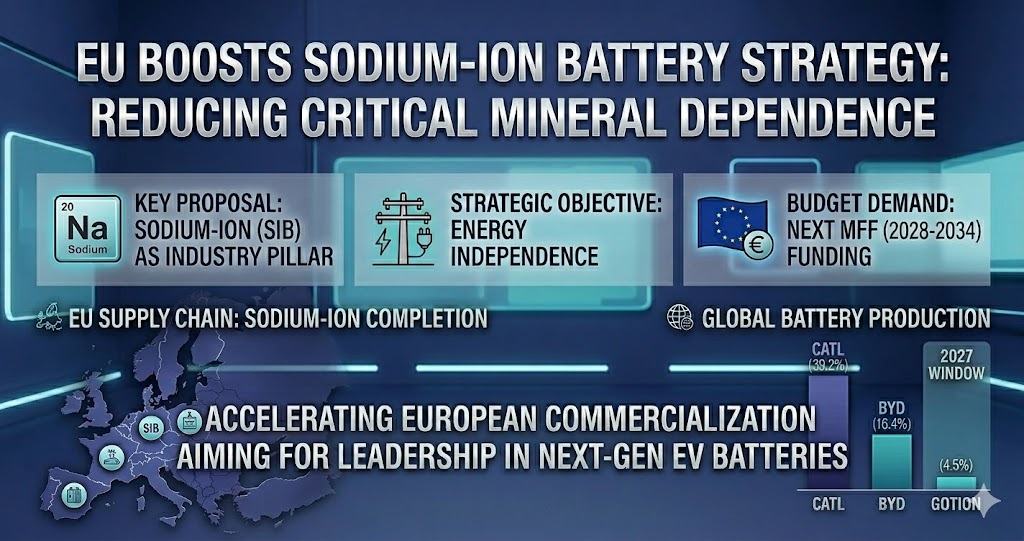
欧州経済社会委員会(EESC)は、次世代の電池技術としてナトリウムイオン電池(SIB)をEUの産業戦略の柱に据えるよう提言しました。リチウムへの依存度を下げ、域内でのサプライチェーンを完結させることが狙いです。
1. 戦略的意義と背景
- 脱リチウム・自給自足: ナトリウム(塩の主成分)は欧州全域で豊富に入手可能であり、中国など特定国への依存を軽減できます。
- 低コストと環境性: リチウムイオン電池に比べ安価で、環境負荷も低い代替技術として期待されています。
- 予算措置の要求: 2028年から2034年までの次期予算枠組み(MFF)において、この分野への重点的な資金投入が求められています。
2. 欧州の主要メーカー・プロジェクト一覧
現在、欧州では複数の企業が商業化に向けた段階に入っています。
| 企業名 | 本拠地 | 特徴・最新動向 |
| Bihar Batteries | スペイン | 2026年にナトリウムイオン電池の市場投入を計画。 |
| Tiamat Energy | フランス | 5分間の急速充電が可能な高出力セル。Stellantis(ステランティス)から出資を受け、5 GWh規模の工場を計画中。 |
| Altris AB | スウェーデン | LFP電池に匹敵する性能。チェコのDraslovkaと提携し、2026年後半にカソード材料の量産開始を予定。 |
| Faradion | 英国 | ナトリウムイオン技術の先駆者。現在はインドのRelianceグループ傘下でグローバル展開を加速。 |
| Phenogy | スイス | ドイツに欧州最大級(約 1 MWh)のナトリウムベース貯蔵システムを設置。 |
| LiNa Energy | 英国 | 低コストな固体ナトリウム電池技術を開発中。 |
| Northvolt | スウェーデン | 2023年末に160 Wh/kgのSIBセルを発表。欧州での大規模量産を目指す。 |
関連情報:技術背景と市場の展望
ナトリウムイオン電池のメリットと課題
- コスト: 生産規模が拡大すれば、セル単価を1 kWhあたり40ドル程度まで下げられる可能性があります(リチウムイオン電池の約半分)。
- 低温特性: マイナス20度以下の極低温下でも性能が落ちにくく、寒冷地での使用に適しています。
- 課題: エネルギー密度(重さあたりの容量)がリチウムイオン電池より低いため、現時点では「小型EV」や「定置型蓄電池(グリッド貯蔵)」が主なターゲットです。
「EVキャズム」救世主としての期待
リチウムの価格変動リスクを抑え、より安価なEVを市場に投入するための鍵として注目されています。フランスのTiamat社には、プジョーやフィアットを擁するStellantis(ステランティス)が戦略的投資を行っており、欧州製安価EVへの搭載が現実味を帯びています。
競合する中国の動向
中国は世界に先駆けてナトリウムイオン電池の商用化を進めており、CATLなどが既に製品を投入しています。欧州がこれに対抗するためには、研究開発だけでなく、ギガファクトリー(大規模工場)への迅速な投資判断が不可欠となっています。
出典:https://www.ess-news.com/2026/03/02/all-european-sodium-ion-battery-manufacturers-at-a-glance/
Europe Places Sodium-Ion Batteries at Heart of Industrial Strategy, Proposing Funding in Next EU Budget
The European Economic and Social Committee (EESC) has recommended making Sodium-Ion Batteries (SIB) a pillar of the EU’s industrial strategy. The goal is to complete a regional supply chain and reduce dependency on lithium.
1. Strategic Significance and Background
- Moving Beyond Lithium and Achieving Self-Sufficiency: Sodium (the main component of salt) is abundantly available across Europe, which can reduce reliance on specific countries like China.
- Low Cost and Environmental Friendliness: SIBs are expected to be a cheaper and more environmentally friendly alternative compared to lithium-ion batteries.
- Request for Budgetary Measures: Heavy investment in this sector is being requested for the next Multiannual Financial Framework (MFF), which runs from 2028 to 2034.
2. Key European Manufacturers and Projects
Several companies in Europe are currently moving toward the commercialization stage.
| Company Name | Headquarters | Key Features and Latest Trends |
| Bihar Batteries | Spain | Plans to bring sodium-ion batteries to market in 2026. |
| Tiamat Energy | France | High-power cells capable of a 5-minute rapid charge. Received investment from Stellantis; planning a 5 GWh scale factory. |
| Altris AB | Sweden | Performance comparable to LFP batteries. Partnered with Draslovka (Czech Republic) to start mass production of cathode materials in late 2026. |
| Faradion | UK | A pioneer in sodium-ion technology. Now owned by India’s Reliance Group, accelerating global expansion. |
| Phenogy | Switzerland | Recently installed Europe’s largest sodium-based storage system (approx. 1 MWh) in Germany. |
| LiNa Energy | UK | Developing low-cost solid-state sodium battery technology. |
| Northvolt | Sweden | Announced a 160 Wh/kg SIB cell in late 2023. Aiming for large-scale mass production in Europe. |
Related Information: Technical Background and Market Outlook
Advantages and Challenges of Sodium-Ion Batteries
- Cost: If production scales up, cell prices could potentially drop to around 40 dollars per kWh (roughly half the cost of lithium-ion batteries).
- Low-Temperature Performance: Performance does not easily degrade even in extreme cold (below minus 20 degrees Celsius), making them suitable for cold climates.
- Challenges: Because their energy density (capacity per weight) is lower than that of lithium-ion batteries, the current primary targets are “small EVs” and “stationary energy storage systems (grid storage).”
Expectations as a Savior for the “EV Chasm”
SIBs are gaining attention as a key to bringing more affordable EVs to market by mitigating the price volatility risks of lithium. Stellantis (the parent company of Peugeot and Fiat) has made a strategic investment in France’s Tiamat, making the installation of these batteries in affordable European-made EVs a realistic possibility.
Trends in Competing China
China is leading the world in the commercialization of sodium-ion batteries, with companies like CATL already releasing products. For Europe to compete, rapid investment decisions for “gigafactories” (large-scale plants) are essential, in addition to continued research and development.

コメント