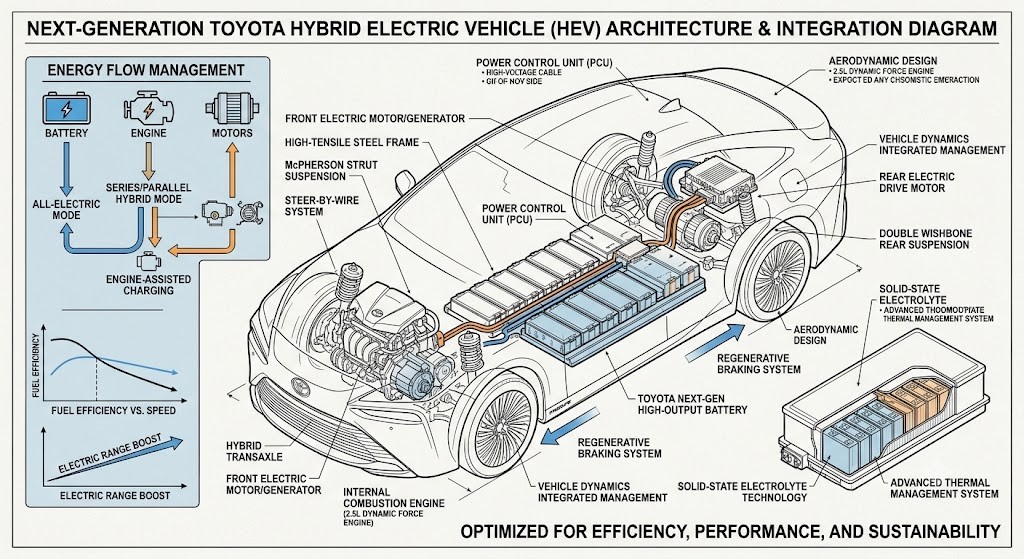
トヨタ自動車は、世界的なハイブリッド車(HV)需要の拡大に対応し、さらなるコスト削減と収益性強化を図るため、次世代電池の国内生産方針を決定しました。
記事の主要ポイントと、理解を深めるための関連情報をまとめた内容は以下の通りです。
発表内容の要点
- 国内での次世代HV電池生産 (2027年 – 2028年)国内のHV用電池生産ライン(60万台規模)を、より高性能で低コストな次世代電池へ切り替えます。これにより、車両1台あたり数万円規模のコスト削減効果が見込まれています。
- トヨタバッテリーでの移行と増強 ( – 2030年)静岡県湖西市にある子会社「トヨタバッテリー」の生産ラインにて、従来のニッケル水素電池からリチウムイオン電池への順次切り替えを行い、あわせて生産能力も増強します。
- 海外(インドネシア)での供給網構築長期計画として、中国の車載電池大手であるCATLがインドネシアにて、トヨタ向けに20万台分のHV用電池を生産する方針です。
- HV世界販売台数の見通しトヨタのHV世界販売台数は、2026年に初めて年間500万台を超える見通しです。
関連情報・背景解説
1. 全方位戦略(マルチパスクアプローチ)におけるHVの重要性
トヨタは電気自動車(EV)だけでなく、HV、プラグインハイブリッド車(PHEV)、燃料電池車(FCV)など多様な選択肢を提供する「マルチパスクアプローチ」を掲げています。世界的なEV需要の急伸が一巡する中、即効性のあるCO2削減手段かつ実用的な選択肢としてHVの評価が世界的に高まっており、トヨタの主要な収益源となっています。
2. トヨタバッテリーの体制強化
トヨタは2024年に、パナソニックホールディングスとの合弁会社であったプライムアースEVエナジーを完全子会社化し、社名を「トヨタバッテリー」に変更しました。HV用電池だけでなくEV用・PHEV用電池を含む供給体制をグループ内で一体管理し、開発・生産のスピードアップとコスト競争力向上を進めています。
3. ニッケル水素からリチウムイオンへの移行
従来のHVでは信頼性が高く安価なニッケル水素電池が長年使用されてきましたが、技術革新によりエネルギー密度が高く軽量なリチウムイオン電池への移行が進んでいます。電池の小型・軽量化により、燃費性能の向上や車内空間の効率化が可能になります。
4. CATLとの連携によるグローバル供給網の確保
世界最大手の電池メーカーであるCATL(寧徳時代新能源科技)との提携を推進し、インドネシアなどの成長市場でも現地調達網を整備することで、グローバルでのHV需要増に迅速に対応する狙いがあります。
出典:https://jp.reuters.com/economy/3S24QIZYWNNDDHZCLWCQVA72W4-2026-08-04/
Toyota to Overhaul Domestic Production Lines for Next-Generation HEV Batteries: 600,000-Unit Scale to Be Introduced by 2028
Toyota Motor Corporation has decided on a domestic production policy for next-generation batteries to meet growing global demand for hybrid electric vehicles (HEVs), aiming to further reduce costs and boost profitability.
The key points of the announcement and relevant background information to deepen understanding are summarized below.
Key Announcement Points
- Domestic Next-Generation HEV Battery Production (2027 – 2028)Toyota will transition its domestic HEV battery production lines (scale of 600,000 units) to higher-performance, lower-cost next-generation batteries. This is expected to yield cost reductions on the order of tens of thousands of yen per vehicle.
- Transition and Expansion at Toyota Battery (- 2030)At the production lines of its subsidiary Toyota Battery in Kosai City, Shizuoka Prefecture, the company will sequentially transition from traditional nickel-metal hydride batteries to lithium-ion batteries while also expanding production capacity.
- Building an Overseas Supply Chain (Indonesia)As part of a long-term plan, major Chinese automotive battery manufacturer CATL is set to produce HEV batteries for 200,000 vehicles for Toyota in Indonesia.
- Global HEV Sales OutlookToyota’s global HEV sales are projected to exceed 5 million units annually for the first time in 2026.
Relevant Information & Background Context
1. Importance of HEVs in the Multi-Pathway Approach
Toyota advocates a “Multi-Pathway Approach” that provides diverse options beyond battery electric vehicles (BEVs), including HEVs, plug-in hybrid electric vehicles (PHEVs), and fuel cell vehicles (FCVs). As the rapid global surge in BEV demand stabilizes, HEVs are gaining global recognition as an immediate and practical means for carbon reduction, serving as a primary revenue generator for Toyota.
2. Strengthening Toyota Battery’s Structure
In 2024, Toyota made Primearth EV Energy—previously a joint venture with Panasonic Holdings—a wholly owned subsidiary and renamed it Toyota Battery. By managing supply systems for HEV, BEV, and PHEV batteries under a unified internal structure, the company is accelerating development and production while enhancing cost competitiveness.
3. Transition from Nickel-Metal Hydride to Lithium-Ion
While reliable and cost-effective nickel-metal hydride batteries were long used in traditional HEVs, technological advances have driven a transition toward higher-energy-density, lightweight lithium-ion batteries. Smaller and lighter batteries directly improve fuel efficiency and optimize interior cabin space.
4. Securing a Global Supply Chain via Partnership with CATL
By advancing its partnership with CATL (Contemporary Amperex Technology Co., Limited), the world’s largest battery manufacturer, Toyota aims to establish local procurement networks in growing markets like Indonesia to respond flexibly to rising global HEV demand.

コメント