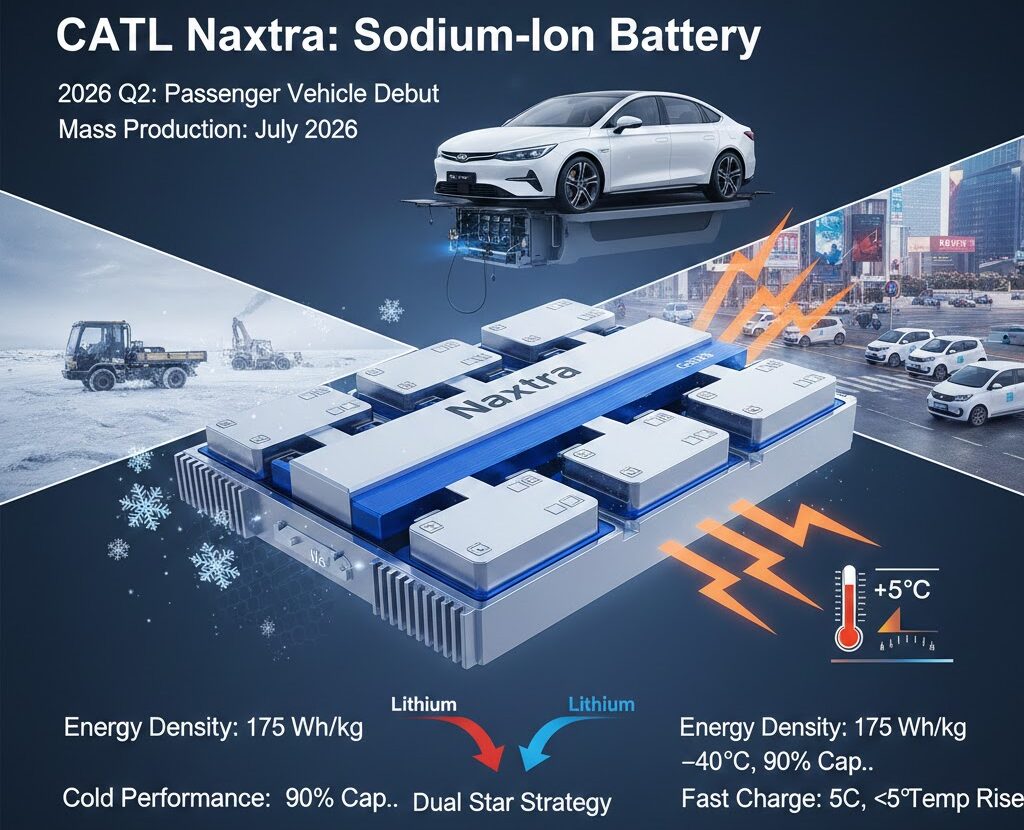
世界最大の電池メーカーであるCATLは、2026年第2四半期(4月から6月)に、乗用車向けとして初となるナトリウムイオン電池の搭載を開始することを明らかにしました。これにより、リチウムに依存しない新しいエネルギー戦略が本格的な量産フェーズへと移行します。
1. 乗用車への初搭載と量産スケジュール
- 最初の搭載モデル: 広州汽車グループのEVブランドであるGAC Aion(アイオン)から発売される予定です。
- 量産開始時期: 2026年7月に本格的な量産が開始されます。
- 対応車種: 通常の充電式車両だけでなく、バッテリー交換(スワップ)モデルにも対応するバージョンが提供されます。
2. 技術的優位性と試験結果
- 驚異的な低温性能: 安徽江淮汽車(JAC)の車両を用いた冬季テストを完了。マイナス40度Cの極寒環境下でも容量の 90% を維持し、マイナス30度Cでの直接充電も可能です。
- 優れた熱管理: 5C(容量の5倍の電流)という高出力充電時でも、温度上昇が5度C以内に抑えられます。これにより、重くて複雑な冷却装置を簡素化でき、車両の軽量化とコストダウンに直結します。
- エネルギー密度: 現在のブランド「Naxtra(ナクストラ)」は 175 Wh/kg を達成しており、これは一般的なLFP(リン酸鉄リチウム)電池に匹敵する水準です。
3. 今後の展望と戦略
- 「デュアルスター」戦略: CATLはナトリウム電池とリチウム電池を併用する体制を構築し、今後3年以内にナトリウム電池の密度をさらに向上させ、コストをLFP以下に引き下げることを目指しています。
- 次世代開発: すでに第3世代のナトリウム電池の開発に着手しており、建設機械や大規模エネルギー貯蔵(ESS)分野への拡大も視野に入れています。
【関連情報】背景と市場の補足
ナトリウムイオン電池が注目される理由
リチウム価格は乱高下しやすく、地政学的なリスクも伴います。一方、ナトリウムは塩などの形で地球上に広く存在するため、安価で安定した供給が可能です。特に「安価な小型EV」や「寒冷地での物流」において、リチウムイオン電池の弱点を補う存在として期待されています。
競合他社の動向
中国ではCATLだけでなく、Hina Battery(中科海鈉)などのスタートアップも台頭しています。Hina Batteryはすでに始動用やエネルギー貯蔵用など4種類のナトリウム電池を量産化しており、中国国内では低価格帯EVや電動二輪車を中心に、リチウムからナトリウムへの置き換えが急速に進みつつあります。
まとめ表:CATL ナトリウムイオン電池の現状と目標
| 項目 | 内容・スペック |
| 主要ブランド | Naxtra (ナクストラ) |
| 初搭載メーカー | GAC Aion (広州汽車アイオン) |
| エネルギー密度 | 175 Wh/kg (LFPと同等水準) |
| 耐寒性能 | マイナス40度Cで容量 90% 維持 |
| 充電性能 | 5C充電レート対応 / マイナス30度Cで充電可能 |
| 今後の目標 | 今後3年でエネルギー密度向上とさらなる低コスト化を実現 |
視点: 「安価で、寒さに強く、燃えにくい」というナトリウム電池の特性は、これまでEV普及が難しかった寒冷地や、低価格車市場における決定打となる可能性があります。
出典:https://cnevpost.com/2026/01/23/catl-to-begin-fitting-sodium-batteries-passenger-cars-q2/
Contemporary Amperex Technology Co., Ltd. (CATL), the world’s largest battery manufacturer, has revealed that it will begin installing sodium-ion batteries in passenger vehicles for the first time in the second quarter (April–June) of 2026. This marks the transition of a new, lithium-independent energy strategy into a full-scale mass production phase.
1. First Passenger Vehicle Launch and Production Schedule
- First Model: The batteries are scheduled to debut in a model from GAC Aion, the electric vehicle brand of the GAC Group.
- Mass Production: Full-scale mass production is set to begin in July 2026.
- Vehicle Compatibility: Versions will be available not only for standard plug-in vehicles but also for battery-swapping (swap) models.
2. Technical Advantages and Test Results
This technology overcomes the typical weaknesses of conventional batteries in extreme conditions.
- Extraordinary Cold Resistance: Winter testing was successfully completed using vehicles from JAC Group. The battery maintains 90% of its usable capacity even at -40 degrees C and supports direct charging at temperatures as low as -30 degrees C.
- Superior Thermal Management: Even during high-output 5C charging (charging at five times the battery’s capacity), the temperature rise is kept within 5 degrees C. This simplifies the cooling system, leading to lighter vehicles and lower costs.
- Energy Density: The current “Naxtra” brand has achieved 175 Wh/kg, a level comparable to standard LFP (Lithium Iron Phosphate) batteries.
3. Future Outlook and Strategy
- “Dual-Star” Strategy: CATL is building a system that utilizes both sodium and lithium batteries in parallel. The goal is to further increase sodium-ion density and reduce costs to below those of LFP within the next three years.
- Next-Generation Development: Work has already begun on third-generation sodium-ion batteries, with plans to expand their use into construction machinery and large-scale energy storage systems (ESS).
[Related Information] Background and Market Context
Why Sodium-Ion Batteries are Gaining Attention
Lithium prices are prone to high volatility and geopolitical risks. In contrast, sodium is abundant worldwide in forms like salt, ensuring a cheap and stable supply. These batteries are expected to be a vital supplement to lithium-ion, particularly for affordable compact EVs and logistics in cold regions.
Competitor Trends
CATL is not alone; Chinese startups like Hina Battery are also rising. Hina has already mass-produced four types of sodium batteries for starter systems and energy storage. Across China, a rapid shift from lithium to sodium is underway, centered on budget EVs and electric two-wheelers.
Summary Table: CATL Sodium-Ion Battery Status and Goals
| Item | Details / Specifications |
| Main Brand | Naxtra |
| First Manufacturer | GAC Aion |
| Energy Density | 175 Wh/kg (Comparable to LFP) |
| Cold Resistance | Maintains 90% capacity at -40 degrees C |
| Charging Performance | Supports 5C rate / Chargeable at -30 degrees C |
| Future Goal | Further density increase and cost reduction within 3 years |
Perspective: The “cheap, cold-resistant, and flame-retardant” nature of sodium batteries could be the decisive factor for EV adoption in cold climates and low-price market segments where lithium-ion batteries have previously struggled.
コメント