次世代EV(電気自動車)やエネルギー貯蔵システム(ESS)の性能を大きく左右する「リチウムイオン電池」や「次世代電池」。その中でも、充放電の効率や安全性を極める鍵となるのが「電解液(電解質)」の配合最適化です。しかし、無数の材料・添加剤の組み合わせから最適な選定を行うには、膨大な実験データと文献調査が必要とされ、開発のボトルネックとなっていました。
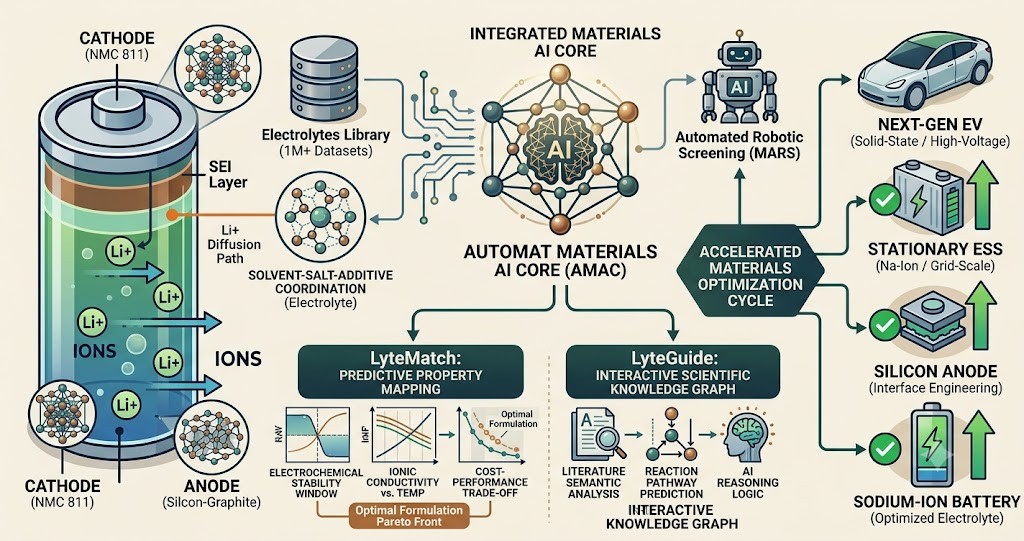
こうした課題に対し、米国カリフォルニア州のAI材料イノベーション企業 Automat Solutions(オートマティック・ソリューションズ)は、AIを活用した2つの新プラットフォーム「LyteMatch」と「LyteGuide」を同時リリースしました。
これらを統合したワークスペースにより、電解質の検索・配合評価から科学的Q&A、データ分析までを一気通貫で支援し、電池開発のスピードを劇的に向上させることが期待されています。
以下に、発表されたサービスの詳細と技術的背景をまとめました。
1. 新規リリースされた2つのプラットフォーム概要
Automat Solutions社が提供するワークスペースは、用途選定と研究支援を担う2つのAIプラットフォームで構成されています。
① バッテリー電解液選定プラットフォーム「LyteMatch」
用途や目標スペックに合わせた最適電解液の検索・比較ツール。
- 精細なフィルタリング:化学組成、用途、動作温度、コスト、納期などで絞り込みが可能。
- 多角的な性能比較:イオン伝導率、電気化学的安定性、粘度、熱安定性、安全性などを一覧評価。
- 根拠の可視化:「なぜその配合が効くのか」を示す背景データや研究論文を提示し、納得感のある意思決定を支援。
② 電池研究支援プラットフォーム「LyteGuide」
電気化学・電池材料に特化したAIアシスタント機能。自然言語による対話が可能。
- インタラクティブな文献・文書分析:論文検索、ドキュメント解析、材料推奨を対話型で実行。
- 化学特有のモジュール:「シリコン負極」「ナトリウムイオン」「リチウム金属」「リチウムイオン」などの分野別専用モジュールを搭載。
- 課題解決型Q&A:電解液の安全性向上、界面安定性の維持、配合最適化などの技術課題に即座に回答。
2. 【関連情報】技術背景と市場における意義(補足情報)
① なぜ今「電解液×AI」なのか?(開発背景)
電解液は、溶媒・電解質塩・各種添加剤の組み合わせが数百万~数億通りにも及びます。従来の「研究者の勘と経験に頼る手作業実験」では、開発に数年レベルの期間がかかっていました。AIとデータベースを活用して最適な配合を予測する本アプローチは、開発コストと期間を劇的に短縮します。
② 次世代電池(シリコン負極・ナトリウムイオン・リチウム金属)への対応
既存のリチウムイオン電池だけでなく、高容量な「シリコン負極」や、リチウム不使用の「ナトリウムイオン電池」、次世代の「リチウム金属電池」は、従来の電解液では副反応や劣化が激しいという技術課題を抱えています。各化学特性に合わせた専用モジュールを提供する「LyteGuide」は、次世代電池実用化の強い後押しとなります。
③ Automat Solutions社の強み(自律型ロボット実験との連携)
同社は単なるソフトウェア企業ではなく、特許取得済みの「材料AIロボット駆動システム(MARS)」とパイロット生産ラインを保有しています。 デジタル上のAI予測(LyteMatch/LyteGuide)と、ロボットによる高スループット(多量・高速)な自動実験・スケールアップ製造を連携させることで、「コンセプト立案から実証・量産まで」を最短距離で結ぶエコシステムを構築しています。
3. 今後の展開と利用方法
- 導入対象:電池研究機関、大学、スタートアップ、大手電池・自動車メーカーなど。
- 利用形態:パートナー企業向けの評価・導入デモ、アクセスリクエストを受付中(同社公式サイト:www.automatsoln.com)。
- 今後の展望:AIと自動ロボット実験施設を統合した「完全に自律化した集中型材料開発プラットフォーム」の実現を目指す。
From Electrolyte Selection to Literature Analysis: Automat Releases an Integrated AI Platform for Battery Researchers
Lithium-ion batteries and next-generation batteries significantly dictate the performance of next-generation electric vehicles (EVs) and energy storage systems (ESS). Among their components, optimizing the formulation of the liquid electrolyte (electrolyte) is key to maximizing charge-discharge efficiency and safety. However, finding the optimal choice from countless combinations of materials and additives requires vast amounts of experimental data and literature research, which has long been a bottleneck in development.
To address these challenges, Automat Solutions, Inc.—an AI-powered materials innovation company based in California, USA—has simultaneously released two new AI-driven platforms: LyteMatch and LyteGuide.
By integrating these platforms into a single workspace, the system provides end-to-end support ranging from electrolyte searches and formulation evaluations to scientific Q&A and data analysis, which is expected to dramatically accelerate the pace of battery development.
Below is a summary of the details and technical background of the announced services.
1. Overview of the Two Newly Released Platforms
The workspace provided by Automat Solutions consists of two AI platforms that handle application selection and research support, respectively.
(1) Battery Electrolyte Selection Platform: “LyteMatch”
A search and comparison tool for finding optimal electrolytes tailored to specific applications and target performance specifications.
- Precise Filtering: Enables filtering by chemical composition, application, operating temperature, cost, lead time, and more.
- Multifaceted Performance Comparison: Allows side-by-side evaluation of key performance metrics such as ionic conductivity, electrochemical stability, viscosity, thermal stability, and safety.
- Visualization of Rationale: Displays background data and research papers explaining why a particular formulation achieves its performance, supporting confident and data-backed decision-making.
(2) Battery Research Support Platform: “LyteGuide”
An AI assistant functionality specifically designed for electrochemistry and battery materials, enabling natural language interactions.
- Interactive Literature and Document Analysis: Interactively executes paper searches, document analysis, and material recommendations.
- Chemistry-Specific Modules: Features dedicated modules tailored to specific fields, including silicon anodes, sodium-ion, lithium metal, and lithium-ion batteries.
- Problem-Solving Q&A: Delivers instant answers to technical challenges such as improving electrolyte safety, maintaining interfacial stability, and optimizing formulations.
2. Technical Background and Market Significance (Supplementary Information)
(1) Why “Electrolytes × AI” Now? (Development Background)
The potential combinations of solvents, electrolyte salts, and various additives reach into the millions or even hundreds of millions. Traditional manual experimentation relying on researchers’ intuition and experience required years of development time. Leveraging AI and databases to predict optimal formulations dramatically reduces development costs and timelines.
(2) Addressing Next-Generation Batteries (Silicon Anodes, Sodium-Ion, Lithium Metal)
Beyond existing lithium-ion batteries, high-capacity silicon anodes, lithium-free sodium-ion batteries, and next-generation lithium metal batteries face severe technical hurdles with conventional electrolytes, such as harsh side reactions and rapid degradation. Providing specialized modules tailored to each chemistry, “LyteGuide” serves as a powerful catalyst for bringing next-generation batteries to practical application.
(3) Automat Solutions’ Core Strength (Integration with Autonomous Robotic Experiments)
Automat Solutions is more than just a software company; it holds a patented Material AI Robot Driven System (MARS) alongside existing pilot production lines. By bridging digital AI predictions (LyteMatch/LyteGuide) with high-throughput (high-volume, high-speed) automated robotic experiments and scale-up manufacturing, the company has built an ecosystem that connects concept formulation to validation and mass production via the shortest possible path.
3. Future Outlook and Availability
- Target Users: Battery research institutes, universities, startups, and major battery and automotive manufacturers.
- Availability: Evaluation and onboarding plans are currently available for partner companies, including demo bookings and access requests via the official website (www.automatsoln.com).
- Future Vision: Aims to realize a fully autonomous, centralized materials development platform that integrates AI with automated robotic experimental facilities.

コメント