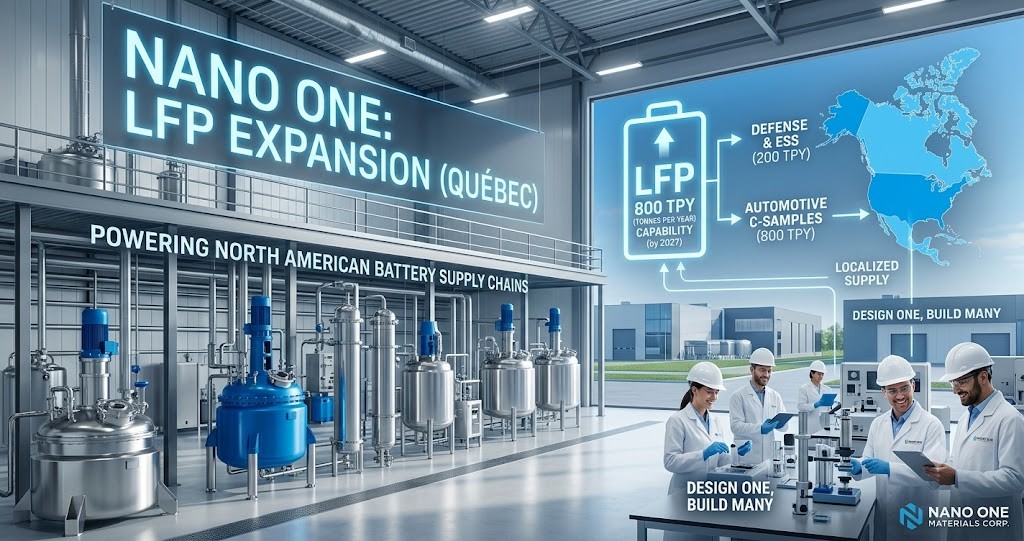
北米における電池材料の自給自足(サプライチェーン構築)への関心が高まる中、カナダの電池材料技術企業であるNano One Materials(ナノワン・マテリアルズ)社が、ケベック州キャンディアック工場におけるLFP(リン酸鉄リチウム)正極材の生産能力拡張プロジェクトの最新進捗を発表しました。
以下に発表内容のまとめと、背景・関連情報を整理して解説します。
発表内容の要点まとめ
1. 拡張工程の進捗と設備調達
- 設計の進歩: 2026年7月中旬時点で、詳細設計(エンジニアリング作業)の85%が完了しており、予定通り・予算内でプロジェクトが推移しています。
- 北米・欧州重視の調達: 機器の発注は2026年3月に完了済み。調達コストベースでプロジェクト機器の約95%(知的財産権に関わる機器は100%)をカナダ、米国、EUから調達しています。
- 稼働予定: 拡張された生産ラインの稼働開始は2027年前半を予定しています。
2. 工場の生産能力と役割の明確化
拡張完了により、キャンディアック工場全体の生産能力は現在の年間約200トンから年間約800トンへと増強されます。
- 年間約200トンライン(既存): 防衛やエネルギー貯蔵(ESS)分野の顧客向けに小ロット供給を行い、製品・プロセスの改善やサンプル検証をサポート。
- 年間約800トンライン(拡張実証ライン): 2027年前半に稼働予定。自動車メーカー等の大規模顧客に必要な「Cサンプル(量産品質確認用の大量サンプル)」の製造・認定を可能にし、本格的な引き取り契約(オフテイク)へと繋げます。
3. ビジネスモデル:「Design One, Build Many」
Nano Oneは自社での大量生産だけでなく、独自の効率的な正極材製造技術を他社へライセンス供与・合弁事業化するビジネスモデルを展開しています。 キャンディアック工場は、このモデルを実現するための「技術実証・運用研修施設」として機能し、ライセンス導入企業の立ち上げリスクとコストを削減します。
関連情報・補足解説
1. Nano One(ナノワン)社と独自の「One-Pot」プロセス
Nano Oneは、リチウムイオン電池の正極活物質(CAM)製造プロセス革新を目指すカナダのバイオ・素材ベンチャーです。同社が特許を持つ「One-Pot(ワンポット)プロセス」は、従来は別々に行われていた前駆体形成と焼成プロセスを単一の反応器で統合する技術です。これにより、以下の大きなメリットが得られます。
- 工程とエネルギーの削減: 製造工程が削減され、設備投資やエネルギー消費を削減。
- 環境負荷の低減: 塩類などの有害な副産物や廃水を出さないクリーンな製造が可能。
2. なぜ今「北米でのLFP生産」が重要なのか?
従来、LFP(リン酸鉄リチウム)電池は中国企業が市場の大部分を支配してきました。しかし、米国のインフレ抑制法(IRA)などをはじめとする地域サプライチェーンの保護政策や地政学的リスクへの対応として、北米や欧州現地でのLFPおよび正極材の製造拠点確保が急務となっています。 Nano Oneが機器調達の95%以上をカナダ・米国・EUから行っている点も、中国依存を脱却した強靭なサプライチェーンをアピールする強力な要素となっています。
3. グローバル大手企業との提携関係
Nano Oneの技術は世界の有力企業から高く評価されています。日本の住友金属鉱山や、資源大手のリオ・ティント(Rio Tinto)、世界的プラント建設大手のWorley(ウォーレイ)などと戦略的パートナーシップを結んでおり、カナダ・米国政府等からも多額の資金援助を受けてプロジェクトを推進しています。
Could This Be the Key to Reducing Dependency on China? The Full Picture of Canada’s Nano One 800-Tonne LFP Cathode Capacity Expansion
Amid growing interest in achieving battery material self-sufficiency and supply chain resilience in North America, Canadian battery material technology firm Nano One Materials Corp. (“Nano One”) has announced the latest progress on its Lithium Iron Phosphate (LFP) cathode active material (CAM) capacity expansion project at its Candiac facility in Quebec.
Below is a summary of the announcement along with relevant background information to provide a deeper understanding.
Key Highlights of the Announcement
1. Expansion Progress and Equipment Procurement
- Engineering Progress: As of mid-July 2026, detailed engineering work is 85% complete, and the project is proceeding on schedule and on budget.
- North America/EU-Focused Procurement: Orders for major equipment were completed in March 2026. Measured by procurement cost, approximately 95% of project equipment (and 100% of IP-related equipment) is sourced from Canada, the US, and the EU.
- Target Operation Date: Commissioning of the newly expanded production line is scheduled for the first half of 2027.
2. Plant Capacity and Role Clarification
Upon completion, total production capacity at the Candiac facility will increase from the current level of approximately 200 tonnes per annum (tpa) to approximately 800 tpa.
- ~200 tpa Line (Existing): Supports small-volume off-take and sample validation for defense and energy storage system (ESS) customers, enabling continuous product and process improvements.
- ~800 tpa Line (Expanded Demonstration Line): Scheduled to begin operations in the first half of 2027. This expansion will enable the production and qualification of C-samples (large-volume samples for production readiness verification) required by major customers, paving the way for large-scale off-take agreements.
3. Business Model: “Design One, Build Many”
Rather than relying solely on in-house mass production, Nano One employs a business model that licenses its proprietary, highly efficient CAM manufacturing technology to third parties and enters into joint ventures. The Candiac facility serves as a technology demonstration and operational training hub for this model, reducing startup risks and capital costs for licensing partners.
Related Information and Context
1. Nano One and Its Proprietary “One-Pot” Process
Nano One is a Canadian process technology innovator focused on revolutionizing the manufacturing process for lithium-ion battery cathode active materials (CAM). The company’s patented One-Pot process integrates precursor formation and calcination into a single reactor step, processes that were traditionally performed separately. This delivers major benefits:
- Process and Energy Reduction: Cuts down on manufacturing steps, reducing capital expenditure and energy consumption.
- Reduced Environmental Footprint: Enables cleaner manufacturing without producing harmful chemical byproducts, such as sodium sulfate salts, or wastewater.
2. Why Localized North American LFP Production Matters
LFP (Lithium Iron Phosphate) batteries have historically been dominated by Chinese suppliers. However, driven by regional supply chain policies such as the US Inflation Reduction Act (IRA) and geopolitical risks, securing localized LFP and cathode material manufacturing capacity in North America and Europe has become an urgent priority. Nano One sourcing over 95% of its equipment from Canada, the US, and the EU serves as a strong advantage in building a resilient supply chain independent of China.
3. Partnerships with Global Industry Leaders
Nano One’s technology is highly regarded by major industry players worldwide. The company has established strategic partnerships with leaders such as Sumitomo Metal Mining in Japan, mining giant Rio Tinto, and global engineering firm Worley, alongside financial support from the Canadian and US governments.

コメント