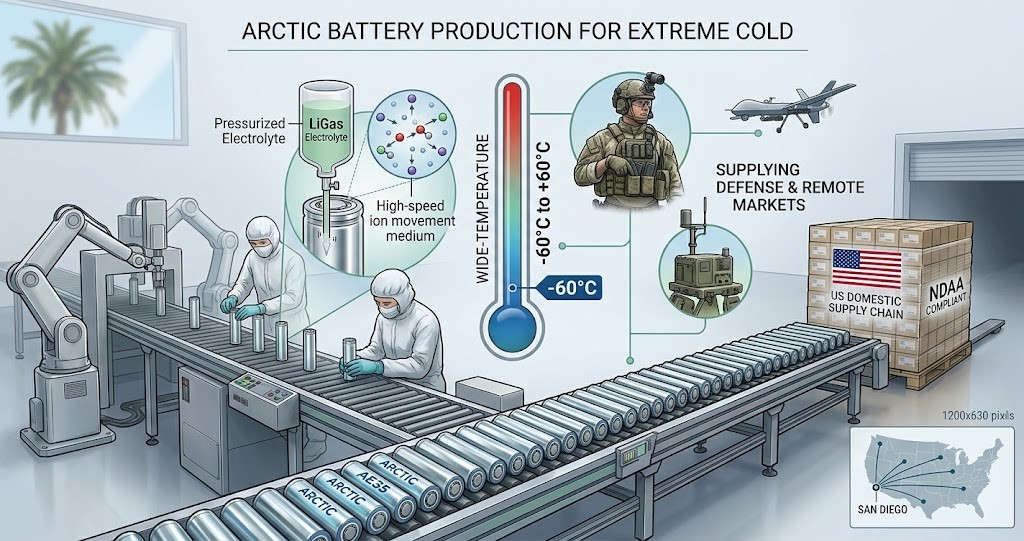
本記事は、米カリフォルニア州サンディエゴに拠点を置くSouth 8 Technologies(サウス8テクノロジーズ)が、極寒環境に対応する特殊なリチウムイオン電池の半自動製造ラインを立ち上げ、量産・供給体制を強化したことを伝える発表です。以下にニュースの概要と関連技術・安全面の背景をまとめています。
主な発表内容
- 新製造ラインの稼働 サンディエゴ工場にて半自動セル製造ラインの運用を開始しました。2027年までに年間5 MWh規模の円筒形電池セル生産能力を目指します。
- 製品仕様と対応温度 対象製品は18650規格の「ARCTIC AE35」セルです。独自の液化ガス電解液「LiGas」を採用しており、-60 ℃ から +60 ℃という非常に広い温度範囲での安定した充放電が可能です。
- 防衛・特殊市場向け供給 主要顧客である3ME TechnologyやGalvionをはじめとする防衛関連企業向けにセルを供給します。無人機システム、通信機器、リモートセンシング、兵士用電源などへの活用が想定されています。
- サプライチェーンと国防規制への適合 懸念外国企業(FEOC)への依存を排除した部材調達ルートを確保しています。米国防権限法(NDAA)第842条などの調達規制をクリアし、リスクの少ない国内供給網を確立しています。
補足・関連情報
1. 「LiGas」技術と低温特性のしくみ
一般的なリチウムイオン電池に使われる液体電解液は、0 ℃ 以下になると粘度が増してイオン導電性が低下し、-20 ℃ や -40 ℃ といった極寒地では急速に電力を失うか動作不能に陥ります。
South 8が開発した「LiGas」は、常圧ではガス(気体)として存在する物質を圧力をかけて液化した電解液です。低温下でも固化・高粘度化しにくく蒸気圧が高いため、-60 ℃ という過酷な環境下でも高い電池性能と導電性を維持できる点が特徴です。
2. 安全性(熱暴走・火災リスクの低減)の優位性
液化ガス電解液は極寒地対応だけでなく、安全性面でも大きなメリットを持っています。
一般的なリチウムイオン電池で熱暴走や内部ショートが発生すると、有機液体電解液が燃焼して激しい火災を起こすリスクがあります。一方、LiGas電解液は万が一セルが破損・穿孔した際に、内部圧力によってガスが瞬時に外部へ拡散・蒸発するため、可燃性液体の残留が抑制されます。米陸軍による試験では、火災時の燃焼継続時間が著しく短いことが示されており、防衛用途における火災安全性の面でも高く評価されています。
Batteries Operable Even at Minus 60 ℃ ! South 8’s Liquefied Gas Electrolyte Technology Enters Mass Production Phase
This article announces that South 8 Technologies, based in San Diego, California, USA, has launched a semi-automated manufacturing line for specialized lithium-ion batteries capable of operating in extreme cold environments, strengthening its mass production and supply capabilities. Below is a summary of the news along with the relevant technical and safety background.
Main Announcement Points
- Operation of New Manufacturing Line Operation of a semi-automated cell production line has commenced at the San Diego facility. The company aims for an annual production capacity of 5 MWh in cylindrical battery cells by 2027.
- Product Specifications and Operating Temperature Range The featured product is the 18650-format ARCTIC AE35 cell. Utilizing its proprietary liquefied gas electrolyte, LiGas, the cell enables stable charging and discharging over an extremely wide temperature range from -60 deg C to +60 deg C.
- Supply for Defense and Specialty Markets Cells will be supplied to defense-related customers, including key partners 3ME Technology and Galvion. Applications are expected to include unmanned aerial systems, communication equipment, remote sensing, and soldier power supplies.
- Supply Chain and Defense Regulation Compliance The company has secured procurement routes that eliminate reliance on Foreign Entities of Concern (FEOC). It clears procurement regulations such as Section 842 of the US National Defense Authorization Act (NDAA), establishing a low-risk domestic supply chain.
Supplementary and Related Information
- How “LiGas” Technology and Low-Temperature Performance Work Conventional liquid electrolytes used in standard lithium-ion batteries experience increased viscosity and decreased ionic conductivity below 0 deg C, leading to rapid power loss or complete failure in extreme cold environments such as -20 deg C or -40 deg C.
LiGas, developed by South 8, is an electrolyte created by pressurizing a substance that exists as a gas under ambient pressure to turn it into a liquid. Because it resists solidification and high viscosity even at low temperatures and maintains high vapor pressure, it retains high battery performance and conductivity even under harsh conditions as low as -60 deg C.
- Safety Advantages (Reduction of Thermal Runaway and Fire Risks) Liquefied gas electrolytes offer significant advantages not only in extreme cold performance but also in terms of safety.
When thermal runaway or internal short circuits occur in conventional lithium-ion batteries, the organic liquid electrolyte poses a risk of catching fire and causing severe blazes. In contrast, if a LiGas cell is damaged or punctured, the internal pressure causes the gas to instantly vent and evaporate into the atmosphere, minimizing residual flammable liquids. Tests by the US Army have shown a significantly shorter fire burn duration, earning high marks for fire safety in defense applications.
コメント