中国のEV(電気自動車)および車載バッテリー業界は、急速な市場拡大の一方で、激しい競争による品質管理の歪みが表面化しつつあります。今回のGAC Aion(広汽アイオン)と大手バッテリーメーカーCALB(中創新航)を巡る大規模なバッテリー不具合問題は、業界全体における安全性の担保と検証サイクルのあり方に大きな一歩を投げかけています。
本記事の要点に、中国EV市場の競争環境や新たな規制動向などの関連情報を付け加えて分かりやすくまとめました。
1. 不具合の概要とユーザーが直面した状況
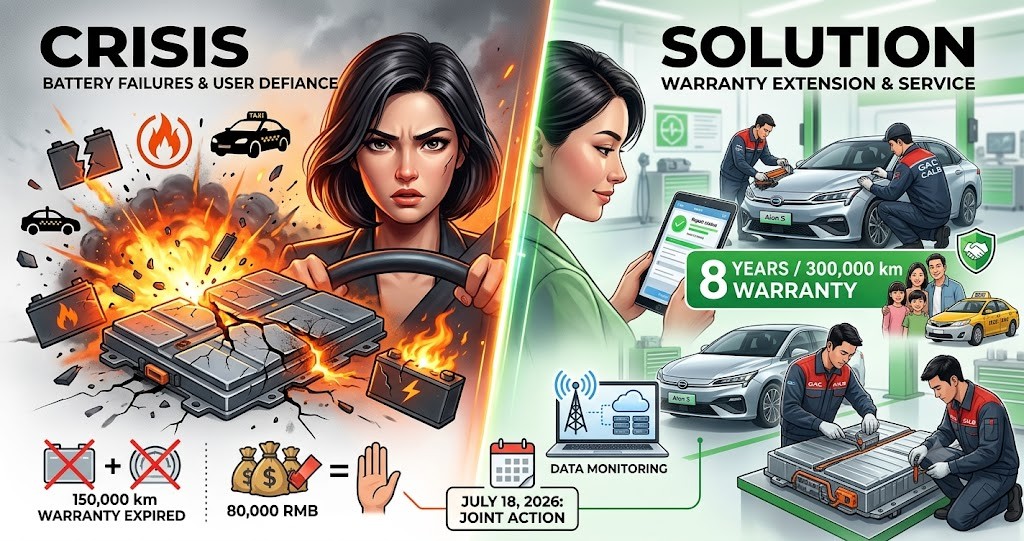
GAC Aionのセダン型EV「Aion S」において、CALB製の177Ah(アンペアアワー)リン酸鉄リチウム(LFP)バッテリーセルを搭載した車両の不具合報告が急増しています。
- 主な症状: バッテリーセルの膨張、液漏れ、絶縁不良、航続距離の大幅な不足など。第三者機関の検査により、外部衝撃ではなく「内部の製造上の欠陥」が原因と確認されています。
- 発生のタイミング: 走行距離が15万キロメートルから30万キロメートルの時間帯に集中しています。これは主にタクシーやネット配車などの商用車として過酷に酷使された車両です。
- 当初のアフターサービス問題: 当初のメーカー保証が「15万キロメートル」だったため、多くのユーザーが保証切れを理由に無償対応を拒否され、バッテリー交換費用として8万元(約11,811ドル)の自己負担を迫られるなど、責任転嫁の動きが世論の反発を招きました。
2. GAC AionとCALBによる救済措置の発表
高まる批判や国営メディア(新華社通信)による報道を受け、両社は2026年7月18日に異例の共同・個別声明を発表し、対応に乗り出しました。
- GAC Aionの対応: 対象となる商用利用車両のバッテリー保証期間を、従来の「8年または15万キロメートル」から「8年または30万キロメートル」へ倍増することを決定しました。また、遠隔でのバッテリーデータ監視を強化し、異常検知時の無料修理・交換を約束しています。
- CALBの対応: 4S店(正規ディーラー)を通じて該当車両のメンテナンス作業を直ちに開始。製品ライフサイクル全体に責任を持つとし、自社のサービス拠点でも直接、無料の点検・修理を受け付けると発表しました。
3. 【関連情報・背景分析】なぜこれほどの欠陥が発生したのか?
現場の技術者などの指摘から、今回の問題は単一企業のミスではなく、中国のEV・バッテリー業界全体の構造的な課題、いわゆる「過剰な進化(内巻:インボリューション)」が背景にあるとみられています。
背景1:検証テストサイクルの極端な短縮
中国市場では次々と新しいEVやバッテリーのモデルが投入され、凄まじいスピード競争が行われています。メーカーが市場シェア獲得を焦るあまり、本来であれば数年をかけるべき長期間の充放電や耐久性の「検証テスト(バリデーション)」の時間を大幅に短縮していた可能性が指摘されています。その結果、15万キロメートルを超えたあたりから潜在的な設計・製造ミスが表面化した形です。
背景2:商用LFPバッテリーへの負荷
LFP(リン酸鉄リチウム)バッテリーはコストが安く、寿命(サイクル回数)が長いことから商用EVに好まれますが、日々の急速充電の繰り返しや過酷な稼働環境下では、わずかな製造上のバラつき(セルの不均一さ)が致命的な膨張や液漏れに繋がりやすいという特性があります。
4. 【関連情報】相次ぐトラブルと「過去最も厳しい」新国家基準の発効
バッテリーを巡る大規模トラブルは今回が初めてではなく、業界全体で規制強化が進んでいます。
- 過去の類似事例: 2025年末には、吉利(Geely)傘下のVremtが、Sunwoda(欣旺達)製のセル不備を理由に23.1億元の損害賠償を請求。その後、高級EVブランドのZeekr(ジーカー)が「Zeekr 001」を38,277台リコールし、バッテリーを無償交換する事態に発展しています。
- 2026年7月1日発効の新国家基準: まさにこのトラブルの最中である2026年7月1日、中国で「これまでで最も厳しい」とされる2つの電力用バッテリーの強制的な国家基準が発効しました。新基準では、万が一バッテリーセルが熱暴走を起こした場合でも、「車両から発火も爆発も起こさない」ことが義務付けられています。ただし、これは新車(新型車)の型式認証向けであり、すでに走行している既存車両の品質担保はメーカーの保証姿勢に委ねられています。
5. まとめと今後の展望
CALBは2026年に入り、世界市場シェア4位(設備容量23.8GWh)、中国国内市場シェア3位(6.82%)へと急成長を遂げている最中でした。それだけに、今回の広範な欠陥問題は同社のブランドイメージや今後の受注活動に冷や水を浴びせる可能性があります。
中国政府が安全性に関する国家基準を厳格化する中、メーカー各社は「低価格・短納期」の競争から、長期間の信頼性を担保する「品質重視」の姿勢への転換を迫られています。
出典:https://cnevpost.com/2026/07/18/calb-in-spotlight-gac-aion-s-battery-cell-defects/
[Quality Issues at Chinese Battery Giant CALB] Widespread Cell Defects Erupt in “Aion S” Vehicles
While China’s EV (electric vehicle) and power battery industries enjoy rapid market expansion, strains in quality control due to fierce competition are beginning to surface. The recent large-scale battery malfunction issue involving GAC Aion and major battery manufacturer CALB presents a significant case study regarding safety assurance and the integrity of validation cycles across the entire industry. This report provides a clear, comprehensive summary of the key points, supplemented with relevant contextual information such as the competitive landscape of the Chinese EV market and new regulatory trends.
1. Overview of Defects and the Situation Faced by Users
Complaints regarding malfunctions have been surging in GAC Aion’s sedan-type EV, the “Aion S,” equipped with CALB-manufactured 177Ah (ampere-hour) lithium iron phosphate (LFP) battery cells.
- Main Symptoms: Cell swelling, leakage, insulation failure, and severe driving range deficiencies, among other issues. Third-party inspection reports have confirmed that the cause of the malfunctions stems from “internal manufacturing defects” rather than external impacts or accidents.
- Timing of Occurrence: The issues are heavily concentrated in vehicles with mileage ranging between 150,000 kilometers and 300,000 kilometers. These are predominantly commercial vehicles, such as taxis and ride-hailing cars, that operate under grueling conditions.
- Initial After-Sales Issues: Because the manufacturer’s original warranty was capped at 150,000 kilometers, many users were initially denied free service under the pretext of expired warranties. Being asked to pay 80,000 RMB (approx. 11,811 USD) out of pocket for a full battery pack replacement led to a perception of buck-passing, triggering a severe public backlash.
2. Announcement of Remedial Actions by GAC Aion and CALB
In the face of mounting criticism and coverage by state media (Xinhua News Agency), both companies released unusual joint and individual statements on July 18, 2026, to address the crisis.
- Response from GAC Aion: The company decided to double the battery warranty period for affected commercially operated vehicles from the original “8 years or 150,000 kilometers” to “8 years or 300,000 kilometers”. It also promised to enhance remote battery data monitoring and proactively contact users to offer free inspections, repairs, or full battery pack replacements if any abnormalities are detected.
- Response from CALB: The manufacturer immediately initiated targeted maintenance work through GAC Aion’s 4S dealership stores. Committing to take full responsibility for product quality throughout its entire lifecycle, CALB announced that vehicle owners can also visit its service outlets directly for free inspection and repair services.
3. Contextual Analysis: Why Did Such Extensive Defects Occur?
According to insights from field technicians and experts, this problem is not merely an isolated mistake by a single company, but rather a reflection of a structural challenge within China’s EV and battery industries—often referred to as hyper-competition or “involution” (neijuan).
- Background 1: Extreme Reduction of Validation Test Cycles New EV and battery models are constantly being introduced to the Chinese market, driving an intense race for speed. Observers point out that in their rush to capture market share, manufacturers may have drastically shortened the duration of long-term charge-discharge and durability “validation testing” that should normally take several years. Consequently, latent design and manufacturing flaws began surfacing once vehicles crossed the 150,000-kilometer mark.
- Background 2: Heavy Load on Commercial LFP Batteries LFP batteries are favored for commercial EVs due to their low cost and long cycle life. However, under relentless daily fast charging and demanding operating environments, even minor manufacturing variances (cell inconsistency) can easily lead to critical swelling and leakage.
4. Heightened Industry Incidents and the Launch of Strict National Standards
This massive battery controversy is not an isolated event, and regulatory tightening has been accelerating across the industry.
- Past Similar Cases: At the end of 2025, Geely-owned Vremt filed a 2.31 billion RMB compensation claim against Sunwoda due to manufacturing flaws in delivered cells. Following this, Geely’s premium EV brand, Zeekr, recalled 38,277 units of the Zeekr 001 to replace their power battery assemblies free of charge.
- New National Standards Effective July 1, 2026: In the midst of these ongoing issues, two mandatory national standards for power batteries—described by the industry as “the strictest ever”—officially took effect on July 1, 2026. The new criteria mandate that “no fire or explosion shall occur from the vehicle” even if a single battery cell experiences thermal runaway. However, this applies to new vehicle models seeking type certification; the quality assurance of existing vehicles already on the road still relies heavily on individual manufacturers’ warranty policies.
5. Summary and Future Outlook
CALB has been on a trajectory of rapid growth in 2026, ranking 4th globally in market share (with an installed capacity of 23.8GWh) and 3rd domestically in China (6.82% market share) during the first half of the year. Because of this rapid ascent, this widespread defect scandal threatens to throw cold water on the company’s brand image and future order acquisitions. As the Chinese government tightens national safety standards, battery manufacturers are being pushed to shift their focus away from a pure “low cost, fast delivery” race toward a “quality-first” mindset that guarantees long-term reliability.
コメント