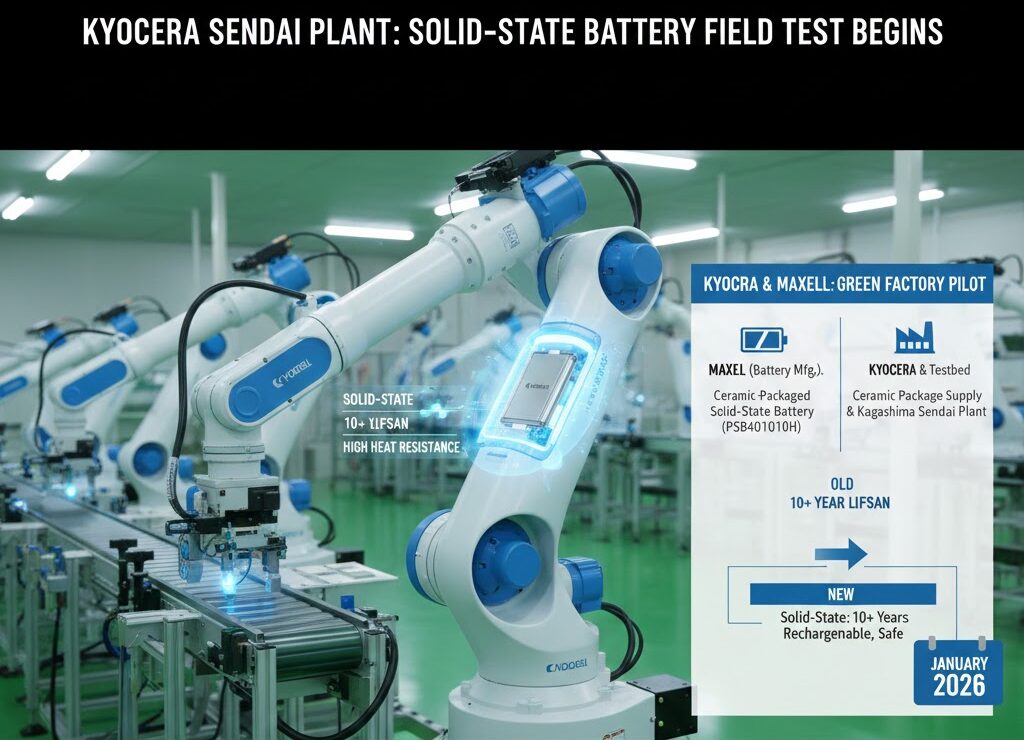
京セラ鹿児島川内工場にて、マクセル製の全固体電池を用いた電源モジュールを産業用ロボットに搭載し、実現場での運用試験が開始されました。
1. 共同プロジェクトの役割分担
今回の取り組みは、両社の強みが合致した「技術の循環」が特徴です。
- マクセル(電池製造): 世界初とされるセラミックパッケージ型全固体電池「PSB401010H」を開発。
- 京セラ(外装提供&実証): 電池の心臓部を守る「セラミックパッケージ」を供給。さらに、自社の主力工場(鹿児島川内)をテストフィールドとして提供。
2. 技術的ポイント:なぜ「全固体電池」なのか?
従来の産業用ロボットは、設定値や時刻を記憶しておくために「一次電池(使い捨て電池)」を使用していました。これを全固体電池に置き換えることで、以下の劇的な改善が見込まれます。
| 項目 | 従来の一次電池 | マクセルの全固体電池 |
| 寿命 | 約1〜2年(定期交換が必要) | 10年以上(長寿命) |
| 耐環境性 | 高温下での劣化が早い | 高耐熱性(製造現場に最適) |
| 環境負荷 | 使用済み電池が産業廃棄物になる | 充電式のため廃棄物を大幅削減 |
| 安全性 | 液漏れや発火のリスクがゼロではない | 電解液がないため燃えにくく安全 |
💡 関連情報:なぜこのニュースが重要なのか?(背景解説)
① 鹿児島川内工場の重要性
鹿児島川内工場は、京セラの中でも半導体用セラミックパッケージの主要拠点です。いわば「自分のところで作った部品(パッケージ)が、最高の形で製品(電池)になり、それが自社のラインを支える」という、非常に効率的かつ説得力のある実証サイクルとなっています。
② 「セラミックパッケージ」の隠れた功績
全固体電池は湿気に弱いため、極めて高い「気密性」が求められます。京セラのセラミック技術は、過酷な温度変化でも変形せず、内部を完全に密閉できるため、この電池の商用化には不可欠なピースでした。
③ 2030年に向けた「グリーン工場」への布石
現在、製造業界では人手不足により「メンテナンスの手間を減らすこと(省メンテ)」が急務です。数千台規模で稼働するロボットの電池交換をゼロにできれば、コスト削減だけでなく、工場全体のカーボンニュートラル達成にも大きく寄与します。
まとめ:今後の展望
このテスト運用が成功すれば、今後は京セラ内の他工場や、世界中のFA(ファクトリーオートメーション)機器へと採用が広がる可能性があります。「燃えない・長持ち・熱に強い」電池が、工場の当たり前になる日も近いかもしれません。
出典:https://kyodonewsprwire.jp/release/202601222903
Kyocera and Maxell Launch Field Test of All-Solid-State Batteries
Kyocera has commenced field testing of power modules equipped with Maxell’s all-solid-state batteries in industrial robots and controllers at its Kagoshima Sendai Plant.
1. Project Roles: A Synergy of Expertise
This initiative is characterized by a “technological cycle” that leverages the core strengths of both companies.
- Maxell (Battery Manufacturing): Developed the “PSB401010H,” a ceramic-packaged all-solid-state battery—the first of its kind in the world.
- Kyocera (Housing & Validation): Supplies the critical ceramic packages that protect the battery core. Additionally, Kyocera provides its flagship Kagoshima Sendai Plant as the real-world testing ground.
2. Technical Key Points: Why All-Solid-State?
Traditional industrial robots use primary (disposable) batteries to maintain memory settings and real-time clocks (RTC). Replacing these with all-solid-state batteries offers dramatic improvements:
| Feature | Conventional Primary Battery | Maxell’s All-Solid-State Battery |
| Lifespan | 1–2 years (Requires periodic replacement) | 10+ years (Long-life) |
| Environmental Resistance | Rapid degradation in high temperatures | High heat resistance (Ideal for factories) |
| Environmental Impact | Becomes industrial waste after use | Rechargeable; significantly reduces waste |
| Safety | Risk of leakage or combustion | Non-flammable and safe (No liquid electrolyte) |
💡 Context: Why This News Matters
① The Significance of the Kagoshima Sendai Plant
This plant is Kyocera’s primary hub for semiconductor ceramic packages. This project creates a highly efficient validation cycle: Kyocera manufactures a component (the package), which is integrated into a superior product (the battery), which then returns to support Kyocera’s own production lines.
② The Critical Role of Ceramic Packaging
All-solid-state batteries are sensitive to moisture and require extreme airtightness. Kyocera’s ceramic technology remains stable under severe temperature fluctuations and provides a perfect hermetic seal, making it an indispensable piece for the commercialization of these batteries.
③ A Stepping Stone to “Green Factories” by 2030
The manufacturing industry currently faces urgent labor shortages, making “maintenance-free” operations a top priority. Eliminating battery replacements for thousands of robots not only cuts costs but also contributes significantly to achieving carbon neutrality across the entire facility.
Conclusion and Future Outlook
If this pilot proves successful, the technology is expected to expand to other Kyocera plants and Factory Automation (FA) equipment worldwide. We are moving toward an era where non-flammable, long-lasting, and heat-resistant batteries are the standard in industrial environments.

コメント