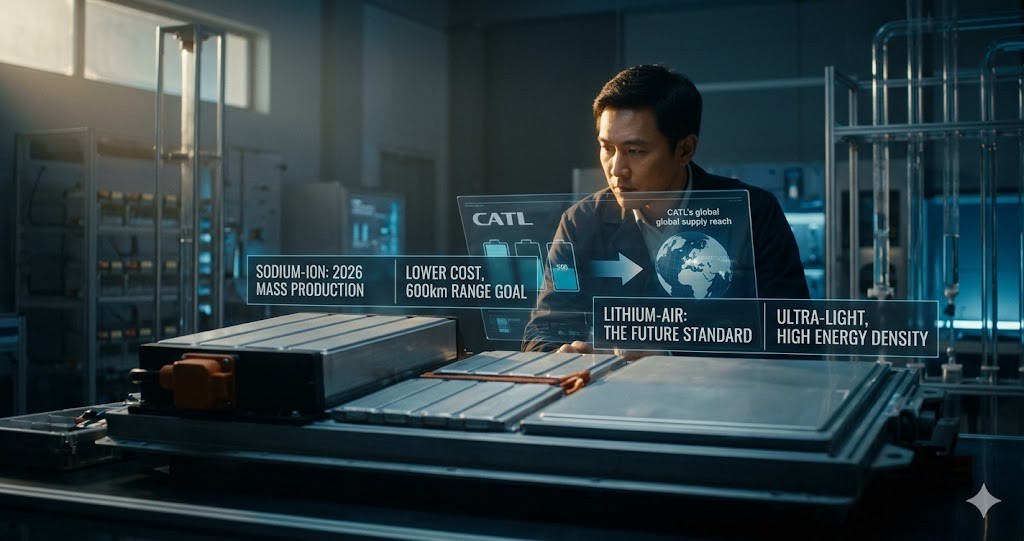
電気自動車(EV)向け車載電池の世界最大手である中国のCATLが、次世代バッテリーの商業化に向けて大きく舵を切りました。リチウム資源への依存度を下げ、圧倒的なコスト優位性を築くため、2026年中にナトリウムイオン電池の量産を本格的に開始します。さらに、将来的な超高エネルギー密度を見据えた「リチウム空気電池」の開発ロードマップも示され、次世代のエネルギー市場をリードする構えです。
発表された重要トピックス
1. ナトリウムイオン電池の量産開始と「航続距離600km」への挑戦
- 進捗と計画: 製造上のボトルネックが解消され、2026年中に乗用車、商用車、バッテリー交換ネット、電力インフラ向けに一連の製品を発売予定です。過去最大規模となる60GWhの供給契約もすでに獲得しています。
- 目標性能: 初期製品は低価格EVや蓄電システム向けですが、将来的には技術改良によって「1回の充電で航続距離600km」を目指します。これは現在普及しているLFP(リン酸鉄リチウム)電池の領域に直接競合する性能です。
2. 長期的なターゲット「リチウム空気電池」へのシフト
- 仕組み: 負極に金属リチウム、正極に大気中の酸素を使用する技術です。周囲の酸素を取り込んで放電するため、内部に重い化学物質を溜め込む必要がなく、バッテリーを劇的に軽量化できます。
- メリット: 理論上のエネルギー密度が現在の液体・固体電池を遥かに凌駕するため、リチウムイオン電池の「究極の後継技術」として長期開発が進められています。
3. CATLの圧倒的な市場シェア
- 現状: 2026年4月時点で、CATLは中国国内のEV電池設置量で46.6%(29.06GWh)という圧倒的なシェアを誇ります。
- 戦略: すでに確立しているLFP電池や三元系(NMC)電池の大量生産ラインと並行して、第3の柱としてナトリウムイオン電池の生産経路を構築していきます。
【関連情報】理解を深めるための補足
ニュースの背景にある、各技術のメリットや課題などの関連情報を追加します。
ナトリウムイオン電池が注目される理由(背景とメリット)
- 圧倒的な資源量と低コスト: リチウムは埋蔵地域が偏っており価格高騰のリスクがありますが、ナトリウムは塩(海水など)の成分であるため地球上にほぼ無限に存在し、原材料コストを大幅に抑えられます。
- 優れた低温特性と安全性: リチウムイオン電池は寒冷地で性能が落ちやすいですが、ナトリウムイオン電池はマイナス20度といった極寒の環境でも高い放電容量を維持できます。また、熱暴走のリスクが低く安全性が高いのも特徴です。
克服すべき課題
- エネルギー密度の壁: ナトリウムはリチウムよりも原子が重く大きいため、理論上のエネルギー密度(一定の重量あたりに蓄えられる電気の量)が低くなります。CATLが目指す「航続距離600km」の達成には、材料のナノ構造化や新しい正極・負極材の開発といった高度な技術革新が不可欠です。
リチウム空気電池が「究極」と呼ばれる理由
- ガソリンに匹敵するエネルギー密度: 理論上のエネルギー密度は市販のリチウムイオン電池の数倍から10倍近くに達し、ガソリンに近いエネルギー効率を持つと言われています。これが実用化されれば、EVの航続距離は飛躍的に伸び、大型トラックや航空機へのバッテリー搭載も現実味を帯びてきます。しかし、充放電の寿命(サイクル寿命)の短さや、大気中の水分・二酸化炭素による劣化を防ぐ技術など、実用化にはまだ多くの高いハードルがあります。
CATL to Mass-Produce Sodium-Ion Batteries in 2026: A 600km Range and the Future of Lithium-Air Batteries
CATL, the Chinese company and world’s largest manufacturer of automotive batteries for electric vehicles (EVs), has made a major strategic shift toward the commercialization of next-generation batteries. In order to reduce reliance on lithium resources and establish an overwhelming cost advantage, the company will fully commence mass production of sodium-ion batteries within 2026. Furthermore, CATL has revealed a development roadmap for “lithium-air batteries” aimed at ultra-high energy density in the long term, positioning itself to lead the next-generation energy market.
Key Topics Announced
1. Commencement of Sodium-Ion Battery Mass Production and the Challenge of a “600km Range”
- Progress and Plans: Manufacturing bottlenecks have been resolved, and CATL plans to launch a series of products for passenger cars, commercial vehicles, battery-swapping networks, and power infrastructure within 2026. The company has already secured a historic 60GWh supply agreement, marking its largest single order to date.
- Target Performance: While initial products target low-cost EVs and energy storage systems, future technological improvements aim to achieve a “600km range on a single charge.” This performance will directly compete with the currently widespread LFP (lithium iron phosphate) batteries.
2. Strategic Shift to the Long-Term Target: “Lithium-Air Batteries”
- Mechanism: This technology utilizes lithium metal for the negative electrode (anode) and atmospheric oxygen for the positive electrode (cathode). Because it takes in oxygen from the surrounding air during discharge, it eliminates the need to store heavy chemical compounds inside, drastically reducing the weight of the battery pack.
- Benefits: Its theoretical energy density far surpasses that of current liquid or solid-state electrolyte systems, positioning it as the “ultimate successor technology” to traditional lithium-ion batteries under long-term development.
3. CATL’s Overwhelming Market Share
- Current Status: As of April 2026, CATL holds a dominant 46.6% market share in China, with 29.06GWh of EV batteries installed nationwide in that month alone.
- Strategy: Alongside its already established, high-volume production lines for LFP and ternary (NMC) batteries, CATL will build a parallel production pathway for sodium-ion chemistry as its third major pillar.
Related Information: Supplementary Context
The following section provides additional context regarding the benefits and challenges of each technology behind this news.
Why Sodium-Ion Batteries Are Drawing Attention (Background and Benefits)
- Abundant Resources and Low Cost: Lithium resources are geographically concentrated, creating risks of price spikes. In contrast, sodium is a component of salt (found abundantly in seawater and elsewhere), making it virtually infinite on Earth and drastically lowering raw material costs.
- Excellent Low-Temperature Performance and Safety: While lithium-ion batteries suffer from performance drops in cold regions, sodium-ion batteries can maintain high discharge capacity even in extreme cold environments as low as minus 20C. They are also characterized by high safety with a low risk of thermal runaway.
Challenges to Overcome
- The Energy Density Wall: Because sodium atoms are heavier and larger than lithium atoms, their theoretical energy density (the amount of electricity stored per unit of weight) is lower. Achieving the “600km range” targeted by CATL will require advanced technological innovations, such as the nanostructuring of materials and the development of new positive and negative electrode materials.
Why Lithium-Air Batteries Are Called “Ultimate”
- Energy Density Comparable to Gasoline: The theoretical energy density is said to be several to nearly ten times higher than commercially available lithium-ion batteries, reaching an energy efficiency close to that of gasoline. If commercialized, EV driving ranges would increase dramatically, making battery integration into heavy-duty trucks and aircraft a realistic possibility. However, high hurdles remain before practical use, including a short charge-discharge cycle life and the need for technology to prevent degradation caused by moisture and carbon dioxide in the atmosphere.
コメント