株式会社富士経済は、次世代バッテリーとして注目される「半固体電池(半固体LiB)」の世界市場調査結果を発表しました。現在の主流である液系リチウムイオン電池(LiB)と、将来の本命とされる全固体電池の間を埋める「ブリッジ(懸け橋)技術」として、中国を中心に普及が始まっています。
- 市場予測: 2040年の世界市場は1兆2184億円(2025年比で3.9倍)に達し、2035年には1兆円の大台を突破すると予測されています。
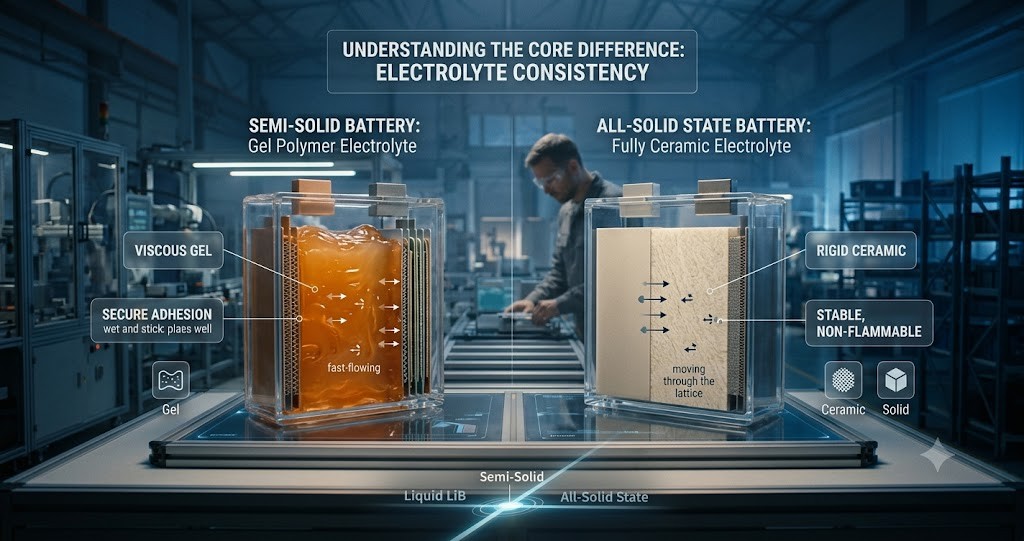
- 半固体電池のメリット: 従来の液系LiBの製造設備を流用できるため、全固体電池に比べて量産化しやすいのが特徴です。また、電解液の量が少ないため発火リスクが低く、安全性が高まります。
- 現在の主な用途: 大型蓄電システム(ESS)やモバイルバッテリーで採用が増加しているほか、電動車(xEV)での搭載も本格化しています。特にESSでは、火災防止や低コスト、低温動作の強みから、液系LiBや全固体電池よりも優位に立つ可能性があります。
- 将来の課題: さらなる市場拡大に向けては、エネルギー密度の向上、最適な固体電解質比率の模索、製造プロセスの最適化によるコストダウンが必要とされています。
関連情報:背景と市場のメカニズム
このニュースの背景にあるバッテリー業界のロードマップや、半固体電池がこれほど注目される理由を解説します。
1. なぜ「全固体」ではなく「半固体」なのか
次世代電池の本命である「全固体電池」は、電解質をすべて固体にすることで圧倒的な安全性と超高エネルギー密度を実現できますが、技術的ハードルが非常に高いという課題があります。 固体の電解質と電極を隙間なく密着させる製造技術や、量産コストの壁があり、本格的な普及にはまだ時間がかかるとみられています。そこで登場したのが半固体電池です。粘り気のあるゲル状(半固体)の電解質や、少量の電解液を固体電解質と併用することで、「全固体に近い安全性」と「液系LiBに近い製造のしやすさ」を両立させています。
2. 中国メーカー主導によるxEVへの実用化
半固体電池の商用化において世界をリードしているのは中国です。すでに中国のEVメーカーなどは、航続距離1000キロメートルを超える高級EVモデルに半固体電池(150キロワット時クラスのバッテリーパックなど)を搭載し、市場への投入を始めています。全固体電池が普及するまでの数年間、市場を牽引する強力な選択肢となっています。
3. 将来的な全固体電池との「住み分け」
富士経済の予測にもある通り、長期的には全固体電池の量産化が進むため、半固体電池の成長スピードはどこかで緩やかになると予想されています。 しかし、半固体電池は「既存のLiB工場の設備を転用できる」という圧倒的なコストパフォーマンスの良さがあります。そのため、最高性能を求める「高級EV」や「航空宇宙」分野には全固体電池が使われ、コストパフォーマンスと安全性のバランスを求める「普及型EV」「定置用蓄電池(ESS)」「民生用ガジェット」には半固体電池が使われるというように、用途に応じた明確な「住み分け」が進むと考えられています。
出典:https://www.nikkei.com/article/DGXZRSP709417_T00C26A7000000/
Fuji Keizai Announces Global Semi-Solid-State Battery Market Forecast: Surpassing 1 Trillion Yen by 2035
Fuji Keizai Co., Ltd. has released the results of its global market research on “semi-solid-state batteries (semi-solid-state LiBs),” which are drawing attention as next-generation batteries. Serving as a “bridge technology” to fill the gap between current mainstream liquid-based lithium-ion batteries (LiBs) and all-solid-state batteries—the ultimate goal for the future—their adoption is beginning to expand, primarily in China.
- Market Forecast: The global market is predicted to reach 1218.4 billion yen in 2040 (3.9 times the size of the 2025 market) and is expected to surpass the 1 trillion yen milestone by 2035.
- Advantages of Semi-Solid-State Batteries: A key feature is that they are easier to mass-produce compared to all-solid-state batteries because manufacturing equipment from conventional liquid-based LiBs can be repurposed. Furthermore, since they use a smaller amount of liquid electrolyte, the risk of ignition is reduced, which enhances safety.
- Current Primary Applications: Adoption is growing in energy storage systems (ESS) and mobile batteries, and their integration into electric vehicles (xEVs) is also starting in earnest. In ESS in particular, they could hold an advantage over both liquid-based LiBs and all-solid-state batteries due to their strengths in fire prevention, low costs, and operation in low-temperature environments.
- Future Challenges: For further market expansion, improvements in energy density, finding the optimal ratio of solid electrolyte, and cost reductions through the optimization of manufacturing processes are considered necessary.
Related Information: Background and Market Mechanism
To provide deeper context for this news, this section explains the battery industry’s roadmap and the reasons why semi-solid-state batteries are attracting so much attention.
1. Why “Semi-Solid” Instead of “All-Solid”?
While “all-solid-state batteries”—the ultimate candidate for next-generation batteries—can achieve overwhelming safety and ultra-high energy density by making the electrolyte entirely solid, they face very high technical hurdles. Due to the manufacturing technology required to tightly bond the solid electrolyte and electrodes without gaps, as well as the barrier of mass-production costs, full-scale adoption is expected to take more time. This is where semi-solid-state batteries come in. By using a viscous, gel-like (semi-solid) electrolyte or combining a small amount of liquid electrolyte with solid electrolytes, they balance “safety close to all-solid-state” with “ease of manufacturing close to liquid-based LiBs.”
2. Practical Application in xEVs Led by Chinese Manufacturers
China is leading the world in the commercialization of semi-solid-state batteries. Chinese EV manufacturers have already begun introducing luxury EV models to the market equipped with semi-solid-state batteries (such as 150 kWh class battery packs) that offer a driving range of over 1000 km. This has become a powerful option driving the market during the few years remaining until all-solid-state batteries become widespread.
3. Future “Market Segregation” alongside All-Solid-State Batteries
As indicated in Fuji Keizai’s forecast, the growth rate of semi-solid-state batteries is expected to slow down at some point in the long term because the mass production of all-solid-state batteries will progress. However, semi-solid-state batteries hold an overwhelming cost-performance advantage because they can utilize existing LiB factory equipment. Therefore, a clear market segregation based on application is expected to develop: all-solid-state batteries will be used in “luxury EVs” and “aerospace” sectors where maximum performance is demanded, while semi-solid-state batteries will be used in “mass-market EVs,” “stationary energy storage systems (ESS),” and “consumer gadgets” that require a balance between cost-effectiveness and safety.

コメント