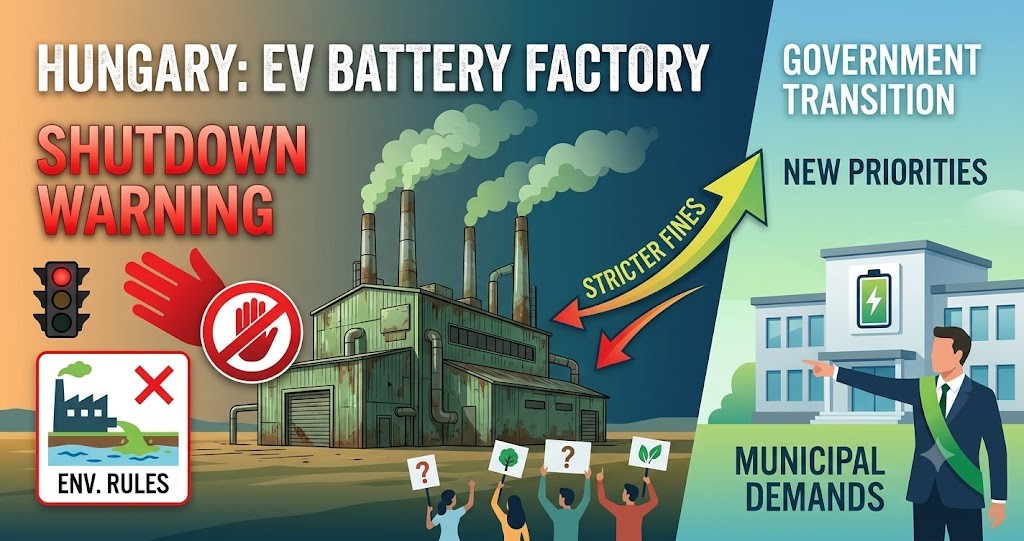
ハンガリーのガイドシュ環境相は、環境規制に従わない電気自動車(EV)向けバッテリー工場に対して、工場閉鎖も辞さない強い警告を投資企業へ向けて発信しました。これは、長年EVバッテリー産業を強力に誘致してきたオルバン前政権の路線からの大きな転換を意味しています。
- 政権交代による方針転換: 2026年4月の総選挙で、工場周辺の健康・安全問題が争点となり、EVバッテリー業界への強硬姿勢を掲げた中道右派「ティサ」が圧勝しました。
- 厳しい罰則の導入: 新政権は産業発展と環境保護のバランスを重視しており、汚染に対する罰金を欧州で最も厳しいレベルに引き上げる方針です。
- 地方自治体の動き: 前首相の与党「フィデス」に所属するデブレツェン市の市長も、環境汚染を理由に中国のEV電池部品メーカーへ退去を要求するなど、影響が広がっています。
関連情報:背景と影響
今回の厳しい姿勢の背景には、ハンガリーが急速に「欧州のバッテリー工場」となった歴史と、それに伴う地域住民の強い不満があります。
1. オルバン前政権による「東方開国」政策
前首相のオルバン氏は、アジア企業からの投資を呼び込む「東方開国(Eastern Opening)」政策を推し進めていました。2021年以降、韓国のサムスンSDIやSKオン、さらに中国のCATL(寧徳時代)などから、累計260億ユーロ(約296億9000万ドル)にのぼる巨額の投資を誘致。これによりハンガリーは、中国、米国に次ぐ世界有数のEVバッテリー生産拠点へと急成長しました。
2. 深刻化していた住民の不満と環境懸念
工場の急速な建設に対し、地元住民からは以下のような懸念や抗議の声が相次いでいました。
- 有害物質の流出リスク: バッテリー製造に使用される有機溶剤(NMPなど)による地下水や大気の汚染リスク。
- 膨大な資源消費: 製造に大量の「水」と「電力」が必要となるため、地域のインフラや自然環境への負荷が限界に近いと批判されていました。
- 労働環境の問題: 外国からの出稼ぎ労働者の急増によるコミュニティの変化や、工場内の安全管理体制への疑問。
3. 自動車業界(サプライチェーン)への影響
ハンガリーにはドイツのBMWやメルセデス・ベンツ、アウディなどの巨大な自動車組み立て工場が集積しています。これらの自動車メーカーは、欧州域内でバッテリーを調達(地産地消)するためにハンガリーでの電池生産を頼りにしていました。 新政権による環境規制の厳格化や工場の操縦・閉鎖リスクは、欧州全体のEVシフトや自動車サプライチェーンの計画に見直しを迫る可能性があります。
出典:https://jp.reuters.com/world/environment/RIDBJNYNTBLANP54NNFO6S53LU-2026-07-03/
New Hungarian Government Warns Polluting EV Battery Companies of Factory Closures
Hungarian Environment Minister Gajdus has issued a stern warning to investing companies, stating that electric vehicle (EV) battery factories failing to comply with environmental regulations could face closure. This marks a major shift from the policy of the previous Orban administration, which had aggressively attracted the EV battery industry for years.
- Policy Shift via Change of Government: In the April 2026 general election, health and safety issues around the factories became a major point of contention. The center-right “Tisza” party, which took a hardline stance against the EV battery industry, won a landslide victory.
- Introduction of Stricter Penalties: The new government prioritizes restoring the balance between industrial development and environmental protection, with plans to raise fines for pollution to the strictest levels in Europe.
- Local Government Actions: The impact is spreading, with the mayor of Debrecen, a member of former Prime Minister Orban’s “Fidesz” party, also demanding that a Chinese EV battery component manufacturer leave the city due to environmental pollution.
Related Information: Background and Impact
Behind this strict stance lies the history of Hungary rapidly becoming “Europe’s battery factory,” along with the resulting strong dissatisfaction from local residents.
1. The “Eastern Opening” Policy of the Previous Orban Administration
Former Prime Minister Orban pushed forward the “Eastern Opening” policy to attract investment from Asian companies. Since 2021, the government attracted massive investments totaling 26 billion euros (approximately 29.69 billion dollars) from companies primarily based in South Korea and China, such as Samsung SDI, SK On, and CATL. As a result, Hungary rapidly grew into one of the world’s leading EV battery production hubs, following China and the United States.
2. Growing Resident Dissatisfaction and Environmental Concerns
In response to the rapid construction of factories, local residents raised a succession of concerns and protests:
- Risk of Hazardous Substance Leaks: Concerns over the risk of groundwater and air pollution caused by organic solvents (such as NMP) used in battery manufacturing.
- Enormous Resource Consumption: Because manufacturing requires vast amounts of water and electricity, critics argued that the burden on local infrastructure and the natural environment was nearing its limit.
- Labor Environment Issues: Concerns regarding changes in local communities due to a sudden influx of foreign guest workers, as well as questions about safety management systems inside the factories.
3. Impact on the Automotive Industry (Supply Chain)
Hungary is home to major automobile assembly plants for German automakers such as BMW, Mercedes-Benz, and Audi. These carmakers relied on battery production in Hungary to source batteries within Europe (local production for local consumption). The tightening of environmental regulations or the risk of factory closures under the new government could force a review of the broader European EV transition and automotive supply chain plans.


コメント