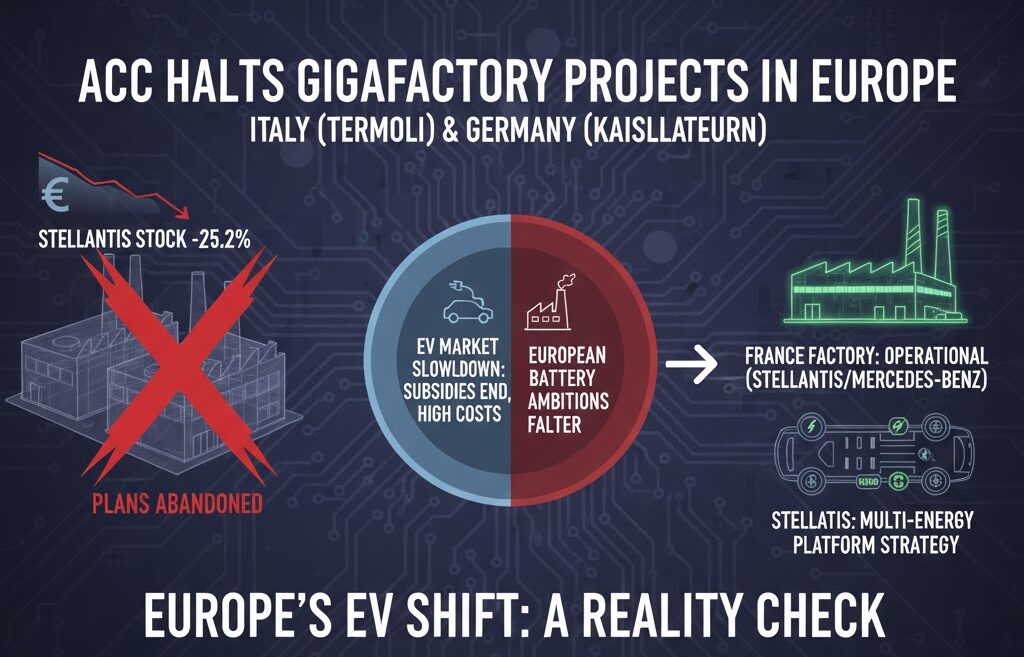
ステランティス、メルセデス・ベンツ、トタルエナジーズの3社によるバッテリー合弁会社ACC(Automotive Cells Company)が、イタリアとドイツで進めていた大規模な電池工場(ギガファクトリー)の建設プロジェクトを中止したことが明らかになりました。
主なトピック
- 中止されたプロジェクト: イタリアのテルモリ(Termoli)およびドイツのカイザースラウテルン(Kaiserslautern)の建設予定地。
- 現状の判断: ACCは、2024年5月からプロジェクトを待機状態としていましたが、再開の前提条件が満たされる見込みが低いため「完全に棚上げ」したと労働組合(UILM)に通知しました。
- フランス工場の状況: フランス北部の工場は稼働中。ステランティス向けに加え、2026年半ばからメルセデス・ベンツ向けの生産も開始予定です。
- 経済的影響: ステランティスの株価は、EV計画縮小に伴う約222億ユーロ(約265億ドル)の損失計上を受け、25.2パーセントという過去最大の下落を記録しました。
関連情報と背景解説
このニュースを理解する上で重要な、現在のEV市場と欧州の状況を補足します。
1. EV市場の減速と「踊り場」現象
現在、欧州や北米を中心にEV(電気自動車)の需要伸び悩みが鮮明になっています。
- 補助金の打ち切り: ドイツなどでEV購入補助金が終了・削減されたことで、消費者の購買意欲が低下しました。
- コストの壁: 手頃な価格のEV供給が遅れており、消費者がハイブリッド車(HEV)やガソリン車へ回帰する動きが見られます。
2. 欧州の「電池自給自足」計画の停滞
欧州連合(EU)は、中国や韓国などのアジア勢に依存しない独自のバッテリーサプライチェーン構築を急いでいましたが、多くのプロジェクトが難航しています。
- コスト競争力: 中国製の安価で高性能なLFP(リン酸鉄リチウム)電池に対し、欧州勢はコスト面で苦戦しています。
- Northvolt(ノースボルト)の苦境: スウェーデンの電池大手Northvoltも、生産の遅れや資金難に直面して、欧州自前の電池生産という野心的な目標は破綻しました。
3. ステランティスの戦略転換
ステランティスは「マルチ・エネルギー・プラットフォーム」戦略をとっています。
- 一つの車台でEV、ハイブリッド、ガソリン車のすべてに対応できる設計を強化しており、需要が低いEV専用の過剰投資を避ける方向に舵を切りました。
- テルモリ工場では電池生産の代わりに、既存のエンジンやギアボックスの生産を維持することで、雇用の確保を図る方針です。
まとめ
今回のACCによる計画撤回は、「欧州におけるEVシフトの失速」を象徴する出来事です。巨額の投資を回収できるほどのEV需要が見込めない現状において、メーカー各社は「性急な電動化」から「現実的な投資抑制」へと戦略を修正せざるを得ない状況に追い込まれています。
今後、イタリアやドイツの当局が、失われた投資と雇用を補うためにどのような産業政策を打ち出すかが焦点となります。
Stellantis-backed ACC Abandons Battery Gigafactory Plans in Italy and Germany
It has been revealed that Automotive Cells Company (ACC), a battery joint venture between Stellantis, Mercedes-Benz, and TotalEnergies, has cancelled its projects to build large-scale battery factories (gigafactories) in Italy and Germany.
Key Topics
- Cancelled Projects: Planned construction sites in Termoli, Italy, and Kaiserslautern, Germany.
- Current Assessment: ACC had placed the projects on hold since May 2024. However, the company notified the UILM labor union that the plans have been “completely shelved” as the prerequisites for restarting are unlikely to be met.
- Status of French Factory: The facility in northern France remains operational. In addition to supplying Stellantis, it is scheduled to begin production for Mercedes-Benz in mid-2026.
- Economic Impact: Stellantis shares recorded a historic one-day drop of 25.2 percent following a loss of approximately 22.2 billion euros (26.5 billion dollars) linked to the scaling back of its EV plans.
Related Information and Context
To better understand this news, here is supplementary context regarding the current EV market and the situation in Europe.
1. EV Market Slowdown and the “Plateau” Phenomenon
The growth of electric vehicle (EV) demand is clearly slowing down, particularly in Europe and North America.
- End of Subsidies: The termination or reduction of EV purchase subsidies in countries like Germany has dampened consumer interest.
- The Cost Barrier: Affordable EV models are slow to arrive, leading consumers to return to hybrid electric vehicles (HEVs) and gasoline-powered cars.
2. Stagnation of Europe’s “Battery Self-Sufficiency” Plan
The European Union (EU) has been rushing to build an independent battery supply chain to reduce reliance on Asian suppliers from China and South Korea, but many projects are facing difficulties.
- Cost Competitiveness: European players are struggling to compete with the cost of inexpensive, high-performance LFP (lithium iron phosphate) batteries made in China.
- Northvolt’s Struggles: The ambitious goal of homegrown European battery production has faced a major setback as the Swedish battery giant Northvolt struggles with production delays and financial difficulties.
3. Stellantis’ Strategic Pivot
Stellantis is pursuing a “Multi-Energy Platform” strategy.
- By strengthening designs that allow a single chassis to support EV, hybrid, and gasoline powertrains, the company has shifted away from over-investing in EV-only infrastructure amid low demand.
- At the Termoli plant, the company intends to secure jobs by maintaining the production of existing engines and gearboxes instead of switching to battery production.
Summary
The cancellation of ACC’s plans is a symbolic event reflecting the “stalling of the EV shift in Europe.” In a market where EV demand is insufficient to recoup massive investments, manufacturers are being forced to revise their strategies from “hasty electrification” to “realistic investment restraint.”
As a next step, the focus will shift to how authorities in Italy and Germany respond to the loss of these major industrial projects.

コメント