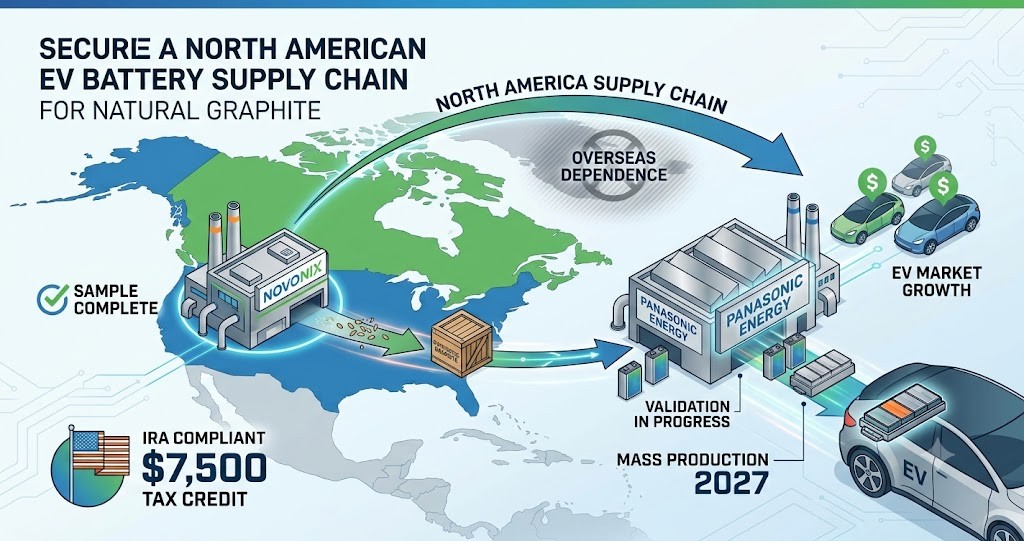
電気自動車(EV)シフトが進む中、車載用リチウムイオン電池の主要材料である「黒鉛(グラファイト)」の確保は、自動車・電池メーカーにとって最優先課題の一つとなっています。現在、黒鉛のサプライチェーンはその大部分を中国が握っており、地政学的リスクや経済安全保障の観点から、北米内での現地調達(ローカライズ)への要求が急速に高まっています。
このような背景の中、米国の電池材料メーカーであるNOVONIX社が、パナソニックエナジーへの合成黒鉛負極材の供給に向けて大きな一歩を踏み出しました。
ニュースの要約と関連情報
1. Cサンプルの納入と認証の最終段階
NOVONIX社は、パナソニックエナジーに対し、量産認定用サンプルである「Cサンプル」の納入を完了しました。北米で製造された合成黒鉛負極活物質のCサンプル出荷としては、これが初の事例となります。
- 関連情報(サンプルの位置づけ): 自動車や電池の材料開発におけるサンプル提供は、一般にAサンプル(初期試作)、Bサンプル(機能評価)、Cサンプル(量産ラインでの検証用)と進みます。Cサンプルの納入は、商業量産直前の「最終段階」に入ったことを意味します。
2. 中国依存からの脱却と経済安全保障
今回の成果は、中国が支配的なシェアを持つリチウムイオン電池用黒鉛市場において、米国国内での供給体制を確立するための重要なマイルストーンです。
- 関連情報(規制の影響): 米国のインフレ抑制法(IRA)では、中国などの「懸念される外国の事業体(FEOC)」から調達された重要鉱物を含むEVは、税額控除(最大7500ドル)の対象から除外される厳しい規制が敷かれています。特に黒鉛は代替が難しいため、北米産黒鉛の確保はパナソニックやその供給先であるテスラなどの自動車メーカーにとって死活問題となっています。
3. 今後の見通しと量産スケジュール
NOVONIX社の社内試験ではパナソニック側の要求仕様を満たしていることが確認されており、今後はパナソニック側で数ヶ月にわたる正式な検証評価が行われます。この認証プロセスが順調に完了すれば、パナソニック向けの製品量産は2027年後半に開始される見込みです。
- 関連情報(今後の課題): 2027年後半の量産に向けては、品質の安定性はもとより、コスト競争力や数万トン規模におよぶ大量生産を安定して維持できる製造キャパシティの拡大が次の焦点となります。
まとめ
今回のCサンプル納入は、単なる一企業の取引進展にとどまらず、「北米産EV電池サプライチェーンの本格始動」を象徴する出来事です。パナソニックエナジーによる数ヶ月の評価を経て2027年後半の量産へと繋がれば、北米における中韓メーカーへの対抗軸として、経済安全保障面でも極めて大きな意味を持つことになります。
NOVONIX First to Ship Synthetic Graphite “C-Sample” to Panasonic — Moving Toward Mass Production in Late 2027
As the shift toward electric vehicles (EVs) accelerates, securing graphite—a key material for automotive lithium-ion batteries—has become one of the top priorities for automakers and battery manufacturers. Currently, China controls the vast majority of the graphite supply chain. Due to geopolitical risks and economic security concerns, the demand for localizing procurement within North America is rapidly rising.
Against this backdrop, US-based battery materials manufacturer NOVONIX has taken a major step forward toward supplying synthetic graphite anode materials to Panasonic Energy.
News Summary and Related Information
1. Delivery of C-Samples and the Final Stage of Qualification
NOVONIX has completed the delivery of “C-Samples,” which are mass-production qualification samples, to Panasonic Energy. This marks the first-ever shipment of a synthetic graphite anode active material C-sample manufactured in North America.
Related Information (Positioning of Samples): In the development of materials for automobiles and batteries, sample submission generally progresses from A-samples (early prototypes) to B-samples (functional evaluation) and then C-samples (validation for mass-production lines). The delivery of C-samples signifies entry into the “final stage” right before commercial mass production.
2. Reducing Reliance on China and Enhancing Economic Security
This achievement serves as a crucial milestone for establishing a domestic supply system in the United States within the lithium-ion battery graphite market, which is currently dominated by China.
Related Information (Impact of Regulations): Under the US Inflation Reduction Act (IRA), strict regulations exclude EVs containing critical minerals sourced from a “Foreign Entity of Concern (FEOC),” such as China, from receiving tax credits of up to 7500 dollars. Because graphite is particularly difficult to substitute, securing North American-sourced graphite is a matter of survival for Panasonic and its customers, including automakers like Tesla.
3. Future Outlook and Mass Production Schedule
NOVONIX’s internal testing has confirmed that the material meets Panasonic’s required specifications. Panasonic will now conduct a formal validation and evaluation over the next few months. If this qualification process is completed successfully, mass production of products for Panasonic is expected to begin in late 2027.
Related Information (Future Challenges): Moving toward mass production in late 2027, the next focus will be on maintaining consistent quality, ensuring cost competitiveness, and expanding manufacturing capacity to stably sustain large-scale production on the scale of tens of thousands of tons.
Conclusion
The delivery of these C-samples is not merely progress in a transaction between individual companies; it symbolizes the “full-scale launch of the North American EV battery supply chain.” If this leads to mass production in late 2027 following Panasonic Energy’s multi-month evaluation, it will hold profound significance for economic security as a counterweight to Chinese and South Korean manufacturers in North America.
コメント