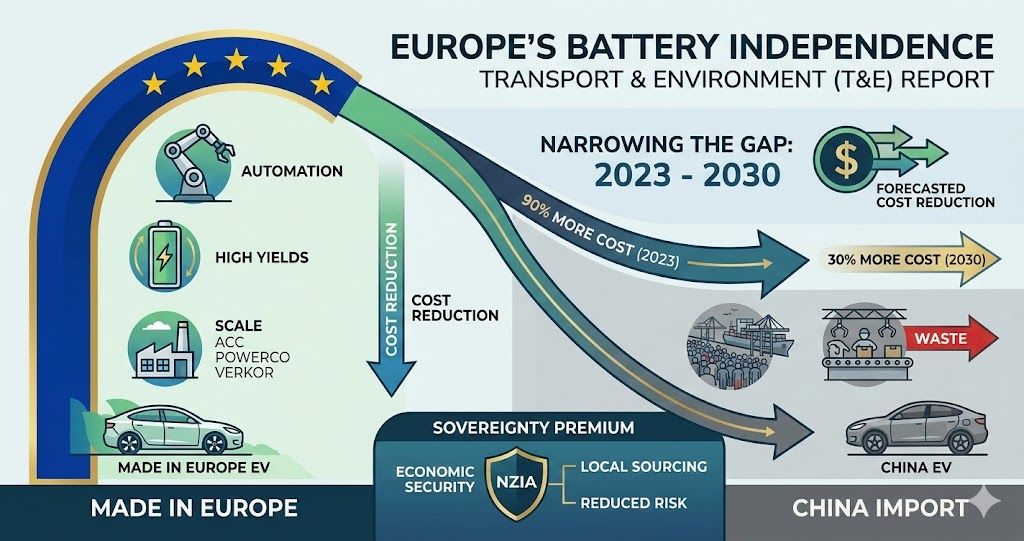
欧州の環境NGO「Transport & Environment(T&E)」は、EUが「Made in Europe」計画を推進することで、域内で製造されるバッテリーのコストを劇的に下げ、中国製に対する競争力を確保できるとする報告書を発表しました。
1. コスト格差の劇的な縮小予測
現在、欧州製バッテリーは中国製に比べて大幅に高価ですが、2030年に向けて以下のような変化が予測されています。
- 現在の価格差: 1キロワット時(kWh)あたり約 41ドル(中国製より約90%高い)
- 2030年の予測: 1kWhあたり約 14ドル まで縮小(差は約30%へ)
- 車両1台あたりの影響: 平均的なEVで約 500ユーロ(590ドル) 程度の差に留まる見通しです。
2. コスト削減を可能にする要因
レポートでは、単なる補助金だけでなく、製造現場の習熟がコストダウンの鍵であると分析しています。
- 歩留まりの向上: 製造過程でのスクラップ率(不良品率)の低下。
- 自動化とノウハウ: 労働者のスキル習熟と、生産ラインの高度な自動化。
- 規模の経済: ACC、Powerco、Verkorなどの欧州メーカーが量産体制を確立すること。
3. 「主権プレミアム」としての現地調達
T&Eのジュリア・ポリスカノバ氏は、中国による重要鉱物の輸出制限などのリスクに触れ、欧州製を採用することは「経済安保のための保険料(主権プレミアム)」であると強調しています。
- 産業促進法案(NZIA): EUが計画している、公的資金を投じる際に域内製品を優先する仕組み。
- 対象分野: 電池、太陽光・風力発電、水素、原子力、EVなど。
- 💡 関連情報の補足:なぜ「欧州製」が重要なのか?
- まとめ:今後の焦点
- The “Made in Europe” Plan is Key: Cost Competitiveness Forecast for European EV Batteries
💡 関連情報の補足:なぜ「欧州製」が重要なのか?
バッテリーの種類と中国の優位性
現在、EV用バッテリーは主に2種類あります。
- LFP(リン酸鉄リチウム): 安価で寿命が長い。中国が圧倒的なシェアを持つ。
- NMC(ニッケル・マンガン・コバルト): 高エネルギー密度で航続距離が長い。欧州メーカーが注力。 中国は安価なLFPを中心に世界市場を席巻しており、欧州が対抗するにはNMCの高度化とLFPの自国生産の両立が急務となっています。
欧州の主要プレーヤー
記事に登場する企業は、欧州の「脱・中国依存」を担う中心的存在です。
- ACC: ステランティス、メルセデス・ベンツ、トタルエナジーズの合弁。
- Powerco: フォルクスワーゲン傘下の電池会社。
- Verkor: ルノーなどが支援するフランスのスタートアップ。
政策的背景:ネットゼロ産業法(NZIA)
EUが提案しているこの法案は、2030年までにクリーン技術の需要の少なくとも 40% を域内で製造することを目指しています。これは米国の「インフレ抑制法(IRA)」による投資引き抜きへの対抗措置としての側面も持っています。
まとめ:今後の焦点
欧州が中国製バッテリーとの価格差を「許容範囲」まで縮められるかは、生産規模の早期拡大(スケーリング)と、EV購入者・法人車への税制優遇をいかに連動させられるかにかかっています。
The “Made in Europe” Plan is Key: Cost Competitiveness Forecast for European EV Batteries
The European environmental NGO “Transport & Environment (T&E)” has released a report stating that by promoting the “Made in Europe” plan, the EU can dramatically lower the cost of batteries manufactured within the region and secure competitiveness against Chinese products.
1. Forecast of Dramatic Shrinkage in the Cost Gap
While European batteries are currently significantly more expensive than Chinese ones, the following changes are projected by 2030:
- Current price gap: Approximately 41 dollars per kilowatt-hour (kWh) (about 90% higher than Chinese products).
- 2030 forecast: The gap is expected to shrink to approximately 14 dollars per kWh (reducing the difference to about 30%).
- Impact per vehicle: The price difference for an average EV is expected to be limited to about 500 euros (590 dollars).
2. Factors Enabling Cost Reduction
The report analyzes that the key to cost reduction is not just subsidies, but the maturation of manufacturing sites:
- Improved yield: Reduction in scrap rates (defect rates) during the manufacturing process.
- Automation and expertise: Increased worker skill levels and advanced automation of production lines.
- Economies of scale: European manufacturers such as ACC, Powerco, and Verkor establishing mass production systems.
3. Local Procurement as a “Sovereignty Premium”
Julia Poliscanova of T&E emphasized that adopting European-made products serves as an “insurance premium for economic security (sovereignty premium),” citing risks such as China’s export restrictions on critical minerals.
- Net-Zero Industry Act (NZIA): A planned EU mechanism that mandates prioritizing local products when using public funds.
- Target sectors: Batteries, solar and wind power, hydrogen, nuclear power, EVs, etc.
Additional Context: Why is “Made in Europe” Important?
Battery Types and China’s Dominance
Currently, there are two main types of EV batteries:
- LFP (Lithium Iron Phosphate): Low cost and long lifespan. China holds an overwhelming market share.
- NMC (Nickel Manganese Cobalt): High energy density and long driving range. Focus area for European manufacturers. With China dominating the global market through cheap LFP batteries, it is urgent for Europe to both advance NMC technology and establish domestic LFP production.
Key European Players
The companies mentioned in the article are central to Europe’s efforts to end its dependence on China:
- ACC: A joint venture between Stellantis, Mercedes-Benz, and TotalEnergies.
- Powerco: A battery company under the Volkswagen Group.
- Verkor: A French startup backed by Renault and others.
Policy Background: Net-Zero Industry Act (NZIA)
This proposed EU legislation aims to manufacture at least 40% of the region’s clean technology needs within the EU by 2030. This also serves as a countermeasure against the drainage of investment caused by the U.S. Inflation Reduction Act (IRA).
Summary: Future Focus
Whether Europe can shrink the price gap with Chinese batteries to an “acceptable range” depends on…

コメント