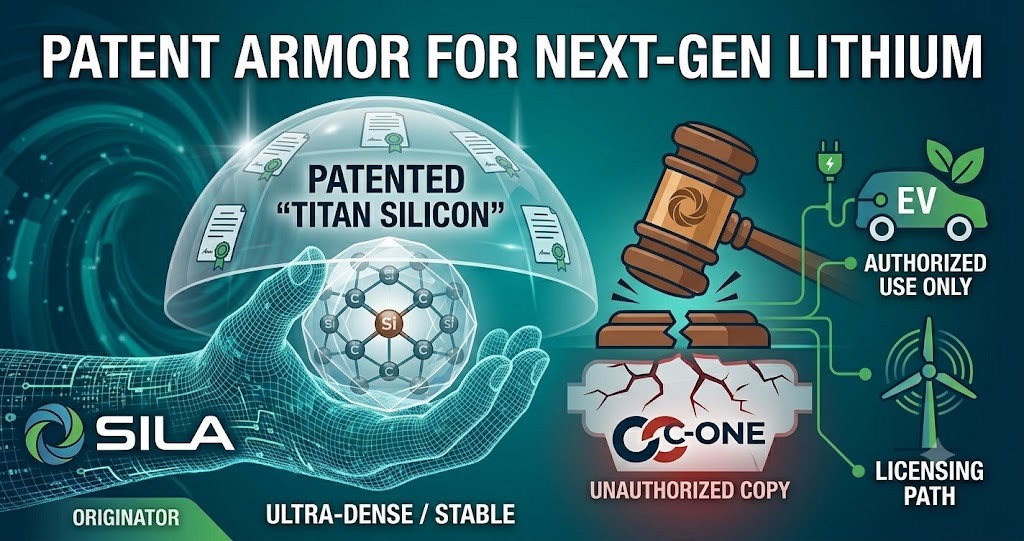
次世代バッテリーのキーテクノロジーである「シリコン負極材」の先駆者である米Sila Nanotechnologies(Sila社)が、自社の知的財産権を守るため、中国系企業を相手に大規模な法的措置に踏み切りました。リチウムイオン電池の性能を飛躍的に高める同社の独自技術「Titan Silicon」を巡る今回の訴訟は、米中のクリーンエネルギー技術における主導権争いやサプライチェーンの安全保障という観点からも、業界内外から高い注目を集めています。以下にその詳細と関連情報をまとめます。
Sila社による特許侵害訴訟の概要と関連情報
1. 訴訟の背景と概要
- 原告: Sila社(共同創設者兼CEO:ジーン・ベルディチェフスキー、CTO:グレブ・ユシン教授、代理人:ジョーンズ・デイ法律事務所およびジョージア工科大学)
- 被告: 海外の電池負極材料メーカーであるCarbon One New Energy(C-ONE)グループ3社(Carbon One New Energy Co., Ltd.、Zhejiang Lichen New Material Technology Co., Ltd.、Carbon One New Energy (Hangzhou) Co., Ltd.)
- 提起先: 米国国際貿易委員会(ITC)および連邦地方裁判所
- 主な主張と要求: 1930年関税法第337条に基づき、Sila社が開発したシリコン・カーボン(Si/C)負極技術の特許を侵害する材料や関連製品の米国への輸入禁止(排除命令)などを求めています。
2. 独自技術「Titan Silicon」とその重要性
- 技術の特徴: 従来のグラファイト(黒鉛)負極に比べ、シリコンは理論上約10倍の容量を持ちますが、充放電時に約4倍に膨張して壊れやすいという致命的な欠点がありました。Sila社は15年近くの研究開発により、この膨張問題を克服したシリコン・カーボン(Si/C)アノード材料「Titan Silicon」を製品化しました。これにより、バッテリーの急速充電化、高エネルギー密度化、長寿命化を同時に実現しています。
- 応用分野: EV(電気自動車)の航続距離や充電速度を劇的に向上させるだけでなく、ドローン、ロボット工学、データセンター、人工衛星など、次世代の重要産業を支えるコア技術として期待されています。
3. 米国拠点のサプライチェーンと量産体制
- 世界初の量産施設: Sila社は、ワシントン州モーゼスレイクに、シリコン負極材料としては米国初となるギガワット時(GWh)規模の商業生産施設を構え、拡大を進めています。
- 経済・安全保障上の意味: 米国政府は現在、インフレ抑制法(IRA)などを通じてバッテリー材料の脱中国・内製化(米国内でのサプライチェーン構築)を強く推進しています。Sila社の取り組みは、このアメリカのクリーンエネルギー戦略とも合致しており、多額の投資を行い築き上げた米国拠点のサプライチェーンを守ることが今回の法的措置の強い動機となっています。
4. 市場へのアプローチとパートナーシップ
- 柔軟なライセンス戦略: Sila社は他社への排除だけでなく、業界全体の発展を見据えた建設的なアプローチをとっています。技術支援や認定プログラム、ロイヤリティ契約(特許使用料の支払い)と供給契約を組み合わせたパートナーシップを最優先しており、正当な手続きを経れば他社もこの革新技術を導入できる仕組みを提供しています。
5. Sila社について
- 設立: 2011年
- 実績: 2021年にリチウムイオン電池向けシリコン負極材の世界初となる商用製品を出荷。世界中で250件以上の特許・特許出願ポートフォリオを有しています。すでにメルセデス・ベンツなどの大手自動車メーカーとの提携も報じられており、EV市場での実用化が進んでいます。
- 主要投資家: 8VC、Bessemer Venture Partners、カナダ年金投資委員会(CPPIB)、Coatue、In-Q-Tel、Matrix Partners、Sutter Hill Ventures、T. Rowe Price Associates, Inc. など。有力なベンチャーキャピタルや機関投資家から巨額の資金を調達しています。
US-Based Sila Sues C-ONE Group for Silicon Anode Technology Patent Infringement, Requesting Exclusion Orders from US ITC and District Court
[Introduction]
US-based Sila Nanotechnologies (Sila), a pioneer in silicon anode materials—a key technology for next-generation batteries—has taken major legal action against Chinese companies to protect its intellectual property rights. This lawsuit, centered around the company’s proprietary Titan Silicon technology that dramatically enhances lithium-ion battery performance, has drawn significant attention from both inside and outside the industry. It highlights the growing competition between the US and China for leadership in clean energy technology, as well as broader supply chain security concerns. The details and related context are summarized below.
Overview and Context of Sila’s Patent Infringement Lawsuit
1. Lawsuit Background and Overview
- Plaintiffs: Sila (Co-founder and CEO: Gene Berdichevsky, CTO: Professor Gleb Yushin; represented by Jones Day and Georgia Institute of Technology)
- Defendants: Three companies within the Carbon One New Energy (C-ONE) group, an overseas battery anode material manufacturer: Carbon One New Energy Co., Ltd., Zhejiang Lichen New Material Technology Co., Ltd., and Carbon One New Energy (Hangzhou) Co., Ltd.
- Venues: US International Trade Commission (ITC) and US Federal District Court
- Key Claims and Requests: Pursuant to Section 337 of the Tariff Act of 1930, Sila is seeking a ban on the importation into the United States (exclusion orders) of materials and related products that infringe upon its developed silicon-carbon (Si/C) anode technology, among other remedies.
2. Proprietary Technology “Titan Silicon” and Its Significance
- Technical Characteristics: Compared to traditional graphite anodes, silicon theoretically possesses about 10 times the capacity. However, it suffered from a critical flaw: swelling by approximately 4 times during charging and discharging, making it highly fragile. Through nearly 15 years of research and development, Sila commercialized “Titan Silicon,” a silicon-carbon (Si/C) anode material that overcomes this swelling issue. This breakthrough simultaneously achieves fast charging, high energy density, and extended battery life.
- Application Fields: Beyond dramatically improving the driving range and charging speed of electric vehicles (EVs), it is expected to serve as a core technology supporting next-century industries, including drones, robotics, data centers, and satellites.
3. US-Based Supply Chain and Mass Production Capabilities
- First-of-Its-Kind Mass Production Facility: Sila is expanding its operations at its Moses Lake facility in Washington State, which is the first gigawatt-hour (GWh) scale commercial production facility for silicon anode materials in the United States.
- Economic and Security Implications: The US government is actively promoting the decoupling from China and the localization of battery materials (building domestic supply chains) through initiatives like the Inflation Reduction Act (IRA). Sila’s efforts align closely with this US clean energy strategy. Protecting the US-based supply chain, built upon heavy investment, serves as a powerful motivator behind this legal action.
4. Market Approach and Partnerships
- Flexible Licensing Strategy: Rather than focusing solely on excluding others, Sila takes a constructive approach aimed at the development of the entire industry. The company prioritizes partnerships that combine technical support, qualification programs, and royalty agreements (patent licensing payments) with supply contracts. This framework allows other companies to adopt this innovative technology provided they follow legitimate procedures.
5. About Sila
- Established: 2011
- Track Record: In 2021, Sila shipped the world’s first commercial silicon anode product for lithium-ion batteries. The company holds a broad patent portfolio including more than 250 patents and patent applications globally. Partnerships with major automakers like Mercedes-Benz have already been reported, making commercial implementation in the EV market well underway.
- Key Investors: 8VC, Bessemer Venture Partners, Canada Pension Plan Investment Board (CPPIB), Coatue, In-Q-Tel, Matrix Partners, Sutter Hill Ventures, and funds and accounts advised by T. Rowe Price Associates, Inc. Sila has secured massive funding from these prominent venture capital firms and institutional investors.
コメント