スマート物流や自動化工場の普及に伴い、AGV/AMRの「心臓部」である動力用リチウム電池の性能と耐久性は、稼働率や保守コストを左右する極めて重要な要素となっています。
1. AGV用リチウム電池の設計寿命と実際の寿命
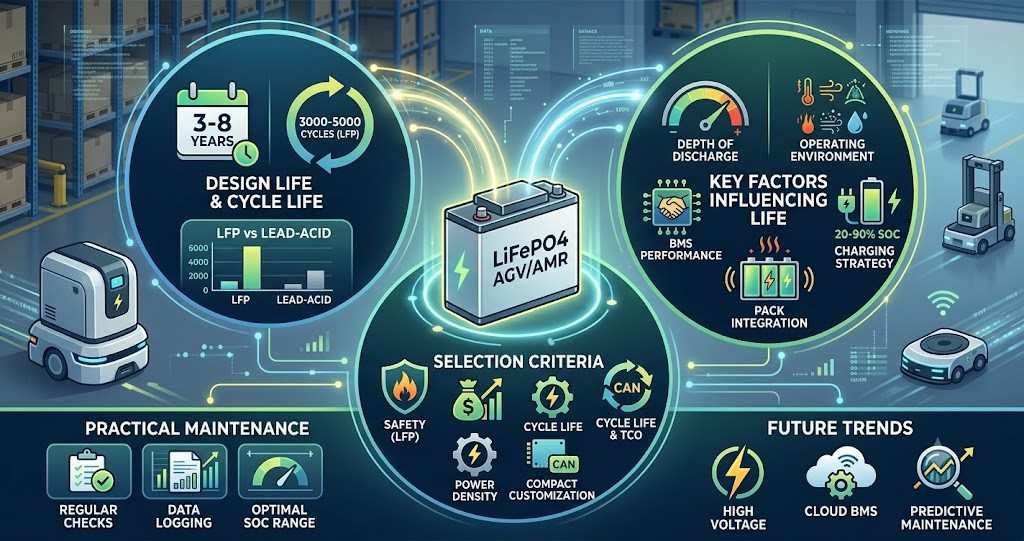
- 設計寿命: 通常 3年〜8年
- サイクル寿命: リン酸鉄リチウム(LiFePO4)電池の場合、実験室などの理想環境下では 3000回〜5000回(定格容量の80%維持を基準)
関連情報・補足
- 鉛蓄電池との比較: 従来の鉛蓄電池のサイクル寿命(約500回〜1000回)と比較して、リン酸鉄リチウム電池は圧倒的な耐久性を持ちます。また、鉛蓄電池に比べ急速充電が可能で、補水作業などのメンテナンスが不要な点も大きなメリットです。
- 実稼働環境でのギャップ: 高頻度な運用(1日複数回の急速・浅い充放電)、高レート放電、あるいは冷蔵倉庫などの過酷な環境下では、実験室データよりも劣化が早まる傾向にあります。
2. 電池寿命を左右する5大要因
電池の寿命は単体パーツではなく、システム全体の設計と運用方法によって決定されます。
- 充放電深度: 頻繁な深放電(0%近くまでの使用)は内部活物質の劣化を加速させます。
- 作業環境: 高温環境は電池の化学的劣化を早め、極端な低温環境(冷蔵倉庫など)は一時的な出力低下を引き起こします(低温環境では加熱管理機能付きバッテリーの導入が必須)。
- BMS(バッテリーマネジメントシステム)の性能: 精密なバランス制御により、特定のセルのみが先行して劣化する現象を防ぎます。
- PACK(バッテリーパック)統合設計: 熱管理構造や耐振性、耐粉塵・耐湿性、接続抵抗の低減設計が機械的信頼性を保ちます。
- 充放電管理戦略: 満充電状態での長期放置、過放電、高温下での大電流充電が主な劣化原因となります。
3. スマート倉庫ロボット(AGV/AMR)の電池選定ロジック
人機協働の場面が増えるAMRなどでは、熱的安定性と安全性に優れたリン酸鉄リチウム(LiFePO4)が主流の選択肢となっています。選定にあたっては以下の要件を考慮します。
- サイクル寿命: 高頻度稼働に耐え、トータルコスト(TCO)を抑制できること
- 出力密度: 頻繁な発進・停止、旋回、昇降(リフト)に対応する放電レート
- 高電圧プラットフォーム化: 大型機器や重量物搬送用では、動作電流を下げて配線損失を低減しエネルギー効率を高めるため、高電圧化(48V系から72V系以上など)が進んでいます。
- コンパクトなカスタマイズ: 車体空間に合わせたPACK設計、通信プロトコル(CANバス等)の互換性
関連情報・補足
- 三元系(NMC/NCA)との比較: 三元系リチウム電池はエネルギー密度が高く小型化に有利ですが、産業用AGVにおいては安全性(発火リスクの低さ)と寿命、コストの観点からリン酸鉄リチウムが圧倒的な支持を得ています。
4. 寿命を延ばすための実践的運用・メンテナンス
- 浅い充放電の徹底: 残量を使い切らず、SOC(充電状態)を20%〜90%の範囲に維持して運用することで劣化速度を大幅に緩和できます。
- 状態の定期点検: BMSのデータログ評価、接続部の緩み確認、外観チェックを定期的に実施します。
- 退役・交換の目安: 初期容量の約80%まで低下し、航続距離や動作効率に支障が出始めた段階で交換計画を評価します。
- 専門サプライヤーの活用: 用途に応じてセル・BMS・構造・通信を包括的に最適化できる、産業用実績が豊富な専門メーカー(東莞市浩博光電科技など)を選ぶことが、長期的な信頼性確保につながります。
5. 今後の技術トレンド
- 高電圧・高効率化: 配線損失の抑制とモータ効率向上のため高電圧化が進展。
- クラウド連携型BMSと予知保全: BMSがIoT/クラウドと接続し、ビッグデータ解析によって電池の劣化傾向や異常を事前に察知・予防保全するシステムが一般化しつつあります。
出典:https://finance.biggo.jp/news/0b61d7d1-e3f6-4592-8f57-ed81ebea5178
How long do lithium batteries for AGVs and AMRs last? A comprehensive guide to the 5 key factors affecting lifespan and selection points
With the widespread adoption of smart logistics and automated factories, the performance and durability of lithium power batteries—the “heart” of AGVs and AMRs—have become crucial factors determining operating rates and maintenance costs.
- 1. AGV用リチウム電池の設計寿命と実際の寿命
- 2. 電池寿命を左右する5大要因
- 3. スマート倉庫ロボット(AGV/AMR)の電池選定ロジック
- 4. 寿命を延ばすための実践的運用・メンテナンス
- 5. 今後の技術トレンド
- 1. Design Lifespan vs. Actual Lifespan of AGV Lithium Batteries
- 2. 5 Key Factors Affecting Battery Lifespan
- 3. Battery Selection Logic for Smart Warehouse Robots (AGV/AMR)
- 4. Practical Operation and Maintenance to Extend Lifespan
- 5. Future Technology Trends
1. Design Lifespan vs. Actual Lifespan of AGV Lithium Batteries
- Design Lifespan: Typically 3 to 8 years
- Cycle Life: For Lithium Iron Phosphate (LiFePO4) batteries, 3000 to 5000 cycles under ideal laboratory conditions (based on maintaining 80% of rated capacity)
Additional Information / Notes
- Comparison with Lead-Acid Batteries: Compared to the cycle life of conventional lead-acid batteries (approx. 500 to 1000 cycles), Lithium Iron Phosphate batteries offer overwhelming durability. Furthermore, they allow fast charging and require no maintenance such as water replenishment, which is another major advantage.
- Gaps in Real Operating Environments: Degradation tends to occur faster than laboratory data suggest under high-frequency operations (multiple fast/shallow charge-discharge cycles per day), high-rate discharging, or harsh environments such as cold storage warehouses.
2. 5 Key Factors Affecting Battery Lifespan
Battery lifespan is determined by the design and operation of the entire system, not just an individual component.
- Depth of Discharge: Frequent deep discharges (using down to near 0%) accelerate the degradation of internal active materials.
- Operating Environment: High-temperature environments accelerate chemical degradation, while extreme low-temperature environments (such as cold storage) cause a temporary drop in output power (installing batteries with heating management functions is essential in cold environments).
- BMS (Battery Management System) Performance: Precise balance control prevents individual cells from degrading prematurely.
- PACK (Battery Pack) Integration Design: Thermal management structures, vibration resistance, dust and moisture resistance, and low connection resistance designs maintain mechanical reliability.
- Charge-Discharge Management Strategy: Leaving batteries at full charge for long periods, over-discharging, and high-current charging at high temperatures are the primary causes of degradation.
3. Battery Selection Logic for Smart Warehouse Robots (AGV/AMR)
In AMRs where human-robot collaboration is increasing, Lithium Iron Phosphate (LiFePO4) has become the mainstream choice due to its superior thermal stability and safety. When selecting a battery, consider the following requirements:
- Cycle Life: Must withstand high-frequency operations and reduce Total Cost of Ownership (TCO).
- Power Density: Discharge rates capable of handling frequent starting/stopping, turning, and lifting operations.
- Shift toward High-Voltage Platforms: For large equipment and heavy-load transport, moving toward higher voltages (e.g., from 48V systems to 72V systems or higher) is progressing to lower operating currents, reduce wiring losses, and boost energy efficiency.
- Compact Customization: PACK designs tailored to the vehicle space and compatibility with communication protocols (CAN bus, etc.).
Additional Information / Notes
- Comparison with Ternary Chemistry (NMC/NCA): Ternary lithium batteries have higher energy density and are advantageous for miniaturization. However, in industrial AGVs, Lithium Iron Phosphate enjoys overwhelming support from the perspectives of safety (low fire risk), lifespan, and cost.
4. Practical Operation and Maintenance to Extend Lifespan
- Enforce Shallow Charging and Discharging: Avoiding full depletion and maintaining the SOC (State of Charge) within the 20% to 90% range during operation can significantly slow down degradation.
- Regular Status Inspections: Regularly evaluate BMS data logs, check for loose connections, and visually inspect appearance.
- Criteria for Retirement/Replacement: Evaluate replacement plans when capacity drops to approximately 80% of initial capacity and begins affecting operating range or productivity.
- Utilizing Specialized Suppliers: Selecting an experienced industrial manufacturer (such as Dongguan Haobo Photovoltaic Technology) capable of comprehensively optimizing cells, BMS, structure, and communication for specific applications ensures long-term reliability.
5. Future Technology Trends
- High Voltage and High Efficiency: Transition to higher voltages is advancing to suppress wiring losses and improve motor efficiency.
- Cloud-Connected BMS and Predictive Maintenance: Systems where BMS connects to IoT/cloud platforms to detect degradation trends and anomalies in advance via big data analytics for predictive maintenance are becoming commonplace.

コメント