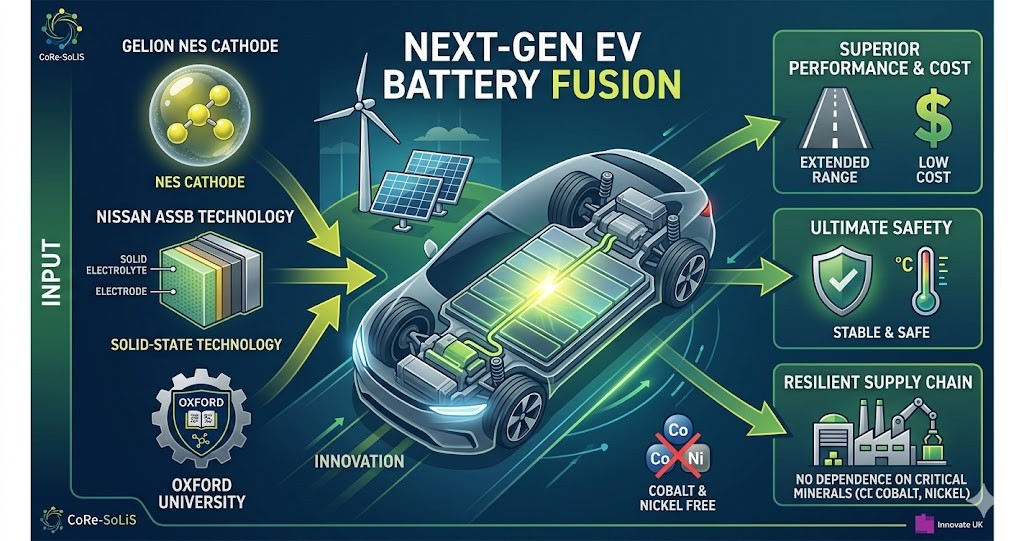
電気自動車(EV)の航続距離、安全性、そしてコストの課題を同時に解決する切り札として、「全固体電池」と「リチウム硫黄(Li-S)電池」の融合に大きな注目が集まっています。
英国のバッテリーイノベーション企業であるGelion(ジェリオン)社は、日産自動車の欧州開発拠点「日産テクニカルセンターヨーロッパ(NTCE)」およびオックスフォード大学との3年間の共同プロジェクト「CoRe-SoLiS(費用対効果が高く、耐久性に優れた固体リチウム硫黄電池)」を開始することを発表しました。本プロジェクトは、英国政府のイノベーション機関であるInnovate UKから総額240万ポンド(プロジェクト総費用340万ポンド)の助成金交付を受けて2026年6月から始動します。
本記事では、Gelion社の画期的な「NESカソード(正極)」技術と日産の固体電池開発力の融合がもたらすメリットに加え、リチウム硫黄電池の背景や市場への影響などの関連情報を交えて分かりやすく解説します。
- 1. Gelion社の独自技術「NESカソード」が解決する課題
- 2. 日産自動車の電動化戦略「EV36Zero」との相乗効果
- 3. 戦略的および経済的影響:英国の競争力強化
- 💡 関連情報・補足
- まとめ
- Overcoming Sulfur Battery Flaws: Gelion’s NES Encapsulation Technology Heads to Nissan’s All-Solid-State EV Lines
1. Gelion社の独自技術「NESカソード」が解決する課題
従来の硫黄系電池は、超低コストで高エネルギー密度という理論上の利点がありながらも、充放電時に硫黄が溶け出す「多硫化物(ポリサルファイド)のシャトル現象」による出力低下やサイクル寿命の短さが商業化への大きな障壁となっていました。
- ナノカプセル化硫黄(NES)によるブレークスルー Gelion社の独自技術「NES(Nano-structured Encapsulated Sulfur)」は、硫黄をナノレベルでカプセル化することで、従来の硫黄正極では不可能とされていた高い安定性とサイクル耐久性を実現。これまでの技術的制約を克服しました。
- コバルト・ニッケルフリーによるサプライチェーンの強靭化 NESは、地政学的リスクが高く高価な希少金属(ニッケルやコバルト)を、豊富に存在し超低コストな「硫黄」へと置き換えます。これにより、中国などの特定国に依存しない、強靭な欧米主導のサプライチェーン構築が可能になります。
- 既存の製造ラインへの適応性(ドロップイン・ソリューション) NESカソードは、既存のリチウムイオン電池のグローバル製造ラインや、将来の全固体電池生産ラインにそのまま組み込める(ドロップインできる)設計になっており、大規模な設備投資を抑えた導入が可能です。
2. 日産自動車の電動化戦略「EV36Zero」との相乗効果
日産自動車は、英国サンダーランド工場を中心としたEV製造ハブ「日産EV36Zero」を展開しており、独自の全固体電池(ASSB)の自社開発・量産化を推進しています。本プロジェクトはこの戦略と強力に合致しています。
- 自動車用固体電池の厳しいKPI(重要業績評価指標)を達成 本プロジェクトは、日産が求める厳しい性能・安全性・製造性の要件に基づき、「高出力(急速充放電)」「高エネルギー密度」「長寿命」を兼ね備えた自動車用固体リチウム硫黄電池パックの開発を目指します。
- 世界最高峰の専門知識の融合 GelionのNESカソード技術、日産の世界をリードする固体電池開発・生産能力、そして固体電池科学の世界的権威であるオックスフォード大学の高度な負極材料技術を組み合わせることで、開発・統合に伴うリスクを最小限に抑えます。
3. 戦略的および経済的影響:英国の競争力強化
全固体電池およびリチウム硫黄電池の国内開発は、英国が先進製造業における競争力を維持するために極めて重要な国家戦略の一部となっています。
- 国内バリューチェーンの確立 Gelionが英国国内における先進的な正極材のサプライヤーとしての基盤を築くことで、英国内に強靭な電池材料サプライチェーンを創出します。
- グローバルな協業体制の強化 Gelionは日産やオックスフォード大学だけでなく、日本のTDK、英国のQinetiQ、ドイツのマックス・プランク研究所などとも協業関係を構築しており、次世代バッテリーのグローバルリーダーとしての地位を固めつつあります。
💡 関連情報・補足
① リチウム硫黄電池(Li-S)とは?
リチウム硫黄電池は、正極に硫黄、負極にリチウム金属を使用する次世代電池です。理論上のエネルギー密度は従来のリチウムイオン電池の数倍に達し、大幅な軽量化が可能なため、EVだけでなく航空宇宙分野やドローンへの応用も期待されています。今回、液体電解質を「固体電解質」に置き換える全固体化により、液漏れや発火のリスクを排除した究極の安全性が実現します。
② 日産自動車の全固体電池(ASSB)ロードマップ
日産自動車は、長期ビジョン「Nissan Ambition 2030」において全固体電池の自社開発を明言しています。2024年には横浜工場内にパイロット生産ラインを公開し、2028年度までの量産化およびEVへの搭載を目指して開発を加速させています。今回のGelion社との共同プロジェクトは、日産が全固体電池のバリエーションとして、より低コストな材料選択肢(硫黄系)を視野に入れている戦略の現れと言えます。
まとめ
本プロジェクト「CoRe-SoLiS」は、バッテリー性能の限界を押し上げる2大イノベーションである「全固体化」と「硫黄正極」を融合させた、世界初の試みの一つです。
欧州・英国が次世代EV市場で主導権を握るための鍵は、以下の3点に集約されます。
- ニッケルやコバルトを排除した「超低コストかつ強靭なサプライチェーン」の確立
- 多硫化物の問題を克服したNES技術による「実用的な耐久性と安全性の獲得」
- 日産のEV36Zero戦略と連動した「実生産ラインへのスムーズなドロップイン」
単なる実験室レベルの技術にとどまらず、日産という大手自動車メーカーの厳しい量産・品質基準(KPI)を満たすアプローチを取ることで、全固体リチウム硫黄電池のマスマーケット(大量普及市場)への投入が現実味を帯びてきています。
出典:https://gelion.com/news/nissan-collaboration/
Overcoming Sulfur Battery Flaws: Gelion’s NES Encapsulation Technology Heads to Nissan’s All-Solid-State EV Lines
The fusion of all-solid-state batteries and lithium-sulfur (Li-S) batteries is attracting significant attention as a definitive solution to simultaneously address EV range, safety, and cost challenges.
Gelion, a UK-based battery innovation company, has announced the launch of CoRe-SoLiS (Cost-Effective, Reliable, Solid-State Lithium-Sulfur Batteries), a three-year collaborative project with Nissan Technical Centre Europe (NTCE) and the University of Oxford. Backed by a total grant of 2.4 million GBP (with a total project cost of 3.4 million GBP) from Innovate UK, the UK government’s innovation agency, the project officially kicks off in June 2026.
This article provides an easy-to-understand overview of the benefits brought by the integration of Gelion’s breakthrough NES cathode technology and Nissan’s solid-state battery development capabilities, along with relevant context regarding the background of lithium-sulfur batteries and their market impact.
1. Challenges Solved by Gelion’s Proprietary “NES Cathode” Technology
While traditional sulfur-based batteries offer theoretical advantages of ultra-low cost and high energy density, commercialization has faced a major barrier: the polysulfide shuttle effect, where sulfur dissolves during charging and discharging, causing power degradation and poor cycle life.
- A Breakthrough with Nano-structured Encapsulated Sulfur (NES) Gelion’s proprietary NES technology encapsulates sulfur at the nanoscale. This achieves high stability and cycle durability previously deemed impossible for sulfur cathodes, effectively overcoming historical technical limitations.
- Supply Chain Resilience via Cobalt- and Nickel-Free Chemistry NES replaces expensive, highly geopolitically sensitive rare metals like nickel and cobalt with sulfur, which is abundant and ultra-low cost. This enables the creation of a resilient, Western-led supply chain independent of specific nations like China.
- Adaptability to Existing Production Lines (Drop-in Solution) The NES cathode is designed to be integrated directly into existing global lithium-ion manufacturing lines and future all-solid-state battery production lines. This allows for adoption without requiring massive capital expenditures for new machinery.
2. Synergy with Nissan’s “EV36Zero” Electrification Strategy
Nissan is advancing the self-development and mass production of its own all-solid-state batteries (ASSB) centered around “Nissan EV36Zero,” its EV manufacturing hub based at the Sunderland plant in the UK. This joint project aligns strongly with that strategy.
- Meeting Strict Automotive Solid-State Battery KPIs Based on Nissan’s rigorous requirements for performance, safety, and manufacturability, the project aims to develop an automotive solid-state lithium-sulfur battery pack that delivers high power (fast charge/discharge), high energy density, and a long lifespan.
- A Convergence of World-Class Expertise By combining Gelion’s NES cathode technology, Nissan’s world-leading solid-state battery development and production capabilities, and the University of Oxford’s advanced anode material expertise, the project minimizes the technical risks associated with development and system integration.
3. Strategic and Economic Impact: Boosting UK Competitiveness
The domestic development of all-solid-state and lithium-sulfur batteries stands as a critical pillar of national strategy to ensure the UK retains its competitive edge in advanced manufacturing.
- Establishing a Domestic Value Chain By laying the groundwork for Gelion to become a domestic supplier of advanced cathode materials, the project fosters a resilient battery materials supply chain within the UK.
- Strengthening Global Collaborations In addition to Nissan and the University of Oxford, Gelion has established collaborative relationships with Japan’s TDK, the UK’s QinetiQ, and Germany’s Max Planck Institute, solidifying its position as a global leader in next-generation battery innovation.
💡 Related Information and Insights
I. What is a Lithium-Sulfur (Li-S) Battery?
Lithium-sulfur batteries are next-generation cells that utilize sulfur in the cathode and lithium metal in the anode. Their theoretical energy density is several times higher than that of conventional lithium-ion batteries. Because they enable significant weight reduction, they are highly anticipated not just for EVs, but also for aerospace and drone applications. By replacing the liquid electrolyte with a solid electrolyte—shifting to an all-solid-state design—the risk of leaks or fire is eliminated, delivering ultimate safety.
II. Nissan’s All-Solid-State Battery (ASSB) Roadmap
Nissan has explicitly committed to the in-house development of all-solid-state batteries under its long-term vision, “Nissan Ambition 2030.” The automaker unveiled its pilot production line at the Yokohama Plant and is accelerating development with the goal of mass production and vehicle integration by fiscal year 2028. This collaborative project with Gelion indicates that Nissan is actively exploring lower-cost material alternatives, like sulfur, as part of its broader solid-state battery portfolio.
Summary
The CoRe-SoLiS project represents one of the world’s first attempts to fuse two major innovations pushing the boundaries of battery performance: all-solid-state design and sulfur cathodes.
The keys for Europe and the UK to seize the lead in the next-generation EV market are concentrated in three main points:
- Establishing an ultra-low-cost, resilient supply chain by eliminating nickel and cobalt.
- Achieving practical durability and safety via NES technology that overcomes the polysulfide shuttle issue.
- Ensuring a smooth drop-in transition into actual manufacturing lines in sync with Nissan’s EV36Zero strategy.
By moving beyond simple laboratory-level technology and taking an approach that meets the strict mass-production and quality standards (KPIs) of an automotive giant like Nissan, the rollout of all-solid-state lithium-sulfur batteries to the mass market is fast becoming a reality.
コメント