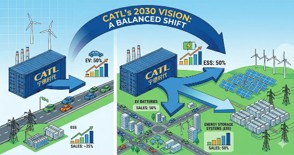
世界最大の電池メーカーである中国のCATL(寧徳時代)が、重大な事業転換の予測を明らかにしました。2026年6月4日、同社幹部はロイター通信のインタビューに対し、現在は総売上高の約25%にとどまっている「エネルギー貯蔵システム(ESS)」向け製品の売上比率が、2030年までに世界の半分(50%)に達するとの見通しを示しました。
電気自動車(EV)向けバッテリーで覇権を握ったCATLが、なぜ今「エネルギー貯蔵」にこれほど注力するのか。その背景と発表の要点を整理・解説します。
1. 発表の要点(ニュースより)
- 驚異的な成長スピード: 5年前には全売上高のわずか2%に過ぎなかったエネルギー貯蔵事業が、現在は25%に急増。2030年にはEV向け(現在約4分の3)と並ぶ、会社の柱へと成長する予測。
- 需要急増の理由: 太陽光や風力などの再生可能エネルギーは発電量が天候に左右されるため、電力を安定供給するための「蓄電システム」が世界中で不可欠になっている。
- 欧州市場の現状: 中国・米国に次ぐ第3の市場である欧州では、再生可能エネルギーと蓄電を組み合わせたシステムや、送電網(グリッド)に直接つなぐ「系統用蓄電システム」への投資が活発化している。
- 地政学リスクとコスト課題: 中東情勢(米国・イスラエルとイランの緊張)等によるリチウム、銅、アルミなどの原材料価格高騰が課題。しかし、同社は中国南部での自社採掘や世界最大級のリサイクル工場の運営により、長期的なコスト低減を目指す。
2. 【関連情報】なぜ「エネルギー貯蔵(ESS)」市場が爆発しているのか?
CATLの強気な予測を支える、世界的な背景と技術的課題を補足します。
① 「送電網の混雑」とクリーンエネルギーのジレンマ
太陽光パネルや風力発電が急速に普及した結果、世界各地で「作られた電気が送電網(グリッド)の容量を超えてしまい、流せない」という送電網の混雑(ボトルネック)が多発しています。
これを解決するのが大型の蓄電システム(ESS)です。昼間に余った電力をバッテリーに貯め、需要が高まる夜間に放出することで、送電網への負荷を減らし、再生可能エネルギーの無駄をなくします。
② 【重要】CATLが「火災試験センター」に4億4,000万ドルを投じる理由
記事内で、CATLがエネルギー貯蔵の試験センターに4億4,000万ドル(約600億〜700億円規模)を投資すると言及されていますが、これには深刻な背景があります。
- 巨大化するリスク: EVのバッテリー火災も問題視されますが、エネルギー貯蔵(ESS)はコンテナサイズ、あるいはビル一棟クラスの「超巨大なリチウムイオン電池の塊」です。万が一火災や爆発が起きれば、周辺地域や電力インフラに甚大な損害を与えます。
- 顧客の最大の懸念を払拭: 安全性への懸念は、大口顧客(電力会社や政府)が導入を躊躇する最大の原因です。CATLは巨額を投じて送電網をシミュレーションし、爆発原因を徹底調査する体制を整えることで、「世界で最も安全なインフラ用バッテリー」としての信頼を勝ち取る戦略に出ています。
3. CATLのグローバル戦略と製造基盤
EV向けでの実績とライセンス展開を武器に、エネルギー貯蔵分野でも世界的な現地化を進めています。
| 展開地域 | 主な動き・生産拠点 |
| ヨーロッパ | ・ドイツおよびハンガリーに自社工場を保有。 ・自動車大手ステランティスとの合弁で、スペインに新工場を着工。 ※欧州のESS業界は、EV業界に比べて「部品の現地調達(域内生産)」の規制要求が現状は緩い。 |
| 米国 | ・フォード・モーターがミシガン州に建設中の工場に対し、EVバッテリー技術のライセンス(LFP:リン酸鉄リチウムイオン電池技術など)を供与。 |
まとめ:今後の展望
これまでCATLの業績は、世界のEV市場の成長スピード(EVシフトの加速や減速)に大きく左右されてきました。しかし、2030年に向けてエネルギー貯蔵(ESS)を売上の半分にまで育てることで、同社は「自動車部品メーカー」から、世界のエネルギーインフラを支える「クリーンエナジーの基盤企業」へと脱皮しようとしています。
原材料価格の変動や安全性の確保というハードルを、自社のサプライチェーン(採掘・リサイクル)と巨額のR&D投資でどう乗り越えていくのかが、今後の注目点です。
From EVs to “Energy Storage (ESS)”: Global Leader CATL Predicts Storage to Account for 50% of Global Sales by 2030
China’s CATL (Contemporary Amperex Technology Co., Limited), the world’s largest battery manufacturer, has revealed a forecast indicating a significant business pivot. On June 4, 2026, a company executive stated in an interview with Reuters that products for Energy Storage Systems (ESS), which currently account for about 25% of total revenue, are projected to make up half (50%) of its global sales by 2030.
Why is CATL, having already secured dominance in electric vehicle (EV) batteries, shifting such immense focus toward “energy storage”? Below is an overview and analysis of the background and key takeaways from the announcement.
1. Key Takeaways from the Announcement (From the News)
- Phenomenal Growth Speed: The energy storage business, which accounted for a mere 2% of total sales just five years ago, has surged to 25% today. By 2030, it is projected to grow into a primary pillar of the company, rivaling the EV sector (which currently accounts for roughly three-quarters of sales).
- The Reason Behind the Surge in Demand: Because intermittent renewable energy sources, such as solar and wind, depend heavily on weather conditions, large-scale storage systems have become indispensable worldwide to ensure a stable power supply.
- Current State of the European Market: In Europe—CATL’s third-largest energy storage market after China and the US—investments are accelerating both in co-located renewable-plus-storage systems and in grid-scale storage systems, depending on regional grid bottlenecks.
- Geopolitical Risks and Cost Challenges: Rising raw material prices for lithium, copper, and aluminum driven by Middle East tensions (such as conflicts involving the US, Israel, and Iran) pose challenges. However, the company aims to reduce long-term costs through its own mining operations in southern China and by running one of the world’s largest recycling plants.
2. [Context] Why is the “Energy Storage (ESS)” Market Exploding?
Here is the supplementary global context and technical challenges supporting CATL’s aggressive forecast.
(1) Grid Congestion and the Clean Energy Dilemma
The rapid expansion of solar panels and wind turbines worldwide has led to frequent “grid congestion” (bottlenecks), where the electricity generated exceeds grid capacity and cannot be transmitted.
Large-scale Energy Storage Systems (ESS) solve this issue. By storing surplus power generated during the day and discharging it during peak nighttime hours, these systems alleviate grid stress and eliminate wasted renewable energy.
(2) [Crucial] Why CATL is Investing 0 Million in a “Fire Testing Center”
The article mentions that CATL will invest $440 million into a dedicated testing center for energy storage, a decision rooted in a very serious background:
- The Scale of Risk: While EV battery fires are a documented concern, an ESS is a “gargantuan cluster of lithium-ion batteries” the size of shipping containers or even entire buildings. In the rare event of a fire or explosion, the damage to the surrounding area and power infrastructure can be catastrophic.
- Allaying Customers’ Primary Concern: Safety anxieties are the single greatest barrier preventing large-scale clients (utilities and governments) from adopting these systems. By investing heavily to simulate grids and thoroughly investigate the root causes of explosions, CATL’s strategy is to win global trust as the provider of the world’s safest infrastructure-grade batteries.
3. CATL’s Global Strategy and Manufacturing Footprint
Leveraging its proven track record and technology-licensing model in the EV space, CATL is aggressively pursuing global localization for its energy storage business.
| Target Region | Key Operations & Production Bases |
| Europe | • Operates proprietary manufacturing plants in Germany and Hungary. • Broke ground on a new facility in Spain via a joint venture with automotive giant Stellantis NV. Note: Unlike the automotive sector, the European ESS industry currently faces less stringent pressure regarding localized component sourcing. |
| United States | • Licensing its EV battery technology (such as LFP: lithium iron phosphate technology) to Ford Motor Company for a plant Ford is building in south-central Michigan. |
Summary: Future Outlook
Historically, CATL’s financial performance has been heavily tied to the growth trajectory of the global EV market (the acceleration or deceleration of the EV transition). However, by cultivating Energy Storage Systems (ESS) to represent half of its sales by 2030, the company is poised to evolve from an “automotive component supplier” into a “core clean energy infrastructure enterprise” powering the world’s electrical grids.
How the company navigates hurdles like raw material price volatility and safety assurance through its vertical integration (mining and recycling) and massive R&D investments will remain the key point to watch moving forward.
コメント