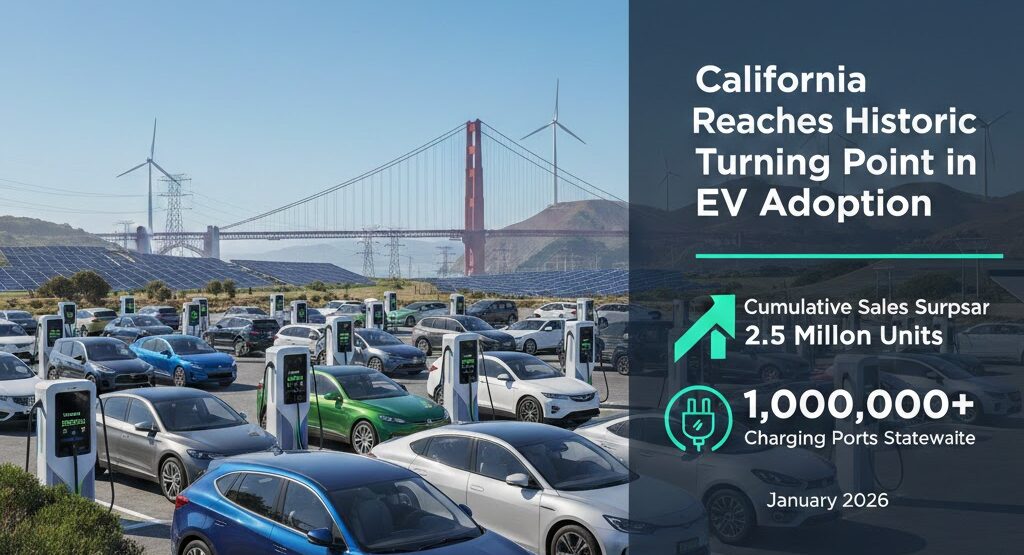
カリフォルニア州は長年、クリーンエネルギーへの移行において全米、そして世界をリードしてきました。2026年1月、同州はゼロエミッション車(ZEV)の累計販売台数が250万台を超えるという、持続可能な交通の歴史における大きな節目を迎えました。
連邦政府によるインセンティブの打ち切りや経済的な不透明感が漂う中、カリフォルニア州は独自の政策と野心的な投資によって、この「クリーンカー革命」を加速させています。
ZEV販売の現状:逆風を跳ね返す驚異的な成長
2025年第4四半期のデータによると、カリフォルニア州の新車販売におけるZEVの割合は18.9%(79,066台)を記録しました。これは、2019年末からの累計販売台数が300%以上増加したことを意味します。
特筆すべきは、全米レベルでの失速との対比です。
- 全米の動向: 連邦政府のZEVインセンティブが2025年9月に終了した影響で、第4四半期のZEVシェアは前四半期の10.5%から5.8%へと急落しました。
- カリフォルニアの強さ: 州独自の強力な支援策と消費者の高い関心により、連邦政府の「逆風」の中でも高い市場占有率を維持しています。
リーダーたちの声
カリフォルニア州エネルギー局のナンシー・スキナー局長は、「ガソリンスタンドに行く必要がなくなったという実感は、消費者にとって大きなドライビングエクスペリエンスの向上だ」と述べ、州の歴史的投資がもたらした進歩を強調しました。
また、大気資源局のローレン・サンチェス委員長は、ニューサム知事が提案した2億ドルの新たな還付金プログラムに触れ、「これは単なる環境対策ではなく、賢明な経済政策である」と、産業競争力の維持を訴えています。
多様化する市場と圧倒的なインフラ網
現在、カリフォルニア州の消費者は149種類に及ぶZEVモデルから選択が可能であり、市場の多様性はかつてないレベルに達しています。この普及を支えているのが、州全土に張り巡らされた充電ネットワークです。
カリフォルニア州の充電インフラ(2026年現在) | 設置場所 | 推定設置数 | 主な設置箇所 |
・公共・民間共用 | 20万か所以上 | スーパー、ガソリンスタンド、職場、マンション | | ・家庭用 | 約80万か所 | 個人住宅 | | 合計 | 100万か所以上 | 州全土のネットワーク | |
2026年の展望:誰もが手が届くEV社会へ
カリフォルニア州エネルギー委員会(CEC)は、2025年から2026年度にかけて、小型ZEVインフラに9,850万ドル(約145億円)の追加資金を割り当てました。
今後の焦点は以下の3点に絞られます:
- 集合住宅の充電環境: アパートやマンションなど、自宅での充電が困難だった層への支援。
- アクセスの平等性: インフラの設置が特定の地域に偏っていないかを評価する(SB 1000に基づく評価)。
- 技術革新の継続: レベル1、レベル2充電器の戦略的配置による利便性の向上。
関連情報:ZEVとは? ZEV(Zero Emission Vehicle)には、電気自動車(BEV)、プラグインハイブリッド車(PHEV)、および燃料電池車(FCEV)が含まれます。カリフォルニア州は2035年までに州内で販売されるすべての新車をZEVにする目標を掲げています。
カリフォルニア州のこの歩みは、政策、技術、そして消費者の意識が一体となったとき、いかに急速に社会が変わるかを示す世界的なモデルケースとなっています。
出典:https://www.energy.ca.gov/news/2026-01/california-surpasses-25-million-zev-sales
California Reaches Historic Turning Point in EV Adoption: Cumulative Sales Surpass 2.5 Million Units
California has long led the nation and the world in the transition to clean energy. In January 2026, the state reached a major milestone in the history of sustainable transportation as cumulative sales of zero-emission vehicles (ZEVs) exceeded 2.5 million units.
Despite the expiration of federal incentives and lingering economic uncertainty, California is accelerating this “clean car revolution” through its own unique policies and ambitious investments.
Current State of ZEV Sales: Remarkable Growth Defying Headwinds
According to data from the fourth quarter of 2025, ZEVs accounted for 18.9% of new car sales in California (79,066 units). This represents a more than 300% increase in cumulative sales since the end of 2019.
The contrast with the national slowdown is particularly striking:
- National Trends: Following the end of federal ZEV incentives in September 2025, the ZEV market share across the U.S. plummeted from 10.5% in the third quarter to 5.8% in the fourth quarter.
- California’s Strength: Thanks to robust state-level support and strong consumer interest, California has maintained a high market share even amidst these federal “headwinds.”
Voices of Leadership
Nancy Skinner, Director of the California Energy Office, emphasized the progress driven by the state’s historic investments, noting, “The realization that you no longer need to visit a gas station is a major enhancement to the driving experience for consumers.”
Lauren Sanchez, Chair of the Air Resources Board, highlighted Governor Newsom’s proposed 200 million dollar new rebate program, asserting, “This is not just an environmental measure; it is a smart economic policy” aimed at maintaining industrial competitiveness.
A Diversifying Market and Overwhelming Infrastructure
California consumers can now choose from 149 different ZEV models, with market diversity reaching unprecedented levels. This widespread adoption is supported by a charging network stretched across the entire state.
California Charging Infrastructure (as of 2026)
| Location Type | Estimated Units | Primary Locations |
| Shared Public/Private | Over 200,000 | Supermarkets, Gas Stations, Workplaces, Apartments |
| Residential | Approx. 800,000 | Private Homes |
| Total | Over 1,000,000 | Statewide Network |
2026 Outlook: Toward an EV Society Accessible to All
The California Energy Commission (CEC) has allocated 98.5 million dollars in additional funding for light-duty ZEV infrastructure for the 2025-2026 fiscal year.
The future focus will be centered on these three areas:
- Charging in Multi-Unit Dwellings: Supporting those living in apartments or condos who have previously found it difficult to charge at home.
- Equity in Access: Evaluating whether infrastructure deployment is disproportionately distributed (Evaluation based on SB 1000).
- Continued Innovation: Improving convenience through the strategic placement of Level 1 and Level 2 chargers.
Related Info: What is a ZEV?
ZEVs (Zero Emission Vehicles) include Battery Electric Vehicles (BEVs), Plug-in Hybrid Electric Vehicles (PHEVs), and Fuel Cell Electric Vehicles (FCEVs). California has set a goal for all new cars sold in the state to be ZEVs by 2035.
California’s journey serves as a global model, demonstrating how rapidly society can transform when policy, technology, and consumer awareness align.
コメント