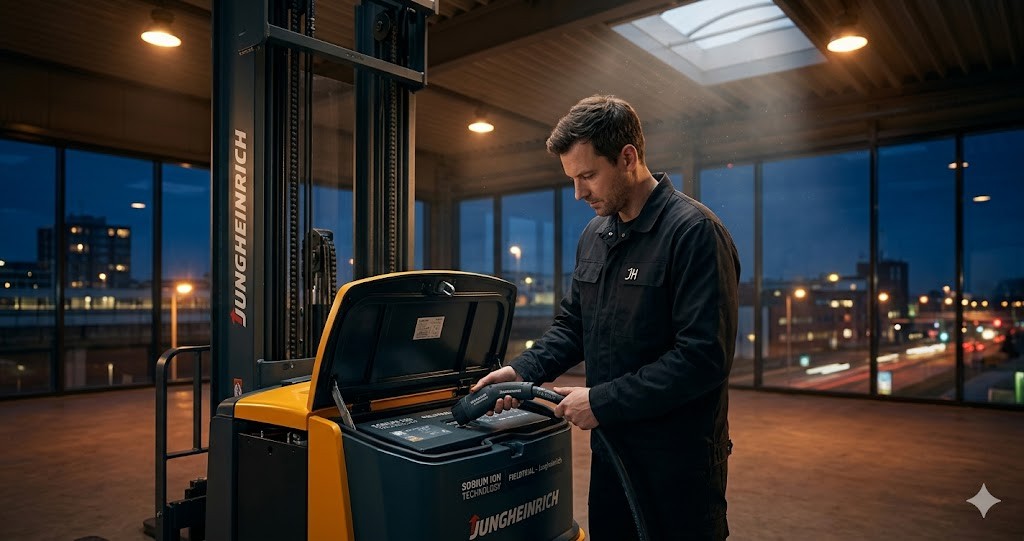
イントラロジスティクス(社内物流)の分野において、持続可能でコスト効率に優れた次世代のエネルギー源への転換が急速に進んでいます。ドイツの主要機器メーカーであるユングハインリッヒ社(Jungheinrich)によるナトリウムイオン電池の実地試験開始は、物流業界における脱炭素化と原材料リスク軽減に向けた重要なステップとして注目を集めています。
1. ニュースの概要
- 実地試験の開始:ドイツのイントラロジスティクス機器メーカーであるユングハインリッヒ社は、一部の顧客企業と共同で、フォークリフトなどの産業用トラックにナトリウムイオン電池を搭載した実地試験を開始しました(2026年5月14日発表)。
- 試験の目的:幅広い運転条件下における新しい電池技術の性能と信頼性を検証し、物流特有のニーズに合わせてカスタマイズを進めることです。
- 現在の状況:具体的な試験運用の提携顧客や、投入している機器のモデル名は公表されていません。初期のラボ試験およびフィールド試験からは、寿命、性能、安全性に関する貴重なデータが得られています。
2. マテリアルハンドリング機器における動力源の変遷(関連情報含む)
- 従来(過去):フォークリフトやトラクターなどの倉庫搬送機器は、長らく「ディーゼルエンジン」または「鉛蓄電池(Lead-acid battery)」に依存していました。鉛蓄電池は安価ですが、充電時間が長く、定期的な補水メンテナンスが必要という課題がありました。
- リチウムイオン電池の台頭:ユングハインリッヒ社は10年以上前に、リチウムイオン電池駆動の搬送機器を市場に投入した先駆者です。2017年には1,000台を超える大型受注を獲得し、近年では高電圧電動フォークリフト「FalcOn」などを発表しています。リチウムイオン電池は、高いエネルギー密度、短い充電時間(継ぎ足し充電可能)、メンテナンスフリーという利点をもたらしました。
- 次世代へのステップ(現在):リチウムイオンに続く新たな選択肢として、今回のナトリウムイオン電池の検証へと至っています。
3. ナトリウムイオン電池を採用するメリットと特徴(関連情報含む)
- コスト効率と持続可能性:海塩などから得られるナトリウムは世界中に豊富に存在するため、原材料費を大幅に抑えられます。
- 地政学的・供給リスクの回避:リチウムイオン電池に不可欠なリチウムやコバルトといった「クリティカルコモディティ(重要鉱物)」を使用しないため、特定の国への依存や価格高騰のリスクを回避できます。
- 安全性と耐環境性:熱暴走のリスクが低く、高い安全性を持ちます。また、極端な温度環境(特に低温下)でも優れた性能を発揮するため、冷凍倉庫などの過酷な物流現場への適応が期待されています。
- 課題と適材適所の運用(補足):リチウムイオン電池と比較すると、現時点では「エネルギー密度(体積あたりの容量)」がやや低いという特性があります。そのため、超長時間連続駆動が必要な重作業よりも、機動性やコスト、頻繁な充電が可能な環境において強みを発揮すると見られています。
4. 企業のコメントと今後の展望
- ユングハインリッヒ社の技術開発責任者であるマーティン・フォン・ヴェルダー(Martin von Werder)氏は、国際的な電池メーカーや研究パートナーと緊密に連携し、高性能かつ持続可能なソリューションの提供に精力的に取り組んでいると述べています。
- ハンブルクに本社を置く同社は、このイノベーションを早期に取り入れることで、顧客に新技術のメリットを迅速に提供し、持続可能で将来性のある物流(グリーンロジスティクス)に積極的に貢献する姿勢を強調しています。
出典:https://batteryindustry.net/jungheinrich-tests-sodium-ion-batteries-in-warehouse-handling-equipment/
Jungheinrich Launches Field Tests of Sodium-Ion Batteries in Warehouse Handling Equipment
In the field of intralogistics (internal logistics), the transition to sustainable and cost-effective next-generation energy sources is accelerating rapidly. The launch of field tests for sodium-ion batteries by Jungheinrich, a major German equipment manufacturer, is drawing significant attention as a crucial step toward decarbonization and the mitigation of raw material risks in the logistics industry.
1. News Overview
- Launch of Field Tests: Jungheinrich, a German intralogistics equipment manufacturer, has launched field tests of sodium-ion batteries in industrial trucks, such as forklifts, in cooperation with select corporate customers (announced on May 14, 2026).
- Objective of the Tests: To verify the performance and reliability of this new battery technology under a wide range of operating conditions, and to customize it to meet the specific needs of logistics.
- Current Status: The specific customers partnering in the trials and the exact equipment model names have not been disclosed. However, initial laboratory and field tests have already provided valuable data regarding the lifespan, performance, and safety of these batteries.
2. Evolution of Power Sources in Material Handling Equipment (Including Contextual Information)
- Conventional (Past): For a long time, warehouse handling equipment such as forklifts and tractors relied heavily on diesel engines or lead-acid batteries. While lead-acid batteries are inexpensive, they pose challenges such as long charging times and the need for regular water-refilling maintenance.
- Rise of Lithium-Ion Batteries: More than a decade ago, Jungheinrich was a pioneer in introducing lithium-ion battery-powered handling equipment to the market. In 2017, the company secured its first large-scale order of over 1000 units, and in recent years, it has introduced products like the high-voltage electric forklift FalcOn. Lithium-ion batteries brought major advantages to intralogistics, including high energy density, short charging times (allowing opportunity charging), and maintenance-free operation.
- Step Toward the Next Generation (Present): As the next option following lithium-ion batteries, the company has now moved forward with the validation of sodium-ion batteries.
3. Benefits and Features of Adopting Sodium-Ion Batteries (Including Contextual Information)
- Cost-Efficiency and Sustainability: Sodium, which can be derived from sources like sea salt, is abundantly available worldwide, allowing raw material costs to be significantly reduced.
- Mitigation of Geopolitical and Supply Risks: Since sodium-ion batteries do not use critical commodities like lithium or cobalt—which are essential for lithium-ion batteries—they eliminate dependence on specific countries and the risk of price spikes.
- Safety and Environmental Resilience: These batteries carry a low risk of thermal runaway and offer high safety. Furthermore, they perform exceptionally well even in extreme temperature environments (particularly at low temperatures), raising expectations for their application in harsh logistics environments like cold storage warehouses.
- Challenges and Right-Place, Right-Time Utilization (Supplementary Note): Compared to lithium-ion batteries, sodium-ion batteries currently have a slightly lower energy density (capacity per unit volume). Therefore, rather than heavy-duty operations that require continuous running for extremely long hours, they are expected to show their strengths in environments that prioritize agility and cost, and where frequent charging is feasible.
4. Corporate Comments and Future Outlook
- Martin von Werder, Head of Technical Development at Jungheinrich, explained that the company is working intensively on developing new battery technologies in close cooperation with international battery manufacturers and research partners to continue providing high-performance, sustainable, and cost-effective solutions.
- Headquartered in Hamburg, the company emphasizes that by adopting this innovation early, it aims to deliver the benefits of new technology to its customers as quickly as possible, actively contributing to sustainable and future-proof logistics (green logistics).

コメント