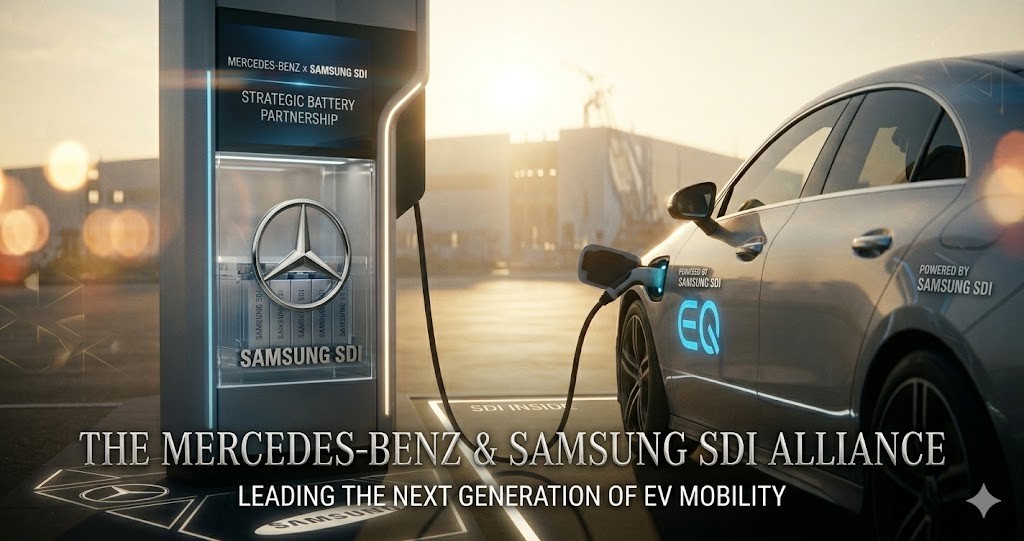
メルセデス・ベンツが次世代EVの核となるバッテリー供給網を再編し、韓国サムスンSDIとの大型契約に踏み切ろうとしています。現在、自動車業界では特定の地域やサプライヤーへの依存を避け、安定した供給体制を構築する「マルチサプライヤー戦略」が不可欠となっています。メルセデスは自社主導の合弁事業が難航する中、確かな実績を持つサムスンSDIをパートナーに選ぶことで、エントリーモデルの競争力を一気に高める狙いです。
- 1. サムスンSDIとの戦略的供給契約の可能性
- 2. MMAプラットフォームへの適用
- 3. 欧州における専用生産拠点の検討
- 4. サプライチェーンのリスク管理と多様化
- 補足:関連情報
- South Korean Batteries to Fill the Production Gap: Why Mercedes Chose Samsung SDI
- 1. Potential Strategic Supply Agreement with Samsung SDI
- 2. Integration with the MMA Platform
- 3. Dedicated European Production Sites Under Consideration
- 4. Supply Chain Risk Management and Diversification
- Supplementary Information
1. サムスンSDIとの戦略的供給契約の可能性
メルセデス・ベンツとサムスンSDIは、2028年以降に市場投入される新型EV向けの角型バッテリー供給について、最終段階の交渉に入っています。
- 供給規模と時期: 2028年モデルから搭載を開始し、供給規模は数十ギガワット時(GWh)に達する見込みです。契約金額は10兆ウォン(約1.1兆円)を超えると推算されています。
- 初の採用: これまでメルセデスは主にCATL(中国)やLGエナジーソリューション(韓国)からセルを調達してきましたが、サムスンSDI製のセルがメルセデス車に搭載されれば今回が初めてとなります。
- トップ外交: サムスン電子のイ・ジェヨン会長が自ら陣頭指揮を執り、メルセデス幹部と定期的に会談を重ねたことで、プロジェクトが急進展したと報じられています。
2. MMAプラットフォームへの適用
このバッテリーは、メルセデスの次世代エントリークラスを支える「MMA(メルセデス・モジュラー・アーキテクチャ)」プラットフォームに採用される予定です。
- 対象車種: 新型CLA、CLAシューティングブレーク、GLA、GLBに加え、2026年2月に開発が確認された新型AクラスのEV版にも搭載される見通しです。
- セル構成: MMAプラットフォームは4つのモジュールで構成される「スケートボード・シャシー」を採用しており、192個の角型セルを搭載します。
- エネルギー容量: 現在のMMA仕様では、NMC(ニッケル・マンガン・コバルト)セルで85kWh、LFP(リン酸鉄リチウム)セルで58kWhの純エネルギー容量を提供しています。
3. 欧州における専用生産拠点の検討
両社の協議には、メルセデス専用の製造ラインを設ける「欧州内での新工場設立」が含まれています。
- 候補地: サムスンSDIは物流とコスト効率を考慮し、オーストリア、スロバキア、チェコ共和国などを新工場の建設候補地として検討しています。
- 背景: メルセデスは当初、ステランティス等との合弁会社ACC(Automotive Cells Company)から角型バッテリーを調達する計画でしたが、ACCの生産遅延とコスト増により計画が頓挫。その穴を埋める代替サプライヤーとしてサムスンSDIが浮上しました。
4. サプライチェーンのリスク管理と多様化
今回の契約には、昨今の品質問題や地政学的リスクへの対応という側面もあります。
- リコールへの対応: 現在、ファラシス・エナジー(中国)製のセルを搭載した一部モデル(EQA/EQB 250+)が世界的なリコール対象となっており、信頼性の高いサプライヤーへの切り替えが急務となっています。
- 中国依存の脱却: 主力サプライヤーであるCATLへの依存度を下げ、韓国メーカーとの協力を深めることで、供給の安定化を図っています。
補足:関連情報
- MMAプラットフォームの効率性: VISION EQXXの技術を継承し、100km走行あたり12kWhという驚異的な電費効率を目指しています。
- 800Vシステム: MMAは800Vの高電圧システムを採用しており、320kWの急速充電により、10分で最大300km走行分の充電が可能です。
- 角型セル (Prismatic Cell): 平型や円筒型に比べ、衝撃に強く冷却効率が良いのが特徴。メルセデスはMMA以降、この形状を標準化する方針です。
出典:https://batteryindustry.net/mercedes-may-secure-battery-cell-supply-deal-with-samsung-sdi/
South Korean Batteries to Fill the Production Gap: Why Mercedes Chose Samsung SDI
Mercedes-Benz is restructuring its battery supply chain—the core of its next-generation electric vehicles (EVs)—and is poised to enter a major contract with South Korea’s Samsung SDI. In today’s automotive industry, a “multi-supplier strategy” is essential to avoid over-reliance on specific regions or vendors. With its own joint venture initiatives facing difficulties, Mercedes aims to rapidly boost the competitiveness of its entry-level models by partnering with Samsung SDI, a player with a proven track record.
1. Potential Strategic Supply Agreement with Samsung SDI
Mercedes-Benz and Samsung SDI are in final-stage negotiations for the supply of prismatic batteries for new EVs slated for market launch starting in 2028.
- Supply Scale and Timing: Implementation is expected to begin with 2028 models, with a supply scale reaching tens of gigawatt-hours (GWh). The contract value is estimated to exceed 10 trillion won (approx. 1.1 trillion JPY).
- First-Time Adoption: While Mercedes has primarily sourced cells from CATL (China) and LG Energy Solution (South Korea), this would mark the first time Samsung SDI cells are used in Mercedes vehicles.
- Executive Diplomacy: Reports suggest the project accelerated following regular meetings between Mercedes executives and Samsung Electronics Chairman Lee Jae-yong, who personally led the initiative.
2. Integration with the MMA Platform
These batteries are intended for the “Mercedes Modular Architecture” (MMA) platform, which supports the company’s next-generation entry-class vehicles.
- Target Models: The batteries are expected to power the new CLA, CLA Shooting Brake, GLA, and GLB, as well as the EV version of the new A-Class, which was confirmed for development in February 2026.
- Cell Configuration: The MMA platform utilizes a “skateboard chassis” consisting of four modules, housing a total of 192 prismatic cells.
- Energy Capacity: Current MMA specifications offer a net energy capacity of 85 kWh for NMC (Nickel Manganese Cobalt) cell versions and 58 kWh for LFP (Lithium Iron Phosphate) versions.
3. Dedicated European Production Sites Under Consideration
Discussions include the establishment of new manufacturing facilities in Europe featuring dedicated production lines for Mercedes.
- Candidate Locations: To optimize logistics and cost-efficiency, Samsung SDI is considering Austria, Slovakia, and the Czech Republic as potential sites for new factory construction.
- Background: Mercedes originally planned to source prismatic batteries from ACC (Automotive Cells Company), a joint venture with Stellantis and others. However, due to production delays and rising costs at ACC, Samsung SDI has emerged as the alternative supplier to fill the gap.
4. Supply Chain Risk Management and Diversification
This potential contract also addresses recent quality concerns and geopolitical risks.
- Response to Recalls: Some models (EQA/EQB 250+) equipped with Farasis Energy (China) cells are currently subject to global recalls, making the switch to a highly reliable supplier an urgent priority.
- Reducing Dependence on China: By deepening cooperation with South Korean manufacturers, Mercedes aims to reduce its reliance on its main supplier, CATL, and stabilize its overall supply chain.
Supplementary Information
- MMA Platform Efficiency: Inheriting technology from the VISION EQXX, the platform targets an impressive energy efficiency of 12 kWh per 100 km.
- 800V System: The MMA platform utilizes an 800V high-voltage system, allowing for 320 kW fast charging that can add up to 300 km of range in just 10 minutes.
- Prismatic Cells: Compared to pouch or cylindrical cells, prismatic cells are more resistant to impact and offer better cooling efficiency. Mercedes plans to standardize this cell shape for the MMA platform and beyond.
コメント