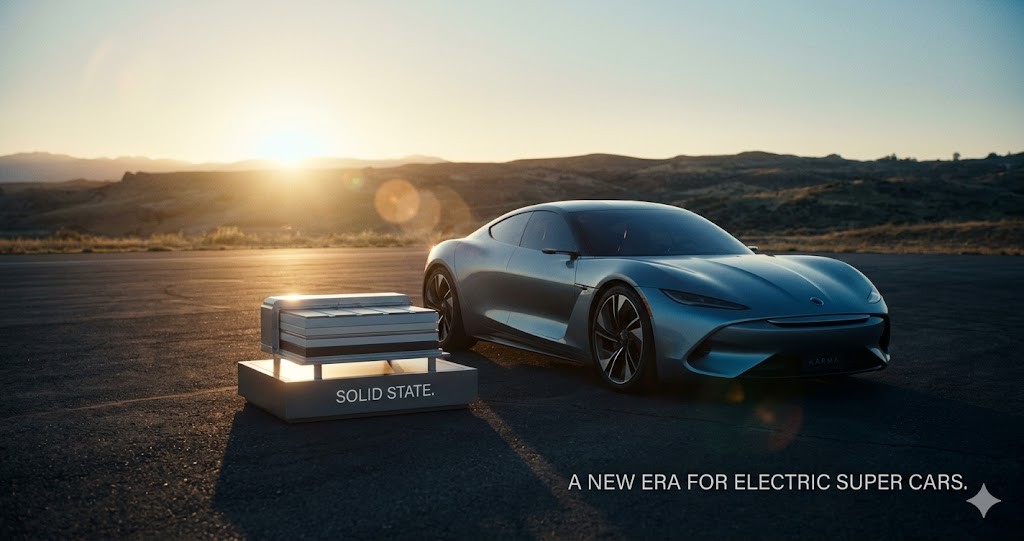
自動車産業が電動化へと加速する中で、超高級車(ウルトラ・ラグジュアリー)やスーパーカーの分野では、従来のバッテリー技術が限界を露呈し始めています。高出力を維持しながら軽量化と航続距離を両立させるという難題に対し、米国カリフォルニア州のKarma Automotive(カルマ・オートモーティブ)と、マサチューセッツ州のスタートアップFactorial Energy(ファクトリアル・エナジー)が、画期的な解決策を提示しました。
両社は、米国初となる乗用車向けの全固体電池生産プログラムを発表。Factorial社の革新的な技術が、2027年末に登場予定の次世代EVスーパークーペ「Kaveya(カベヤ)」の心臓部を担うことになります。
1. スーパーカーが求める「究極のバッテリー」とは
スーパーカーの顧客は、時速200マイル(約322km/h)に近い速度だけでなく、サーキット走行に耐えうる一貫した制御、信頼性の高いブレーキ、そして妥協のない美しいデザインを求めます。
しかし、従来の液体リチウムイオン電池には以下の制約がありました:
- 熱管理の重荷: 過酷な走行時の発熱を抑えるため、大規模な冷却システムが必要となり、車重が増加。
- パッケージングの制限: バッテリーの体積が大きいため、低重心で洗練されたデザインを損なう可能性がある。
- 航続距離への不安: 高出力を追求すると航続距離が犠牲になりやすい。
2. Factorial社の革新的技術:FESTとSolstice
Factorial社は、液体成分を固体に置き換えた、あるいは最小限に抑えた独自のバッテリーシステムを開発しています。
- FEST(Factorial Electrolyte System Technology): 独自の準固体技術。リチウムイオン電池よりもエネルギー密度が高く、安全性が向上。
- Solstice(ソルスティス): 完全な全固体電池。高いエネルギー密度と出力を両立し、スーパーカーやドローンなど、電力需要の厳しい用途に最適。
- AIによる最適化: 「Gammatron」と呼ばれる人工知能を活用し、バッテリーの性能管理と開発を加速させています。
3. Karmaとのパートナーシップがもたらす恩恵
Karma Automotiveの社長、マルケス・マッカモン氏は、Factorial社の技術導入により、車両設計の自由度が劇的に向上すると語っています。
主なメリット:
- 軽量化と高効率: 熱安定性が高いため冷却システムを簡素化でき、車両の軽量化とダイナミクスの向上が可能。
- 急速な商用化: FEST技術は既存のリチウムイオン電池製造ラインの最大80%を流用できるため、生産コストを抑えつつ迅速な増産が可能。
- パフォーマンスの維持: 高い充放電レート(Cレート)を維持でき、過酷な環境下でも安定した走行特性を提供。
4. 関連情報:固体電池を巡るグローバルな動き
今回のニュースをより深く理解するための関連トピックをまとめました。
- 生産エコシステムの構築: Factorial社はPOSCO Future MやPhilenergyといったサプライチェーンのパートナーと提携しており、材料調達から製造まで、強靭なエコシステムの構築を進めています。
- スーパーカー市場の空白: 米国では1950年代のコーチビルド時代以来、フルラインの超高級車生産が途絶えていました。今回のプロジェクトは、米国企業連合による「純米国製スーパーカー」の復権も意味しています。
- 他用途への波及: 固体電池はその軽量・高密度な特性から、EVだけでなく無人航空機(ドローン)やモバイルロボットなど、エネルギー性能がボトルネックとなっている他分野への転用も期待されています。
まとめ
Factorial社の固体電池技術は、単なる「バッテリーの改良」に留まらず、次世代EVスーパーカーのデザインや走行体験を根本から変える可能性を秘めています。2027年の「Kaveya」のデビューは、米国のモビリティ・イノベーションにおける重要なマイルストーンとなるでしょう。
出典:https://www.batterytechonline.com/ev-batteries/untitled
A New Era of EV: Factorial’s Solid-State Batteries Driving Peak Performance
As the automotive industry accelerates toward full electrification, conventional battery technologies are beginning to reveal their limitations, particularly in the ultra-luxury and supercar segments. Addressing the difficult challenge of balancing high power output with lightweight design and long driving range, California-based Karma Automotive and Massachusetts-based startup Factorial Energy have presented a groundbreaking solution.
The two companies have announced the first solid-state battery production program for passenger vehicles in the United States. Factorial’s innovative technology will serve as the heart of the Kaveya, a next-generation EV super-coupe scheduled to debut in late 2027.
1. What is the “Ultimate Battery” for Supercars?
Supercar customers demand more than just speeds approaching 200 mph (approx. 322 km/h). They expect consistent control capable of withstanding track days, highly reliable braking systems, and uncompromisingly beautiful designs.
However, traditional liquid lithium-ion batteries face the following constraints:
- The Burden of Thermal Management: Large-scale cooling systems are required to suppress heat generation during extreme driving, which increases overall vehicle weight.
- Packaging Limitations: The large volume of the battery packs can compromise a low center of gravity and sophisticated design aesthetics.
- Range Anxiety: Pursuing high power output often comes at the expense of driving range.
2. Factorial’s Innovative Technology: FEST and Solstice
Factorial is developing proprietary battery systems that replace or minimize liquid components with solid materials.
- FEST (Factorial Electrolyte System Technology): A proprietary quasi-solid-state technology. it offers higher energy density and improved safety compared to standard lithium-ion batteries.
- Solstice: A fully solid-state battery. It balances high energy density with high power output, making it ideal for demanding applications like supercars and drones.
- AI Optimization: The company utilizes “Gammatron,” an artificial intelligence platform, to accelerate battery performance management and development.
3. Benefits of the Karma Partnership
Marques McCammon, President of Karma Automotive, states that the integration of Factorial’s technology will dramatically increase freedom in vehicle design.
Key Advantages:
- Lightweighting and High Efficiency: High thermal stability allows for simplified cooling systems, enabling vehicle weight reduction and improved dynamics.
- Rapid Commercialization: FEST technology is compatible with up to 80% of existing lithium-ion battery manufacturing lines, allowing for quick production scaling while keeping costs down.
- Sustained Performance: It maintains high charge and discharge rates (C-rates), providing stable driving characteristics even in harsh environments.
4. Related Context: Global Trends in Solid-State Batteries
To better understand this news, here are related topics regarding the global landscape:
- Building a Production Ecosystem: Factorial has partnered with supply chain leaders such as POSCO Future M and Philenergy to build a resilient ecosystem from material sourcing to manufacturing.
- Filling the Supercar Market Gap: Not since the era of coachbuilding in the 1950s has there been full-line ultra-luxury vehicle production in the U.S. This project signifies the return of the “Pure American Supercar” through a U.S. corporate alliance.
- Expansion to Other Applications: Due to their lightweight and high-density characteristics, solid-state batteries are expected to be used in other fields where energy performance is a bottleneck, such as Unmanned Aerial Vehicles (UAVs/drones) and mobile robotics.
Conclusion
Factorial’s solid-state battery technology is more than just a “battery improvement”; it has the potential to fundamentally transform the design and driving experience of next-generation EV supercars. The debut of the Kaveya in 2027 will mark a significant milestone in American mobility innovation.

コメント