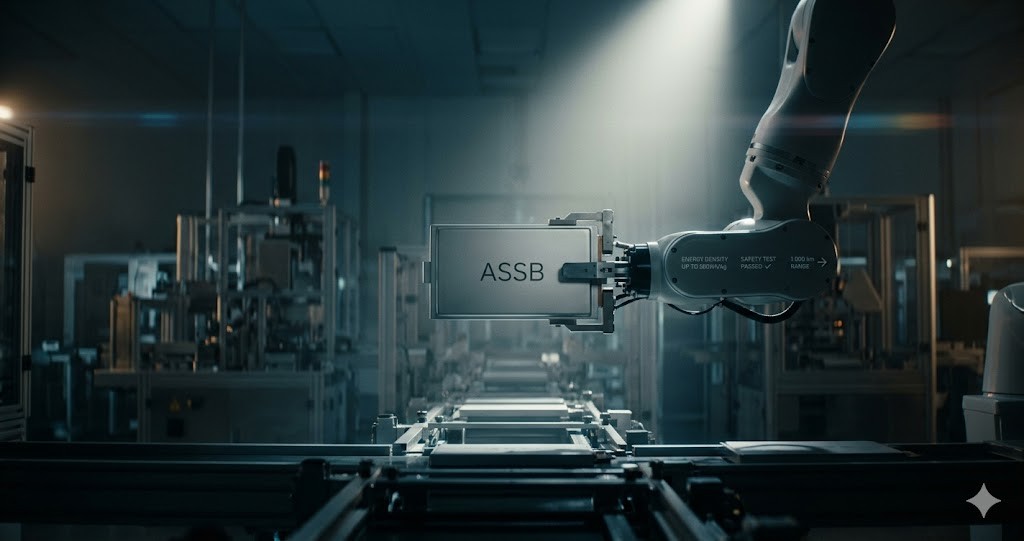
全固体電池(ASSB)の実用化がいよいよ現実味を帯びてきました。長年、研究室レベルの技術とされてきた全固体電池ですが、中国のスタートアップや大手自動車メーカーが相次いで量産に向けた具体的なロードマップを提示しています。この技術は、現在のリチウムイオン電池の限界を超え、電気自動車(EV)だけでなく、航空機やロボット産業にも革命をもたらすと期待されています。
- 1. Greater Bay Technology (GBT) の画期的な成果
- 2. GACグループの戦略と技術スペック
- 3. 全固体電池が解決する「3つの壁」
- 4. 世界的な開発競争の現状
- From Liquid to Solid: The Dawn of EV Battery Chapter 2. GBT Takes on the “World’s First” Mass Production
- 1. Breakthrough Achievements by Greater Bay Technology (GBT)
- 2. GAC Group’s Strategy and Technical Specifications
- 3. Overcoming the “Three Barriers” with All-Solid-State Technology
- 4. Status of the Global Development Race
1. Greater Bay Technology (GBT) の画期的な成果
広汽集団(GACグループ)が出資するGBT社は、全固体電池の商用化において世界をリードする動きを見せています。
- Aサンプルの出荷: 2026年4月、液体電解質を一切含まない「Aサンプル(試作段階)」の電池セルが生産ラインから出荷されました。
- 驚異的な安全性: 針刺し、押し出し、熱衝撃といった過酷な試験を、発火や爆発なしでクリア。熱暴走のリスクを根本から解消しています。
- 高いエネルギー密度: 単セルで260から500Wh/kgを実現。これは従来の液体リチウムイオン電池(通常300Wh/kg未満)を大幅に上回る性能です。
- 量産スケジュール: 2026年中にギガワット時(GWh)規模の量産を開始し、車載化を実現する「世界初の量産メーカー」を目指しています。
2. GACグループの戦略と技術スペック
GBTの親体であるGACグループも、独自の全固体電池プロジェクトを加速させています。
- HYPTECブランド: 2026年から、傘下の高級ブランド「HYPTEC(昊鉑)」の車両に搭載予定です。
- 1000km超の航続距離: パックレベルで400Wh/kgを超える密度を持ち、中国CLTC基準で1,000km(621マイル)以上の走行を可能にします。
- スポンジシリコン負極: 第3世代のナノシリコン複合体を採用し、エネルギー効率と寿命を向上させています。
3. 全固体電池が解決する「3つの壁」
全固体電池の普及により、これまでのEVが抱えていた主要な課題が克服されます。
- 急速充電の両立: 全固体電池で困難とされていた「2から3C(約20分から30分での満充電)」の急速充電に、GBTの「有機無機複合ESC電解質」が道筋をつけました。
- 耐寒性能: 摂氏マイナス30度の極寒地でも高い容量維持率(約70%以上)を誇り、冬場の航続距離低下を防ぎます。
- 空間効率: エネルギー密度が高いため、同じ航続距離ならバッテリーを小型化でき、車内空間を広く確保できます。
4. 世界的な開発競争の現状
中国勢が2026年の量産を掲げる一方、世界の大手メーカーも激しい追い上げを見せています。
- トヨタ: 日本政府から生産拠点の認定を受け、2027年から2028年の量産開始を目指しています。
- CATL: 2026年に半固体電池の量産、2027年に全固体電池の小規模生産を開始するロードマップを公開。
- 欧米勢: フォルクスワーゲン(QuantumScape)やメルセデス・ベンツ(Factorial Energy)が、2020年代後半の実用化に向けてパイロットラインでの検証を進めています。
出典:https://electrek.co/2026/04/15/solid-state-ev-batteries-coming-sooner-than-expected/
From Liquid to Solid: The Dawn of EV Battery Chapter 2. GBT Takes on the “World’s First” Mass Production
The realization of All-Solid-State Batteries (ASSB) has finally gained significant momentum. Long considered a laboratory-level technology, Chinese startups and major automakers are now presenting concrete roadmaps for mass production. This technology is expected to surpass the limitations of current lithium-ion batteries and revolutionize not only electric vehicles (EVs) but also the aviation and robotics industries.
1. Breakthrough Achievements by Greater Bay Technology (GBT)
Backed by GAC Group, GBT is leading the global race to commercialize all-solid-state batteries.
- Shipment of A-Samples: In April 2026, “A-sample” battery cells—completely free of liquid electrolytes—were shipped from the production line.
- Incredible Safety: These cells passed rigorous tests, including nail penetration, crushing, and thermal shock, without fire or explosion, fundamentally eliminating the risk of thermal runaway.
- High Energy Density: Achieving 260 to 500 Wh/kg at the single-cell level. This significantly exceeds the performance of conventional liquid lithium-ion batteries, which typically fall below 300 Wh/kg.
- Mass Production Schedule: GBT aims to start Giga-watt hour (GWh) scale production within 2026, striving to become the world’s first manufacturer to achieve automotive integration.
2. GAC Group’s Strategy and Technical Specifications
GAC Group, GBT’s parent entity, is also accelerating its own all-solid-state battery projects.
- HYPTEC Brand: The technology is scheduled to be installed in vehicles under the premium brand “HYPTEC” starting in 2026.
- Over 1,000 km Range: With a pack-level density exceeding 400 Wh/kg, it enables a driving range of over 1,000 km (621 miles) based on China’s CLTC standards.
- Sponge Silicon Anode: The use of a third-generation nano-silicon composite improves energy efficiency and cycle life.
3. Overcoming the “Three Barriers” with All-Solid-State Technology
The adoption of all-solid-state batteries addresses major challenges previously faced by EVs.
- Fast Charging Compatibility: GBT’s “organic-inorganic composite ESC electrolyte” has paved the way for 2 to 3C rapid charging (full charge in approximately 20 to 30 minutes), which was previously considered difficult for solid-state batteries.
- Cold Resistance: These batteries maintain a high capacity retention rate (over 70%) even in extreme cold at minus 30 degrees Celsius, preventing the significant range loss typical in winter.
- Space Efficiency: Due to the higher energy density, batteries can be made smaller for the same range, allowing for more spacious vehicle interiors.
4. Status of the Global Development Race
While Chinese players target 2026 for mass production, other global leaders are following closely.
- Toyota: Having received certification for production sites from the Japanese government, Toyota aims to begin mass production between 2027 and 2028.
- CATL: Has released a roadmap to mass-produce semi-solid-state batteries in 2026 and start small-scale production of all-solid-state batteries in 2027.
- Western Manufacturers: Companies like Volkswagen (QuantumScape) and Mercedes-Benz (Factorial Energy) are conducting pilot line testing with sights set on practical application in the late 2020s.

コメント