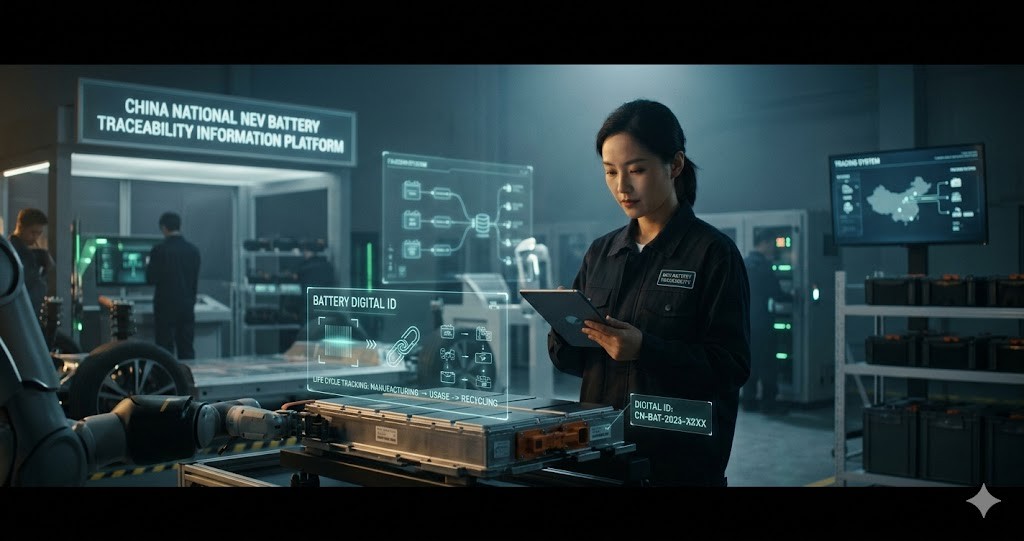
2026年4月1日、中国で全国新エネルギー自動車動力電池トレーサビリティ情報プラットフォームが正式に稼働しました。これは、電気自動車(EV)などの動力電池に「デジタル身分証」を付与し、その一生を追跡する国家規模のシステムです。
1. プラットフォームの核心:デジタルID
すべての動力電池に固有のコード(デジタルID)を割り当てます。これにより、以下のプロセスを「チェーン(鎖)」のように繋ぎ、可視化します。
- 川上: 電池材料の調達・製造
- 中流: 車両への搭載・販売・メンテナンス・バッテリー交換
- 川下: 廃車・回収・再利用(リサイクル)
2. 4つの中核機能と企業の役割
このプラットフォームは、情報の壁を打破するために設計された4つの中核機能を備えています。
- データの網羅: 車両メーカー、バッテリーメーカー、回収業者など、全プレイヤーのデータを統合。
- 責任の閉ループ化: 各企業は生産から廃棄までの情報をアップロードする義務を負い、責任の所在を明確にします。
- 評価効率の向上: 再利用企業は電池の履歴(技術情報)を正確に照会できるため、中古電池の残存価値(リセールバリュー)を迅速に判断できます。
- 市場の透明化: サプライチェーン全体を可視化し、不透明な取引を排除します。
関連情報:なぜ今「電池の身分証」が必要なのか?
ニュースの背景を補完する重要なポイントは以下の通りです。
A. リサイクル市場の適正化(ブラックボックスの解消)
これまで廃電池のリサイクル市場では、無許可の小規模業者による「違法な解体」が問題となっていました。これは環境汚染や火災リスクを招く原因となります。プラットフォームによるリアルタイム監督により、正規ルート以外への流出を阻止する狙いがあります。
B. 資源の有効活用と「都市鉱山」
動力電池にはリチウム、コバルト、ニッケルといった希少金属が大量に含まれています。
- 段階的利用(カスケード利用): 車載用としては性能が落ちた電池を、家庭用や産業用の蓄電池として再利用すること。
- 資源回収: 最終的に物理的な寿命を迎えた電池から金属を取り出し、再び新しい電池の原料にすること。 この循環(グリーン化)を支えるのが、正確な履歴データです。
C. グローバル規制(EU電池規則など)への対応
欧州連合(EU)では2027年以降、電池のカーボンフットプリントやリサイクル材料の割合を記録した「バッテリーパスポート」の導入が義務化されます。中国が国家レベルでプラットフォームを構築することは、中国製電池の国際競争力を維持・強化するための戦略的一手でもあります。
まとめ
今回のプラットフォーム稼働は、単なる管理システムの導入に留まらず、中国の新エネルギー車(NEV)産業を「売って終わり」のモデルから「資源を循環させる」サステナブルなモデルへと転換させるための重要なインフラとなります。
出典:https://j.people.com.cn/n3/2026/0401/c95952-20442363.html
China Launches “Digital ID” System for Power Batteries: Tracking the Full Life Cycle
On April 1, 2026, the National New Energy Vehicle Power Battery Traceability Information Platform officially commenced operations in China. This is a nation-wide system designed to assign a “Digital ID” to power batteries for electric vehicles (EVs) and track their entire lifespan.
1. Core of the Platform: Digital ID
The system assigns a unique code (Digital ID) to every power battery. This creates a “chain” that connects and visualizes the following processes:
- Upstream: Sourcing of raw materials and manufacturing.
- Midstream: Vehicle installation, sales, maintenance, and battery swapping.
- Downstream: Decommissioning, collection, and recycling.
2. Four Core Functions and Corporate Roles
The platform is designed with four core functions to break down “information silos”:
- Comprehensive Data Coverage: Integrates data from all players, including vehicle manufacturers, battery makers, and recycling firms.
- Closed-loop Responsibility: Every company is mandated to upload data from production to disposal, ensuring clear accountability.
- Improved Evaluation Efficiency: Recycling companies can accurately query technical histories, allowing for the rapid assessment of a used battery’s residual value (resale value).
- Market Transparency: Visualizes the entire supply chain to eliminate opaque or illicit transactions.
Context: Why is a “Battery ID” Necessary Now?
Here are the key points explaining the background of this initiative:
A. Regularizing the Recycling Market (Eliminating the Black Box)
Previously, the battery recycling market suffered from “illegal dismantling” by unlicensed small-scale workshops, leading to environmental pollution and fire risks. Real-time supervision via the platform aims to prevent batteries from leaking into these unregulated channels.
B. Efficient Resource Use and “Urban Mining”
Power batteries contain high concentrations of rare metals like lithium, cobalt, and nickel.
- Cascade Utilization: Reusing batteries that no longer meet EV standards for stationary energy storage (home or industrial use).
- Resource Recovery: Extracting metals from end-of-life batteries to serve as raw materials for new ones. Accurate historical data is essential for this “green” circulation.
C. Compliance with Global Regulations (EU Battery Regulation, etc.)
Starting in 2027, the European Union (EU) will mandate “Battery Passports” to record carbon footprints and recycled content. Establishing a national-level platform is a strategic move for China to maintain and strengthen the international competitiveness of its battery products.
Summary
The launch of this platform is more than just a management tool; it serves as vital infrastructure to transition China’s New Energy Vehicle (NEV) industry from a “sell-and-forget” model to a sustainable, circular economy model.


コメント