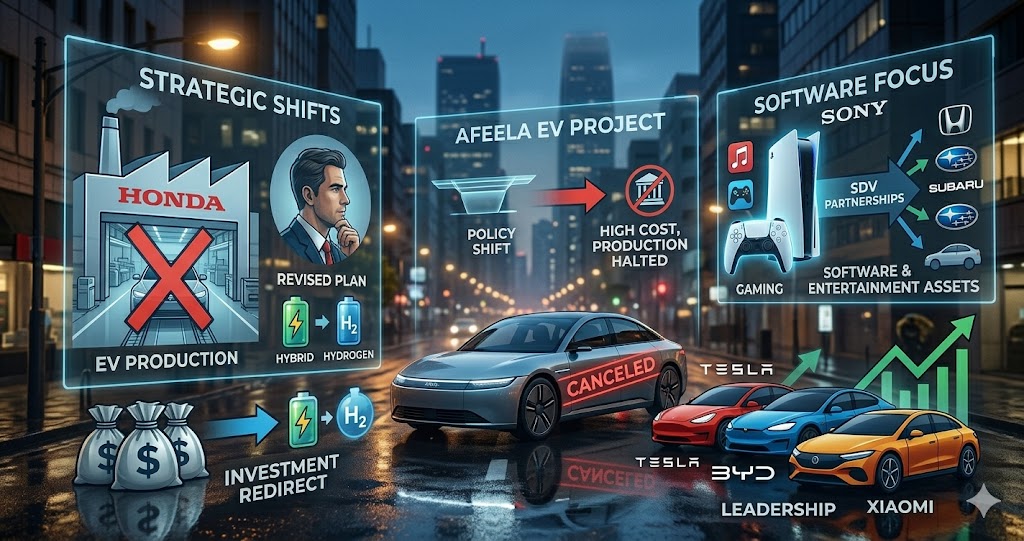
2026年3月25日、ソニーグループとホンダの共同出資会社「ソニー・ホンダモビリティ」は、電気自動車(EV)ブランドAFEELA(アフィーラ)の開発および販売を中止すると発表しました。
2022年の設立以来、日本の技術連合としてテスラや中国勢に対抗する象徴的存在でしたが、米国の政策転換とEV市場の冷え込みにより、量産開始を目前に控えての断念となりました。
中止に至った主な要因
- 米国の政策転換と需要減: トランプ政権によるEV支援策の見直し(補助金削減等)により、北米市場でのEV需要が想定を下回りました。
- ホンダの戦略修正: 生産を担うホンダが、EVへの巨額投資計画を見直し、最大2.5兆円の損失計上を決定。これによりソニー・ホンダへの生産委託継続が困難になりました。
- 中国勢との競争激化: BYDやシャオミ(Xiaomi)などの中国メーカーが、価格競争力とソフトウェア技術で先行しており、対抗が難しいと判断されました。
関連情報と補足データ
今回の撤退を理解する上で重要な、業界の背景情報を整理します。
1. 開発されていた車両スペック(計画値)
中止となった「AFEELA 1」は、単なる移動手段ではなく「走るエンターテインメント空間」を目指していました。
- 予定価格: 8万9900ドル(約1400万円)
- 主な特徴: 車内に多数のディスプレイを配置し、映画、ゲーム(PS5等)、音楽を楽しめる設計。
- 技術: 多数のセンサーとAIを用いた高度な運転支援システム(ADAS)。
2. 世界のEV市場シェアの逆転(2025年実績)
2025年には世界のEV市場で大きな地殻変動が起きています。
- 首位交代: 中国のBYDが、2025年の年間EV販売台数で初めてテスラ(Tesla)を抜き、世界トップに立ちました。
- 新興勢の躍進: スマホメーカーのシャオミ(Xiaomi)がEV事業で早期に営業黒字化を達成。ハードウェア(車)とソフトウェア(OS)の融合において、日本勢に対し優位性を築いています。
3. 日本メーカーの戦略転換
ソニー・ホンダだけでなく、他のメーカーも「EV一辺倒」からの軌道修正を余儀なくされています。
- SUBARU: 1兆5000億円規模の電動化投資を再検討し、北米で人気の高いハイブリッド車(HV)の開発へリソースを再配分。
- ホンダ: 2040年の「脱エンジン」目標は掲げつつも、足元では収益性の高いHVや燃料電池車(FCV)のバランスを模索。
まとめ:今後の展望
ソニーグループは今回の撤退により、自社ブランドでの車両販売という悲願は遠のきましたが、開発したソフトウェアやエンタメ資産を他社へ提供する方向へシフトする可能性があります。
一方で、今回の事象は「ソフトウェア・ディファインド・ビークル(SDV)」の主導権が、完全に中国・米国勢に握られるリスクを浮き彫りにしました。EVと相性の良い自動運転技術においても、ファーウェイ(Huawei)などの中国勢がOS(基本ソフト)の標準化を進めており、日本メーカーは極めて厳しい局面を迎えています。
出典:https://www.nikkei.com/article/DGXZQOUC2427B0U6A320C2000000/
The End of AFEELA: Sony Honda Mobility Announces Cancellation of EV Business
On March 25, 2026, Sony Honda Mobility, a joint venture between Sony Group and Honda, announced that it will cancel the development and sales of its electric vehicle (EV) brand, AFEELA.
Since its establishment in 2022, the venture was seen as a symbolic Japanese alliance formed to compete with Tesla and Chinese rivals. However, due to shifts in U.S. policy and a cooling EV market, the project was abandoned just before the start of mass production.
Main Factors Leading to Cancellation
- U.S. Policy Shift and Declining Demand: Following the Trump administration’s revision of EV support measures (such as subsidy cuts), EV demand in the North American market fell below expectations.
- Honda’s Strategic Revision: Honda, which was responsible for production, reviewed its massive EV investment plan and decided to record a loss of up to 2.5 trillion yen. This made it difficult to continue the production contract for Sony Honda.
- Intensifying Competition with Chinese Rivals: Chinese manufacturers like BYD and Xiaomi are leading in price competitiveness and software technology, making it difficult for the venture to compete.
Related Information and Supplementary Data
Key industry background information to help understand this withdrawal:
1. Planned Vehicle Specifications
The canceled “AFEELA 1” was intended to be more than just a means of transport; it aimed to be a “mobile entertainment space.”
- Estimated Price: 89,900 dollars (approx. 14 million yen)
- Key Features: Multiple displays inside the cabin designed for movies, games (PS5, etc.), and music.
- Technology: Advanced Driver Assistance Systems (ADAS) using numerous sensors and AI.
2. Global EV Market Share Reversal (2025 Results)
Major shifts occurred in the global EV market in 2025:
- Change at the Top: China’s BYD surpassed Tesla in annual EV sales for the first time in 2025, becoming the world leader.
- Rise of New Players: Smartphone maker Xiaomi achieved profitability in its EV business early on. They have built an advantage over Japanese firms in integrating hardware (vehicles) and software (OS).
3. Strategic Shifts by Japanese Manufacturers
Other manufacturers are also being forced to pivot away from a “pure EV” focus:
- SUBARU: Re-evaluating its 1.5 trillion yen electrification investment to reallocate resources toward Hybrid Electric Vehicles (HEV), which remain popular in North America.
- Honda: While maintaining its goal of eliminating internal combustion engines by 2040, the company is now seeking a balance with highly profitable hybrids and Fuel Cell Vehicles (FCV).
Summary and Future Outlook
With this withdrawal, Sony Group’s ambition to sell vehicles under its own brand has faded, but the company may shift toward providing its developed software and entertainment assets to other manufacturers.
Meanwhile, this event highlights the risk of Software Defined Vehicle (SDV) leadership being completely seized by Chinese and U.S. competitors. In autonomous driving technology—which pairs well with EVs—Chinese firms like Huawei are already moving toward standardizing operating systems (OS), leaving Japanese manufacturers in an extremely difficult position.
コメント