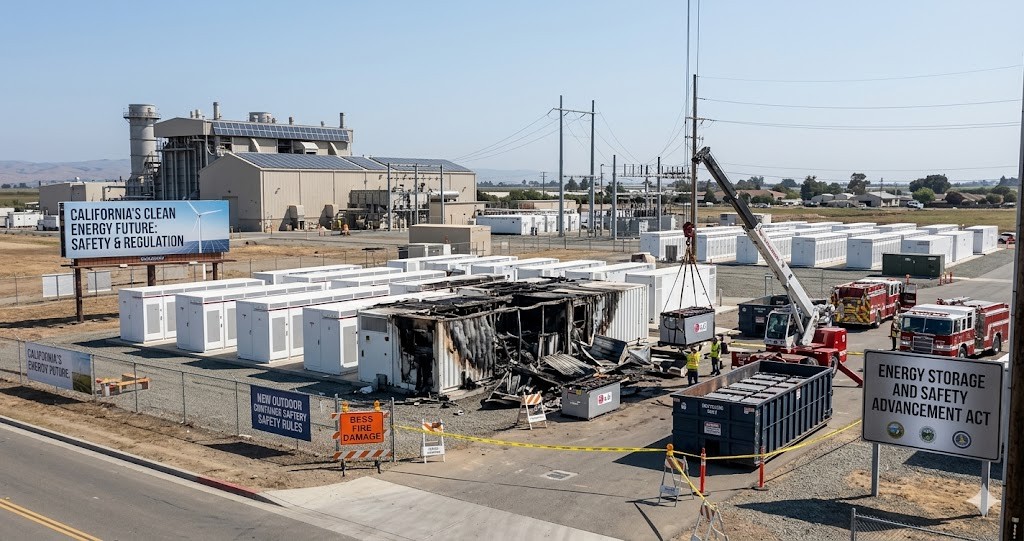
カリフォルニア州がクリーンエネルギーへの転換を急速に進める一方で、電力網を支える大規模な蓄電システムの安全性が大きな課題として浮上しています。2025年1月に発生した世界最大級の蓄電池施設の火災は、発生から1年以上が経過した2026年5月現在も復旧作業が続いており、新たな安全ルールの制定や法案の提出へとつながっています。
モスランディング蓄電池施設火災の現状
- 長期化する復旧作業: 2025年1月17日、テキサス州に本社を置くビストラ(Vistra)社が所有するカリフォルニア州モントレー郡の「モスランディング蓄電池貯蔵施設」で大規模な火災が発生しました。火災から16か月が経過した2026年5月現在も清掃・撤去作業は続いており、完了までには少なくともあと数か月、あるいは1年かかる見通しです。
- 作業の難航と被害規模: 火災は、かつての発電所のタービン建物内に設置されていた300MW(メガワット)のシステム(約99000個のLG製バッテリーモジュール)を襲い、その約55パーセントにあたる約54450個が焼失しました。安全にバッテリーを取り外してリサイクル施設へ送る作業は、再発火のリスクを伴うため極めて慎重に進められています。
- 消火活動の難しさ: リチウムイオン電池の火災に水をかけると危険な化学反応を引き起こす恐れがあるため、地元の消防隊はあえて数日間燃え続けるままにする措置をとりました。この際に放出された有毒ガスが地域住民や環境への懸念を呼び起こしました。
関連情報:カリフォルニア州のエネルギー転換と蓄電池の急増
カリフォルニア州は「2045年までに100パーセント・クリーンエネルギー利用」という非常に積極的な気候変動対策目標を掲げています。
- 蓄電容量の爆発的増加: 太陽光などで日中に発電した余剰電力を夜間の需要ピーク時に供給するため、同州は蓄電池システムへ莫大な投資を行ってきました。州内の蓄電容量は、2020年の500MWから2025年には15700MW以上へと、わずか5年で3000パーセント以上も急増しています。
- 安全性に関する専門家の見解: シカゴ大学のバッテリー専門家であるシャーリー・メン教授によると、近年の技術革新によりリチウムイオン電池の故障率は約1000万分の1にまで低下しており、適切な設計が施されていれば火災のリスクは極めて低いとされています。
安全規則の強化と「エネルギー貯蔵・安全向上法案」
モスランディングの事故は、急速なグリーンエネルギー移行の陰にあるリスクを浮き彫りにし、規制の見直しを促す決定的な契機となりました。
- 地元の反発と州法の改正: カリフォルニア州では、州政府が大規模プロジェクトの審査を迅速化するために「自治体の承認を必要としない迅速許可制度」を導入したため、地域住民や地方自治体から管理権限の強化を求める声(反発)が強まりました。これを受け、ギャビン・ニューサム州知事は地元の消防署との連携や厳格な安全基準を開発業者に義務付ける新たな州法に署名しました。
- 技術的な対策の進化: カリフォルニア州エネルギー委員会(CEC)によると、最新の蓄電池システムは、モスランディングのような建物内への設置を避け、トラブル時のリスクを抑えやすい「屋外のコンテナ」に設置されることが一般的になり、規制もさらに厳格化されています。
- 連邦政府レベルでの超党派法案: 2026年5月、米下院において「エネルギー貯蔵・安全向上法案(Energy Storage and Safety Advancement Act)」が超党派で提出されました。この法案は、今後5年間にわたり年間3000万ドルの連邦資金を蓄電池システムの研究やストレステストに投じる内容で、再生可能エネルギーの普及を進めつつ、その安全性を国レベルで担保することを目的としています。
クリーンエネルギーへの移行という大方針を維持しつつ、今回のような「負の遺産」を繰り返さないために、サプライチェーンや設置運用の両面でさらなる安全対策の徹底が求められています。
In the Shadow of the Green Energy Transition: California’s Battery Storage Fire Recovery Still Faces Difficulties
While California is rapidly advancing its transition to clean energy, the safety of large-scale energy storage systems supporting the power grid has emerged as a major challenge. The fire at one of the world’s largest battery storage facilities, which occurred in January 2025, remains in the recovery phase as of May 2026, more than a year later. This situation has led to the enactment of new safety rules and the introduction of new legislation.
Current Status of the Moss Landing Battery Storage Facility Fire
- Prolonged Recovery Operations: On January 17, 2025, a massive fire broke out at the Moss Landing battery storage facility in Monterey County, California, owned by Texas-based Vistra. As of May 2026, 16 months after the incident, cleanup and removal operations are still ongoing, with completion expected to take at least another few months, or possibly up to a year.
- Difficult Cleanup and Scale of Damage: The fire struck a 300 MW system (consisting of approximately 99,000 LG battery modules) installed inside a former power plant turbine building, destroying about 54,450 modules, or roughly 55 percent of the total. The process of safely removing the batteries and sending them to recycling facilities is being carried out with extreme caution due to the risk of reignition.
- Challenges in Firefighting: Because applying water to lithium-ion battery fires can trigger dangerous chemical reactions, local firefighters took the measure of allowing the fire to burn for several days. Toxic gases released during this period raised serious concerns among local residents and environmental advocates.
Related Information: California’s Energy Transition and the Surge in Battery Storage
California has set a highly aggressive climate change target of achieving 100 percent clean energy use by 2045.
- Explosive Growth in Storage Capacity: To supply surplus electricity generated during the day by solar power and other sources during peak nighttime demand, the state has invested heavily in battery storage systems. Storage capacity within the state has skyrocketed by more than 3,000 percent in just five years, jumping from 500 MW in 2020 to over 15,700 MW by 2025.
- Expert Insight on Safety: According to Professor Shirley Meng, a battery expert at the University of Chicago, recent technological innovations have reduced the failure rate of lithium-ion batteries to about 1 in 10 million, meaning that the risk of fire is extremely low if the system is properly designed.
Strengthening Safety Rules and the “Energy Storage and Safety Advancement Act”
The Moss Landing incident highlighted the hidden risks behind a rapid green energy transition, serving as a decisive catalyst for regulatory overhauls.
- Local Backlash and Amendments to State Law: In California, the state government introduced a streamlined permitting process that bypasses local municipal approval to accelerate the review of large-scale renewable energy projects. This move triggered a strong backlash from local residents and governments demanding greater local control. In response, Governor Gavin Newsom signed a new state law mandating developers to coordinate closely with local fire departments and adhere to strict safety standards.
- Evolution of Technical Solutions: According to the California Energy Commission (CEC), modern battery systems generally avoid indoor installations like the one at Moss Landing. Instead, they are now typically housed in outdoor containers that make it easier to mitigate risks during incidents, and regulations have become even more stringent.
- Bipartisan Bill at the Federal Level: In May 2026, a bipartisan bill titled the “Energy Storage and Safety Advancement Act” was introduced in the US House of Representatives. This legislation allocates 30 million dollars in federal funding annually over the next five years for research and stress testing of energy storage systems, aiming to ensure safety at the national level while continuing the expansion of renewable energy.
While maintaining the overarching policy of transitioning to clean energy, thorough safety measures across both supply chains and installation operations are required to prevent a recurrence of this kind of lingering negative legacy.

コメント