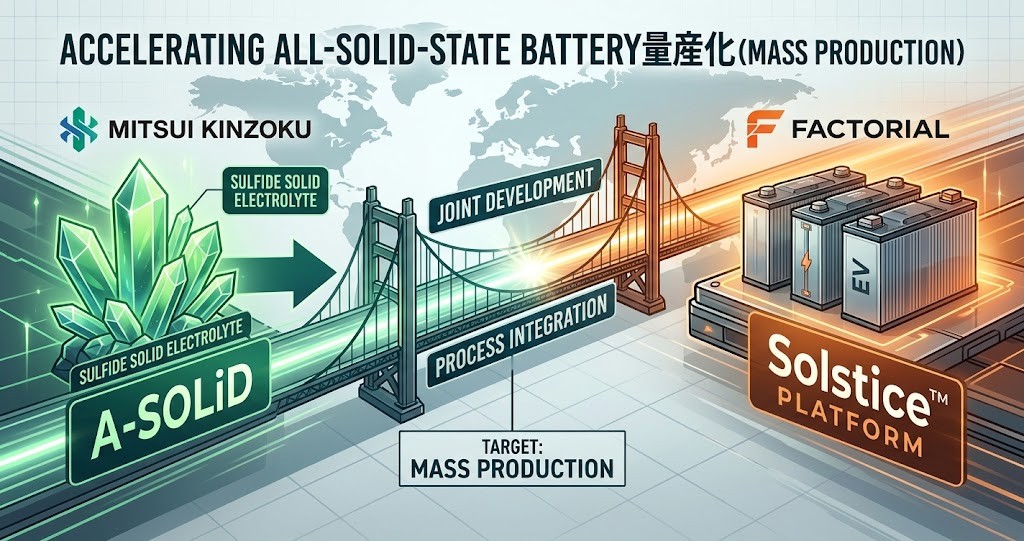
次世代の車載バッテリーとして世界中から注目を集める「全固体電池」。従来の液体電解液を固体へと置き換えることで、安全性向上やエネルギー密度の劇的な増加が期待されています。しかし、高性能な材料(電解質)を開発するだけでは製品化・量産化は達成できません。このたび、日本の素材大手である三井金属と、アメリカの電池開発ベンチャー Factorial Energy(ファクトリアル・エナジー)がタッグを組み、材料と製造プロセスを融合させた全固体電池の量産化技術開発に乗り出しました。
以下に、今回の発表内容と背景となる関連情報をまとめてお届けします。
1. 発表概要:三井金属とFactorialの共同開発
三井金属とFactorial Energyは2026年9月18日、硫化物系全固体電池の実用化に向けた共同開発契約を締結しました。
- 目的: 三井金属の硫化物固体電解質「A-SOLiD」を用い、実用的な電池セルの製造プロセスを共同開発すること。
- 役割分担:
- 三井金属: 高性能な硫化物固体電解質「A-SOLiD」の供給および材料・製造技術の知見提供。
- Factorial: 硫化物系全固体電池プラットフォーム「Solstice(ソルスティス)」におけるセル設計、プロセス開発、サプライチェーン認証、生産ラインへの統合、製造検証。
- 提携の核心: 単なる「材料の供給・購入」にとどまらず、材料の性能を100%引き出し、量産ラインに乗せるための「セル製造技術」そのものを両社で開発する点にあります。
2. 記事から見る主な技術的アプローチと強み
全固体電池の実用化には、電極との接合、成形、積層、セル化など、複雑な製造プロセスをいかに効率化するかが大きな課題です。
- ドライカソード(dry-cathode)プロセスの採用: FactorialはSolsticeにおいて、溶媒を使わないドライ塗工技術(ドライカソード処理)を採用し、製造コストの削減を目指しています。
- 既存設備との高い互換性(80% drop-in compatibility): 既存のリチウムイオン電池(NMC等)の製造ラインを約80%そのまま活用できる設計としており、設備投資リスクや新規ライン立ち上げのハードルを大幅に下げています。
3. 【関連情報】背景と補足解説
① 硫化物系固体電解質「A-SOLiD」の特長
全固体電池の電解質には主に「硫化物系」「酸化物系」「高分子(ポリマー)系」がありますが、自動車向けとして最も期待されているのが硫化物系です。
- メリット: イオン伝導度(リチウムイオンの移動しやすさ)が液体の電解液と同等以上に高く、高出力・急速充電に向いています。また、素材が柔らかいため電極との密着性を確保しやすい特徴があります。
- 課題: 水分と反応すると有害な硫化水素ガスが発生しやすいため、厳格な製造環境管理(ドライルーム等)が必要とされます。
② Factorial Energyの業界における立ち位置
Factorial(本社:米国マサチューセッツ州)は、次世代電池開発のトップランナーとして知られる新興企業です。
- 主要自動車メーカーとの提携: メルセデス・ベンツ(Mercedes-Benz)、ステランティス(Stellantis)、現代自動車(Hyundai Motor Company)などの大手自動車メーカーと強力な出資・パートナーシップ関係を結んでいます。
- Solstice(ソルスティス): 同社が展開する硫化物系全固体電池プラットフォームで、エネルギー密度 450 Wh/kg(ワット時毎キログラム)級を目指しており、電気自動車(EV)の航続距離を飛躍的に伸ばすと期待されています。
③ なぜ「製造プロセス開発」が重要なのか?
全固体電池は、固体の電解質と固体の電極層をミクロレベルで隙間なく密着させる必要があります。充放電に伴って電極が膨張・収縮するため、接合面が剥離して性能が低下しやすいという物理的課題があります。 そのため、優れた材料を用意するだけでなく、「どのように圧縮・成形・積層して安定したセルにするか」という製造プロセスの確立こそが、実用化・量産化に向けた最大の壁となっています。
4. 両社トップのコメント
- 三井金属 専務執行役員 安田清隆 氏: 「電池は電化社会の実現に不可欠ですが、多くの技術的課題が残されています。三井金属の材料・製造技術とFactorialの高度な技術力を融合させ、次世代電池の実現を加速させていきます。」
- Factorial CEO Siyu Huang 氏: 「バッテリーのイノベーションは一企業だけでは成し遂げられず、業界全体の連携が必要です。三井金属の電解質技術は、Solsticeの商用展開に不可欠な材料の専門知識をもたらしてくれます。」
出典:https://motor-fan.jp/article/1630542/
From Material Development to Mass Production: Mitsui Mining & Smelting and US-Based Factorial Partner on Cell Manufacturing for Sulfide-Based All-Solid-State Batteries
All-solid-state batteries are drawing global attention as the next-generation automotive power source. By replacing traditional liquid electrolytes with solid materials, they promise dramatic improvements in safety and energy density. However, developing high-performance materials (electrolytes) alone is not enough to achieve commercialization and mass production.
Japanese materials giant Mitsui Mining & Smelting (Mitsui Kinzoku) and US battery technology company Factorial Energy have teamed up to develop mass-production technology that fuses advanced materials with manufacturing processes.
Below is a summary of the announcement along with relevant background information.
1. Announcement Overview: Mitsui Kinzoku and Factorial Joint Development
On September 18, 2026, Mitsui Mining & Smelting and Factorial Energy entered into a joint development agreement aimed at commercializing sulfide-based all-solid-state batteries.
- Objective: Jointly develop a practical battery cell manufacturing process using Mitsui Kinzoku’s sulfide solid electrolyte, “A-SOLiD”.
- Roles & Responsibilities:
- Mitsui Mining & Smelting: Supply high-performance “A-SOLiD” sulfide solid electrolytes and provide expertise in materials and manufacturing technology.
- Factorial: Handle cell design, process development, supply chain qualification, integration into production lines, and manufacturing validation for its sulfide-based all-solid-state battery platform, “Solstice”.
- Core of the Partnership: Going beyond a simple buyer-supplier relationship, the two companies will jointly develop the actual cell manufacturing technology needed to maximize material performance and transition to mass-production lines.
2. Key Technical Approaches and Advantages
A major hurdle in commercializing all-solid-state batteries lies in streamlining complex manufacturing processes, including electrode bonding, molding, stacking, and cell assembly.
- Adoption of Dry-Cathode Processing: Factorial utilizes a solvent-free dry-coating technology (dry-cathode processing) for Solstice, aiming to lower production costs.
- High Compatibility with Existing Equipment (80% Drop-In Compatibility): Designed to utilize approximately 80% of existing lithium-ion battery (such as NMC) manufacturing lines, significantly reducing capital expenditure risks and the barrier to establishing new production lines.
3. Background and Supplementary Information
(1) Features of the Sulfide Solid Electrolyte “A-SOLiD”
Electrolytes for all-solid-state batteries fall into three main types: sulfide-based, oxide-based, and polymer-based. Among these, sulfide-based electrolytes are the most promising for automotive applications.
- Pros: High ionic conductivity (ease of lithium-ion movement) equal to or greater than liquid electrolytes, making them ideal for high power output and fast charging. Additionally, the soft nature of the material makes it easier to maintain good contact with electrodes.
- Challenges: Reacts easily with moisture to produce harmful hydrogen sulfide gas, requiring strict manufacturing environment controls (such as dry rooms).
(2) Factorial Energy’s Industry Standing
Factorial (headquartered in Massachusetts, USA) is an emerging company recognized as a frontrunner in next-generation battery development.
- Partnerships with Major Automakers: Holds strong investment and partnership relationships with leading automakers including Mercedes-Benz, Stellantis, and Hyundai Motor Company.
- Solstice: The company’s sulfide-based all-solid-state battery platform targets an energy density of 450 Wh/kg (watt-hours per kilogram), which is expected to dramatically extend the driving range of electric vehicles (EVs).
(3) Why Development of the Manufacturing Process Matters
All-solid-state batteries require solid electrolytes and solid electrode layers to adhere to one another without microscopic gaps. During charge and discharge cycles, electrodes expand and contract, creating physical challenges where interfaces can peel apart and degrade performance. Therefore, beyond creating superior materials, establishing the manufacturing process—how to compress, mold, stack, and turn them into stable cells—is the biggest obstacle to commercialization and mass production.
4. Statements from Company Executives
- Kiyotaka Yasuda, Ph.D., Senior Executive Officer and General Manager of Corporate Business Development at Mitsui Mining & Smelting: “Batteries are an indispensable technology for achieving an electrified society, but many technical challenges remain. By combining Mitsui Kinzoku’s long-standing expertise in materials and manufacturing technology with Factorial’s advanced capabilities, we aim to accelerate the realization of next-generation batteries.”
- Siyu Huang, Ph.D., CEO of Factorial: “Battery innovation cannot be accomplished by a single company alone; it requires collaboration across the supply chain and the entire industry. Mitsui Kinzoku’s foundational electrolyte technology brings essential materials expertise to our efforts toward the commercial deployment of Solstice.”

コメント