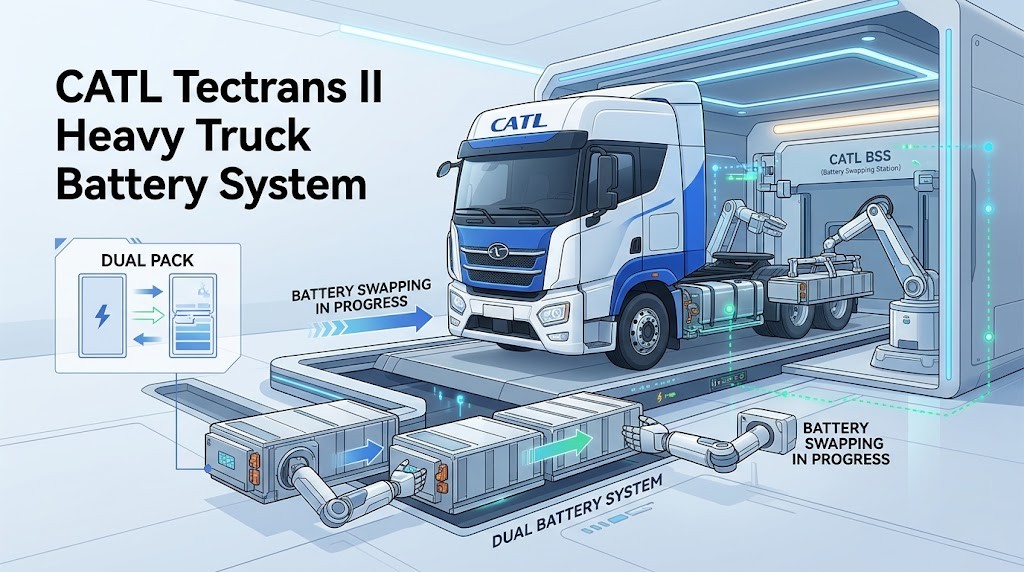
世界最大の電池メーカーであるCATL(寧徳時代)は、大型トラックの電動化を加速させる革新的な「デュアル・バッテリーシステム(Tectrans II)」と、大型トラック向けバッテリー交換システム「Qiji」の最新アップデートを発表しました。
本まとめでは、同社が提案する「メイン交換式+車載レンジエクステンダー」という画期的な構成や、大幅なコスト削減をもたらす課金体系の見直し、さらに中国における電動大型トラック(NEV大型トラック)の急成長といった市場背景の関連情報を加えて分かりやすく整理します。
主な発表内容と技術仕様のまとめ
1. 「1+X」デュアル・バッテリーシステムの仕組みとメリット
- システム構成:
- 交換可能なメインバッテリー(1): シャーシに搭載する標準化パック。260型(432kWh)および300型(513kWh)を新たにラインナップ(既存の75型も補完)。
- 車載レンジエクステンダー(X): 運転席後方に固定搭載する77kWhの独立バッテリー。3C急速充電に対応し、バックアップ電源として機能。
- 利用効率と安全性の向上:
- 従来の交換式トラックは電欠を防ぐためバッテリー残量30%程度でステーションに戻る必要があり、容量が無駄になっていました。
- 77kWhのバックアップがあることで、メインバッテリーの放電深度(DOD)を約70%から95%以上へ引き上げ可能。残量5%未満まで使い切ることができます。
- 数ミリ秒で自動的に電源供給を切り替えるため、過酷な走行環境でも電力が途絶えません。
- 柔軟な資産運用:
- 77kWhのバックアップ電池は車両所有(自社資産)とする一方、メイン電池は季節的な物流需要に応じて柔軟にリース(レンタル)可能。稼働率が落ちる時期のレンタル費用を大幅にカットできます。
2. 次世代「Qiji」バッテリー交換ステーションと課金体系の改善
- ステーション性能:
- バッテリー交換時間をわずか5分に短縮。
- 掘削工事不要で最短5日で設置可能。建設コストを10%削減。
- ユーザーに有利な「BaaS(Battery as a Service)」料金体系:
- 課金方式を「放電エネルギー」から「正味充電エネルギー(充電量から回生ブレーキでの回収分を引いた額)」へ変更。
- 回生ブレーキの経済的メリットがそのまま利用者に還元され、基本プランでは1kWhあたりのレンタル費用を最大20%削減。
3. 充電・交換インフラの拡大計画
- 設置目標: 2026年末までに大型トラック用ステーションを900カ所、2027年までに2000カ所へ拡大。将来的にはパートナー企業と連携し、中国全土で10000カ所の展開を目指す。
- 大口受注: 発表イベントにてSF Holdings(順豊速運)やChina Post Express Logistics(中国郵政速達物流)などの大手物流会社と、計13000台規模の契約・注文を締結。
関連情報・背景解説
なぜ大型トラックで「デュアル・バッテリー」が必要なのか?
大型トラックの電動化における最大の課題は、「バッテリーの重量とコスト」および「充電に伴うダウンタイム(稼働停止時間)」です。 大容量バッテリーを固定搭載すると車両が重くなり積載量が減るうえ、長時間の充電が必要になります。かといって従来の交換式のみでは、ステーションへ駆け込むための「走り残し(残量30%)」が発生し、リース代の無駄が生じていました。
CATLの「メイン交換+車載バックアップ」方式は、ステーション網と車載バッテリーの強みを組み合わせることで、「バッテリー切れの不安解消」「充電/交換待ち時間の短縮」「リース代金の最適化」を同時に達成する画期的なソリューションとなっています。
急拡大する中国の新エネルギー(NEV)大型トラック市場
- 市場シェアの急上昇: 強制自動車保険データ(CPCA分析)によると、中国の大型トラック市場における新エネルギー車(NEV)の普及率は、2025年9月時点の29%から、2026年9月には50%へと一気に拡大しました。
- 物流大手の導入加速: CATLは2023年にQiji Energyを発表して以来、J&T Express(5000台規模の協定)をはじめとする主要物流企業との連携を強化しており、商用車市場における圧倒的なシェア維持・拡大を狙っています。
出典:https://cnevpost.com/2026/10/20/catl-dual-battery-system-heavy-truck-electrification/
[CATL] Accelerating Heavy-Duty Truck Electrification! “Dual-Battery” System and 5-Minute Swapping Stations Eliminate Range Anxiety
CATL, the world’s largest battery manufacturer, announced its innovative “Dual-Battery System (Tectrans II)” to accelerate the electrification of heavy-duty trucks, along with the latest updates to its “Qiji” battery swapping system for heavy-duty trucks.
This summary reorganizes and presents the key points of the announcement, adding relevant background context such as the innovative “swappable main battery + vehicle-mounted range extender” configuration, fee structure revisions that yield significant cost reductions, and the rapid growth of the new energy vehicle (NEV) heavy-duty truck market in China.
Summary of Key Announcements and Technical Specifications
1. Mechanism and Benefits of the “1+X” Dual-Battery System
- System Configuration:
- Swappable Main Battery (1): Standardized chassis-mounted packs. Newly introduced 260-type (432 kWh) and 300-type (513 kWh) models (complementing the existing 75-type).
- Vehicle-Mounted Range Extender (X): An independent 77 kWh battery fixed behind the cab. Supports 3C fast charging and functions as a backup power supply.
- Improved Utilization Efficiency and Safety:
- Conventional swappable trucks previously needed to return to stations with around 30 percent battery remaining to prevent running out of power, leaving capacity unused.
- With the 77 kWh backup, the Depth of Discharge (DOD) of the main battery can be increased from about 70 percent to over 95 percent, allowing trucks to use main batteries down to under 5 percent capacity.
- Power supply switches automatically within milliseconds, ensuring uninterrupted power delivery even under severe operating conditions.
- Flexible Asset Management:
- The 77 kWh backup battery remains a vehicle-mounted owned asset, while the main battery can be flexibly leased based on seasonal logistics demand, significantly cutting lease expenses during low-utilization periods.
2. Next-Generation “Qiji” Battery Swapping Station and Pricing Improvements
- Station Performance:
- Battery swapping time reduced to just 5 minutes.
- Requires no excavation work and can be installed in as few as 5 days, reducing construction costs by 10 percent.
- Customer-Friendly “BaaS” (Battery as a Service) Pricing Structure:
- Billing method changed from “discharged energy” to “net charged energy” (charged energy minus energy recovered through regenerative braking).
- Passes the economic benefits of regenerative braking directly to users, cutting battery lease costs per kWh by up to 20 percent under basic plans.
3. Expansion Plan for Charging and Swapping Infrastructure
- Deployment Targets: Expand heavy-duty truck swapping stations to 900 locations by the end of 2026 and 2,000 locations by 2027. Long-term goals aim for 10,000 locations across China in partnership with enterprise partners.
- Major Orders: Signed contracts and orders totaling 13,000 units with major logistics companies including SF Holdings and China Post Express Logistics during the event.
Related Information and Background Context
Why is a “Dual-Battery” System Needed for Heavy-Duty Trucks?
The biggest challenges in electrifying heavy-duty trucks are “battery weight and cost” alongside “downtime during charging.” Permanently mounting large-capacity batteries increases vehicle weight and reduces payload capacity, while requiring long charging times. Conversely, relying solely on conventional battery swapping resulted in “unused capacity (30 percent remaining)” when rushing to swap stations, creating wasted lease costs.
CATL’s “swappable main + vehicle-mounted backup” approach combines the strengths of swapping networks and vehicle-mounted batteries into a breakthrough solution that simultaneously achieves “elimination of range anxiety,” “reduction of charging/swapping wait times,” and “optimization of lease expenses.”
Rapidly Expanding NEV Heavy-Duty Truck Market in China
- Surging Market Share: According to compulsory vehicle insurance data analyzed by the CPCA, the penetration rate of New Energy Vehicles (NEVs) in China’s heavy-duty truck market surged from 29 percent in September 2025 to 50 percent in September 2026.
- Accelerated Adoption by Logistics Giants: Since launching Qiji Energy in 2023, CATL has strengthened partnerships with major logistics firms, including J&T Express (an agreement covering over 5,000 trucks), aiming to maintain and expand its dominant market share in the commercial vehicle sector.
コメント