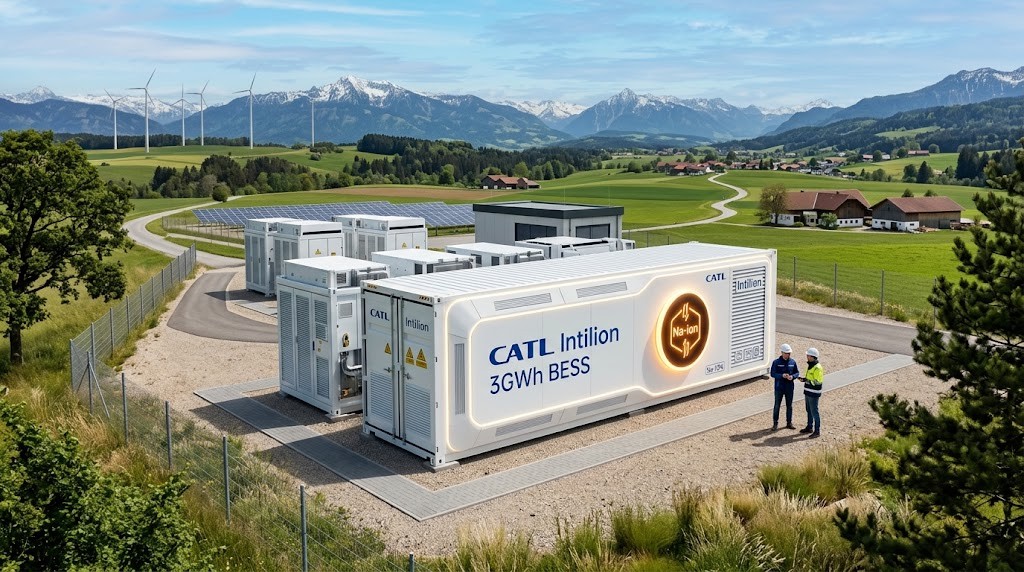
中国の電池大手である寧徳時代(CATL)は2026年10月10日、ドイツのシステムインテグレーター企業Intilionと戦略的提携契約を締結しました。本提携により、今後5年間でドイツ語圏(DACH地域:ドイツ、オーストリア、スイス)において最大3GWh規模のナトリウムイオン電池を搭載した蓄電システム(BESS)プロジェクトを展開します。これによりCATLのナトリウムイオン電池の受注総量は70GWhに達し、欧州市場におけるナトリウムイオン電池の実用化が大きく前進することとなります。
1. 契約の概要と製品性能
- 契約内容: 今後5年間で、ドイツ、オーストリア、スイス(DACH地域)を中心に最大3GWhのナトリウムイオン電池搭載BESSプロジェクトを実施。
- Intilionによる技術評価:
- 充放電の往復効率(RTE): 96.5%以上
- 高温環境下でのサイクル寿命: 15,000回以上
- 低温時の容量保持率: 90%以上
- 受注規模の拡大: 今回の契約により、CATLのナトリウムイオン電池の受注量は従来の67GWhから70GWhに拡大しました。
2. 商業化の進展と今後のロードマップ
- 中国国内での大規模プロジェクト: 雲南省墨江において、中国初となる1GW/4GWh規模のGWh級純ナトリウムイオン電池独立・共有型エネルギー貯蔵プロジェクトが登録済み。
- 天恒(Tianheng)ナトリウムイオンBESSの展開: ミュンヘンで発表された世界初の実証型システムは、2026年9月に第1期納品を完了。2026年末までに1GWhを出荷し、2027年6月より国際市場への供給を開始する予定。
- 将来の生産能力と用途拡大: 3~5年以内にナトリウムイオン電池の生産能力を100GWh以上に引き上げ、急増するグローバルなAIデータセンターなどのエネルギー貯蔵(バックアップ電源)需要に対応する方針。
3. 【関連情報・背景の追加】ナトリウムイオン電池が注目される理由と課題
- リチウム不使用によるコスト・供給リスク軽減: ナトリウム(塩などの原料)は地殻中に豊富に存在するため、リチウムやコバルトといったレアメタルの価格変動や地政学的なサプライチェーンリスクの影響を受けにくく、大幅なコスト低減が期待されています。
- 低温特性と安全性の高さ: 従来のリチウムイオン電池は寒冷地で性能が低下しやすい傾向がありますが、ナトリウムイオン電池はマイナス20度などの低温環境下でも高い放電容量を維持できます。また、熱暴走リスクが低く安全性が高いため、大型蓄電システム(BESS)や寒冷地のバックアップ電源に適しています。
- 負極材料(ハードカーボン)とシステム統合: ナトリウムイオン電池の負極にはグラファイトではなくハードカーボン(難黒鉛化炭素)が主に用いられます。エネルギー密度面では従来のリチウムイオン電池(LFPなど)に及ばない部分もありますが、15,000回を超える高サイクル寿命と優れた往復効率(RTE)を実現したことで、AIデータセンターや系統用蓄電池としての商業的価値が急速に高まっています。
出典:https://www.afpbb.com/articles/biz/3657546?ctm_campaign=biz_news
CATL Secures Major 3GWh Order in Europe! Annual Sodium-Ion Battery Order Volume Expands to 70GWh
On October 10, 2026, Contemporary Amperex Technology Co., Limited (CATL), a major Chinese battery manufacturer, announced that it has signed a strategic partnership agreement with Intilion, a German system integrator. Under this partnership, Intilion will implement battery energy storage system (BESS) projects equipped with CATL’s sodium-ion battery solutions across the German-speaking DACH region (Germany, Austria, and Switzerland) over the next five years, with a target total capacity expected to reach up to 3GWh. With this agreement, CATL’s cumulative sodium-ion battery order volume has expanded from 67GWh to 70GWh, marking a major step forward in the practical application of sodium-ion batteries in the European market.
1. Overview of the Agreement and Product Performance
- Contract Details: Implementation of BESS projects utilizing up to 3GWh of sodium-ion batteries over the next five years, centered around the DACH region (Germany, Austria, and Switzerland).
- Technical Evaluation by Intilion:
- Round trip efficiency (RTE): 96.5 percent or higher
- Cycle life in high-temperature environments: 15,000 cycles or more
- Capacity retention rate at low temperatures: 90 percent or higher
- Expansion of Order Scale: This agreement expands CATL’s sodium-ion battery order volume from 67GWh to 70GWh.
2. Progress in Commercialization and Future Roadmap
- Large-Scale Projects in China: A 1GW / 4GWh independent and shared sodium-ion battery energy storage project has been registered in Mojiang, Yunnan Province, expected to become China’s first GWh-grade pure sodium-ion battery independent and shared energy storage project.
- Deployment of Tianheng Sodium-Ion BESS: The world’s first pilot sodium-ion battery energy storage system unveiled by CATL in Munich completed its first phase of deliveries in September 2026. It plans to ship 1GWh by the end of the year and begin supplying international markets in June 2027.
- Future Production Capacity and Application Expansion: CATL aims to scale its sodium-ion battery production capacity to over 100GWh within the next 3 to 5 years to support the rapidly growing energy storage (backup power) demand for global AI data centers.
3. Reasons for Attention and Challenges Surrounding Sodium-Ion Batteries
- Cost and Supply Risk Reduction via Lithium-Free Design: Because sodium (raw materials such as salt) is abundantly available in the earth’s crust, it is less susceptible to price volatility and geopolitical supply chain risks associated with rare metals like lithium and cobalt, promising significant cost reductions.
- Low-Temperature Characteristics and High Safety: While conventional lithium-ion batteries tend to suffer performance degradation in cold regions, sodium-ion batteries can maintain high discharge capacities even in low-temperature environments such as minus 20 degrees Celsius. Additionally, because they feature lower thermal runaway risks and high safety, they are well-suited for large-scale energy storage systems (BESS) and cold-region backup power supplies.
- Anode Material (Hard Carbon) and System Integration: Hard carbon (non-graphitizable carbon) is primarily used for the anodes of sodium-ion batteries instead of graphite. While energy density may lag behind conventional lithium-ion batteries (such as LFP), achieving a high cycle life exceeding 15,000 cycles and superior round-trip efficiency (RTE) has rapidly increased their commercial value for AI data centers and grid-scale storage batteries.
コメント