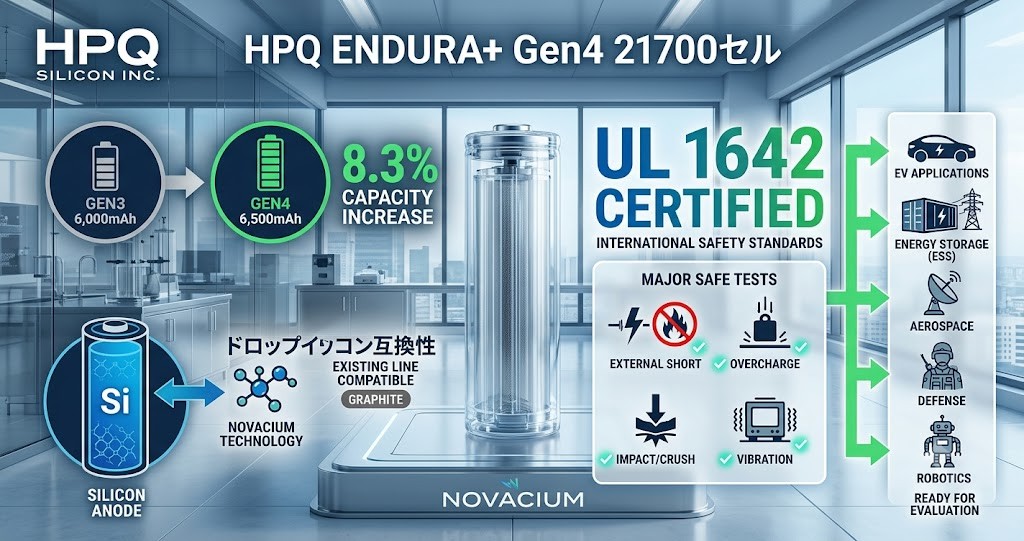
先進材料と次世代プロセスの開発を行うHPQ Silicon Inc.は、同社のシリコンアノード(シリコン負極)リチウムイオン電池プラットフォーム「HPQ ENDURA+ Gen4 21700セル」が、独立系試験機関による評価を経て、国際的に広く認められた米国安全規格「UL 1642」の認証を取得したことを発表しました。
1. Gen4プラットフォームの進化と主な成果
- 容量の拡大(8.3%アップ): 前世代のGen3プラットフォーム(6,000mAh)に対し、Gen4は6,500mAhで認証を取得。エネルギー密度を高めながら、厳しい安全基準を満たしています。
- 主要な安全試験をクリア: 外部短過酷試験、過充電、強制放電、耐衝撃、圧壊、振動、機械的衝撃、高温評価といった電気的・熱的・機械的な各種負荷試験において、火災や爆発などの危険な現象を起こさない安定性が実証されました。
- 商業化に向けた展開: UL 1642認証の取得により、EV(電気自動車)、エネルギー貯蔵(ESS)、通信、防衛、ロボット工学などの顧客企業やシステムインテグレーター、OEM(相手先ブランド製造)パートナーによる商業評価やパック統合評価の本格化が可能となります。
2. 技術的背景:シリコンアノード(負極)の課題克服とNovaciumとの協業
- シリコン負極のメリットと課題: シリコンは従来の黒鉛(グラファイト)に比べて理論容量が圧倒的に高い反面、充放電時に体積変化(膨張・収縮)が非常に大きく、電池の劣化や破壊を引き起こしやすい課題がありました。
- 既存インフラとの互換性: HPQはフランスの仏Novacium社と提携し、体積膨張のストレスに耐えうる材料構造を開発。従来の電池製造ラインをそのまま活用できるドロップイン互換性を確保し、製造コストの増大を抑えた商用展開を狙っています。
【関連情報・背景解説】
- UL 1642認証の重要性: UL 1642は、主に商用リチウムイオン電池のセル単体における安全性を評価する世界標準規格です。エネルギー密度(容量)を高めるほど電池内の危険エネルギーは増大するため、「高容量化」と「UL 1642の合格」を両立させることは技術的に極めて難易度が高く、ラボ段階から実用製品段階へ移行したことを示す決定的な指標となります。
- 21700規格(サイズ)の普及: 「21700」は、直径21mm×長さ70mmの円筒形リチウムイオン電池の規格サイズです。テスラをはじめとする主要EVメーカーやポータブル電源、産業機器などで標準的に使われており、汎用性が高いため市場参入のハードルを大きく下げる利点があります。
- HPQ Silicon Inc.の立ち位置: カナダ・ケベック州を拠点とする企業で、超高純度シリカ(QPF)やシリコン材料の低コスト製造技術を開発しています。子会社のHPQ SILICON POLYSILICONなどを通じて、太陽光発電やバッテリー分野向けの次世代シリコン材料の商業化を急速に進めています。
Accelerating from Lab to Commercialization: HPQ Achieves UL 1642 Certification for High-Capacity Silicon Anode Battery
HPQ Silicon Inc., a developer of advanced materials and next-generation processes, announced that its silicon anode lithium-ion battery platform, the “HPQ ENDURA+ Gen4 21700 Cell,” has successfully achieved UL 1642 safety certification—an internationally recognized U.S. safety standard—following evaluation by an accredited independent testing facility.
1. Evolution and Key Achievements of the Gen4 Platform
- Increased Capacity (8.3% Increase): Compared to the previous Gen3 platform (6,000mAh), the Gen4 cell achieved certification at 6,500mAh, meeting strict safety standards while increasing energy density.
- Passed Key Safety Tests: Stability without hazardous phenomena such as fire or explosion was demonstrated across various electrical, thermal, and mechanical stress evaluations, including external short circuit, overcharge, forced discharge, impact, crush, vibration, mechanical shock, and high-temperature exposure.
- Path to Commercialization: Achieving UL 1642 certification enables customers, system integrators, and original equipment manufacturer (OEM) partners across EV (electric vehicle), energy storage (ESS), telecommunications, defense, and robotics sectors to begin formal commercial evaluation and pack integration.
2. Technical Background: Overcoming Silicon Anode Challenges and Collaboration with Novacium
- Benefits and Challenges of Silicon Anodes: While silicon offers vastly higher theoretical capacity compared to conventional graphite, it undergoes severe volumetric changes (expansion and contraction) during charge-discharge cycles, presenting challenges related to rapid battery degradation and failure.
- Compatibility with Existing Infrastructure: Partnering with France-based Novacium, HPQ developed a material structure capable of withstanding volumetric expansion stress. This ensures drop-in compatibility with existing battery manufacturing lines, targeting commercial deployment while minimizing capital expenditure increases.
[Related Information and Background]
- Importance of UL 1642 Certification: UL 1642 is a global standard evaluating the safety of individual commercial lithium-ion cells. Because higher energy density (capacity) increases the hazardous energy stored within a cell, achieving both high capacity and UL 1642 compliance is technically challenging and serves as a decisive metric marking the transition from laboratory development to commercial-grade product readiness.
- Widespread Adoption of the 21700 Format: “21700” refers to a cylindrical lithium-ion battery standard size measuring 21mm in diameter and 70mm in length. It is widely used by major EV manufacturers, portable power units, and industrial equipment, lowering market entry barriers due to its high versatility.
- HPQ Silicon Inc.’s Market Positioning: Based in Quebec, Canada, the company develops low-cost manufacturing technologies for high-purity silica (QPF) and silicon materials. Through subsidiaries such as HPQ SILICON POLYSILICON, it is rapidly advancing the commercialization of next-generation silicon materials for solar power and battery applications.
コメント