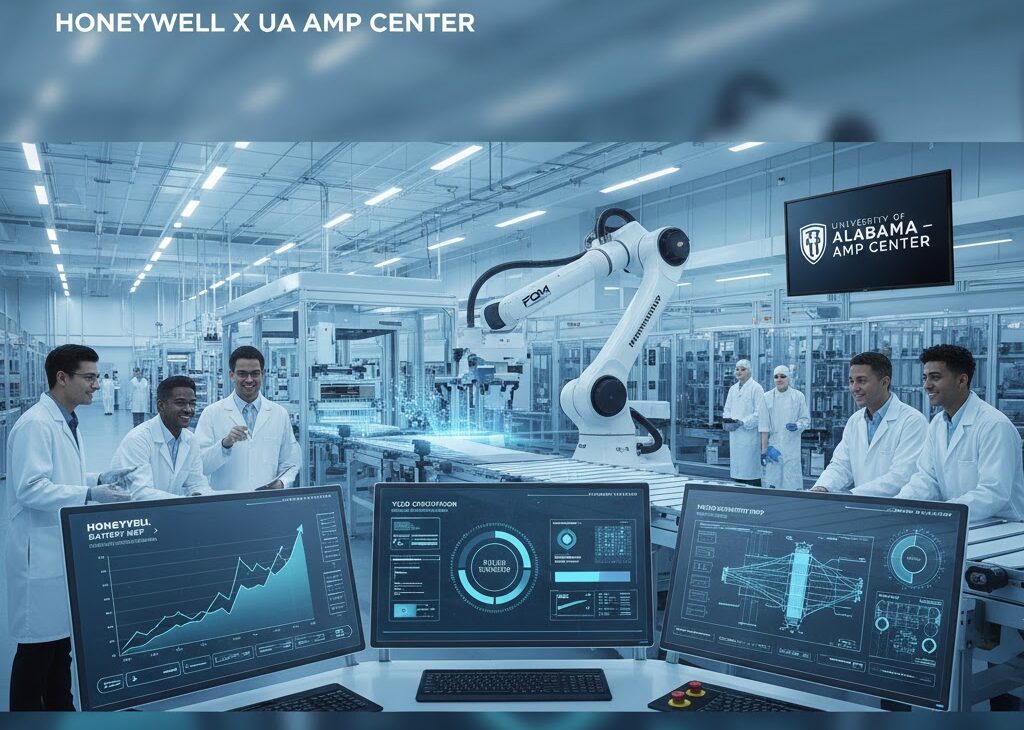
ハネウェルは、AIを活用したバッテリー製造自動化プラットフォーム「Battery Manufacturing Excellence Platform (Battery MXP)」を、アラバマ大学の「アラバマ・モビリティ・アンド・パワー(AMP)センター」に導入すると発表しました。
本ニュースの重要ポイント
- AIによる最適化: あらゆる規模のメーカーで、バッテリーセルの歩留まり(良品率)向上と、工場の立ち上げ期間短縮を実現します。
- 次世代人材の育成: 学生やエンジニアが、最新の自動化技術を用いた実践的な経験を積む場として活用されます。
- 強力なパートナーシップ: ハネウェルはFOM Technologiesと協力し、製造工程で最も困難とされる「電極製造」の最適化に取り組み、エンドツーエンドのソリューションを提供します。
- ラボの開設: AMPセンターのバッテリー研究ラボは2026年第2四半期に開設予定で、外部組織も利用可能な全米有数の試験拠点となります。
関連情報:なぜこのニュースが注目されるのか
1. バッテリー製造における「歩留まり」の課題
従来のバッテリー工場、特にギガファクトリーと呼ばれる大規模施設では、生産開始初期の歩留まりが低く、多くの廃棄(スクラップ)が発生することが業界共通の課題です。ハネウェルのBattery MXPは、AIによるデータ分析を用いて製造パラメータをリアルタイムで調整することで、この無駄を最小限に抑えることを目的としています。
2. 「エネルギー転換」と米国の政策
現在、米国ではインフレ抑制法(IRA)などの政策により、バッテリーの自国生産(オンショアリング)が強力に推進されています。しかし、高度な製造現場を支える専門人材の不足が深刻化しており、アラバマ大学のような研究教育ハブにおける最新設備の導入は、産業界全体の「人材確保」というボトルネックを解消する重要な一歩となります。
3. ハネウェルの事業戦略
ハネウェルは現在、「自動化(Automation)」「航空の未来(Future of Aviation)」「エネルギー転換(Energy Transition)」という3つのメガトレンドに注力しています。今回のBattery MXPは、自動化技術をエネルギー転換分野に適用した象徴的な製品であり、同社のIoTプラットフォーム「Honeywell Forge」を基盤としたデジタルトランスフォーメーションを推進するものです。
Honeywell Deploys AI-Powered Battery Manufacturing Excellence Platform (Battery MXP) at the University of Alabama
Honeywell has announced the implementation of its AI-driven automation platform, the “Battery Manufacturing Excellence Platform (Battery MXP),” at the Alabama Mobility and Power (AMP) Center at the University of Alabama.
Key Highlights of the News
- AI-Driven Optimization: The platform enables manufacturers of all sizes to improve battery cell yields and significantly shorten facility startup times.
- Workforce Development: It will serve as a training ground for students and engineers to gain hands-on experience with the latest automation technologies.
- Strategic Partnership: In collaboration with FOM Technologies, Honeywell is working to optimize “electrode manufacturing”—one of the most difficult stages of production—to provide an end-to-end solution.
- Lab Opening: The AMP Center’s battery research lab is scheduled to open in the second quarter of 2026, becoming one of the premier testing facilities in the U.S. accessible to external organizations.
Context: Why This News Matters
1. The Challenge of “Yield” in Battery Manufacturing
A common industry challenge for traditional battery plants, especially large-scale “gigafactories,” is low initial yield rates, resulting in significant amounts of scrap material during the early stages of production. Honeywell’s Battery MXP aims to minimize this waste by using AI data analysis to adjust manufacturing parameters in real time.
2. “Energy Transition” and U.S. Policy
Under policies such as the Inflation Reduction Act (IRA), the U.S. is strongly promoting the “onshoring” of battery production. However, a shortage of specialized talent to manage advanced manufacturing sites has become a serious issue. Introducing state-of-the-art equipment to research and education hubs like the University of Alabama is a critical step toward resolving this workforce bottleneck.
3. Honeywell’s Business Strategy
Honeywell is currently focused on three powerful megatrends: Automation, the Future of Aviation, and Energy Transition. The Battery MXP is a signature product that applies automation technology to the energy transition sector, leveraging the company’s IoT platform to drive digital transformation across the industry.


コメント