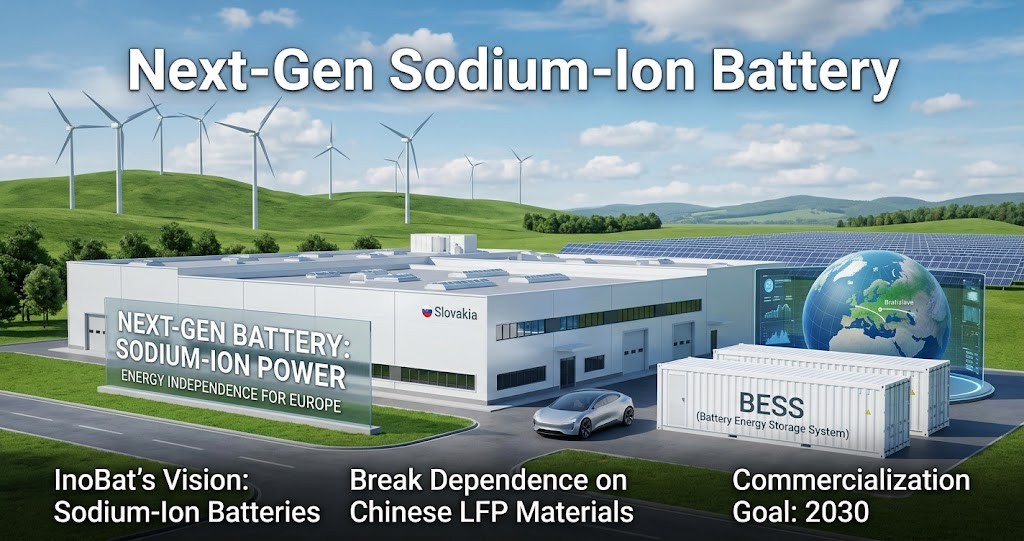
世界的に再生可能エネルギーの導入拡大が進む中、定置型蓄電池システム(BESS)やEV用バッテリーの需要が急増しています。しかし、現在主流であるリチウムイオン電池(特にリン酸鉄リチウム:LFP)は、原料供給や加工チェーンの多くを中国に依存しており、地政学的リスクや価格変動への懸念が高まっています。こうした課題に対し、資源が豊富で安価なナトリウムを用いた「ナトリウムイオン電池」が次世代電池として大きな注目を集めています。スロバキアのInoBatは、2030年までに中国の材料調達に依存しないBESSおよび自動車向けナトリウムイオン電池の完全商用化を目指す意欲的な計画を明らかにしました。
1. InoBatのナトリウムイオン電池開発・商業化ロードマップ
2026年8月中旬に公開された投資家向けプレゼンテーション(Cartesian Growth Corporation IIによるSEC提出書類)に基づき、以下のスケジュールが提示されています。
- 2026年: 共同開発およびR&D(研究開発)の推進
- 2027年: パイロット生産(試験生産)およびBESS統合試験の実施
- 2028〜2029年: 商用化前段階での部品統合、地域密着型(欧米圏など)サプライチェーンの構築
- 2029年〜: 自動車メーカー(OEM)およびティア1サプライヤー向けの自動車用ナトリウムイオン電池の量産開始
- 2030年: 中国からの供給に依存しない完全ナトリウムイオンBESS(定置型蓄電池システム)の商業展開
InoBatは今後24ヶ月以内に技術成熟度レベル(TRL)8〜9(実用化・商用化レベル)を達成し、最終的には欧米市場においてギガワット時(GWh)規模の製造能力を確保する方針です。
2. ナトリウムイオン電池の技術的特徴・メリット
InoBatが主張するナトリウムイオン電池の主な強みは以下の通りです。
- 原料調達の安定性と低コスト性: 地球上に豊富に存在するナトリウム(塩など)を使用するため、コバルトやリチウムのような価格変動リスクや地政学リスクを大幅に低減。
- 高安全性: 従来のリン酸鉄リチウム(LFP)電池と比較して熱爆発などのリスクが低い(本質的安全性が高い)。
- 低温特性: 低温環境下でも性能低下が少なく、優れた放電特性を発揮。
- 適用分野: 定置型エネルギー貯蔵(BESS)および自動車の低電圧用途(12V/48V等の補助バッテリー領域など)に最適。
3. 主要な戦略的パートナーシップ
InoBatは欧米での強固なエコシステム構築を進めています。
- Clarios(クラリオス / 米国): 低電圧自動車用バッテリーの世界的大手。ドイツ・ハノーバーのR&Dラボにて検証・試験を担当。
- Altris(アルトリス / スウェーデン): ナトリウムイオン電池の革新的な正極材・セル技術を持つ開発企業。
- 協業体制: 2026年1月、Altrisの技術を活用し、スロバキア・ヴォデラディ(Voderady)にあるInoBatのパイロット施設で車載用試験セルの最初の製造を行うと発表済み。
4. 企業の成長と事業基盤(BESS・資金調達)
InoBatはBESS市場での実績を着実に積み重ねています。
- BESSの納入実績: 欧州において累計 875MWh(メガワット時)の公益事業規模BESSの納入済み、または契約を獲得。
- 生産拠点: スロバキア・ヴォデラディにある 2000 m2(平方メートル)のBESS生産 facility は、将来的に年間 5GWh(ギガワット時)まで拡大可能。
- 特別買収目的会社(SPAC)との合併:
- 2026年7月、Cartesian Growth Corporation II と事業統合案に合意。
- 業績連動型報酬を含めたInoBatの企業評価額は最大 12億6500万ドル(約12.65億ドル)。
- 7750万ドルのコミットメント投資が含まれ、規制当局や株主の承認を経て2026年第4四半期に統合完了予定。
【関連解説・補足情報】
- 脱中国サプライチェーンの意味: 現在、世界のリチウムイオン電池サプライチェーン(特に精錬・正極材・負極材)は中国企業が圧倒的なシェアを握っています。米国のインフレ抑制法(IRA)や欧州の重要原材料法(CRMA)など、欧米各国の脱中国政策を受け、原料調達から製造までを欧米圏内で完結させる動きが急速に強まっています。
- BESS(Battery Energy Storage System)の重要性: 太陽光や風力などの変動性再生可能エネルギーを電力網に安定して供給するために不可欠な大型蓄電池設備です。コスト面・安全面で優れるナトリウムイオン電池は、重量制限の少ないBESS用途で最も早期の実用化が期待されています。
出典:https://www.bestmag.co.uk/inobat-sodium-ion-bess-2030/
Slovakia’s InoBat Unveils Roadmap to Deploy Non-Chinese Sodium-Ion BESS by 2030
As the adoption of renewable energy accelerates worldwide, the demand for battery energy storage systems (BESS) and EV batteries is surging. However, the current dominant lithium-ion batteries—specifically lithium iron phosphate (LFP)—rely heavily on China for raw material supplies and processing chains, heightening concerns over geopolitical risks and price volatility. To address these challenges, sodium-ion batteries, which utilize abundant and low-cost sodium, are attracting significant attention as next-generation energy storage. Slovakia-based InoBat has revealed an ambitious plan aiming for the full commercial rollout of BESS and automotive sodium-ion batteries independent of Chinese material sourcing by 2030.
- InoBat’s Sodium-Ion Battery Development and Commercialization Roadmap Based on an investor presentation disclosed in mid-August 2026 via an SEC filing by Cartesian Growth Corporation II, the following timeline has been presented:
- 2026: Joint development and R&D activities.
- 2027: Pilot production and BESS integration testing.
- 2028–2029: Pre-commercial component integration and development of a localized supply chain (in Western regions).
- 2029 onward: Mass production of automotive sodium-ion batteries for OEMs and Tier 1 suppliers.
- 2030: Commercial deployment of a complete sodium-ion BESS independent of Chinese supplies.
InoBat plans to achieve Technology Readiness Level (TRL) 8 to 9 (commercialization readiness) within the next 24 months, ultimately securing gigawatt-hour (GWh) scale manufacturing capacity in Western markets.
- Technical Features and Advantages of Sodium-Ion Batteries The primary strengths of sodium-ion technology highlighted by InoBat include:
- Supply Chain Stability and Low Cost: Utilizes globally abundant sodium (e.g., salt), significantly reducing commodity price volatility and geopolitical risks compared to cobalt or lithium.
- High Safety Profile: Exhibits higher intrinsic safety with lower thermal runaway risks compared to traditional lithium iron phosphate (LFP) batteries.
- Low-Temperature Performance: Maintains strong performance and discharge efficiency even in cold environments.
- Applications: Ideally suited for stationary energy storage (BESS) and low-voltage automotive applications (such as 12V/48V auxiliary battery systems).
- Key Strategic Partnerships InoBat is actively building a robust ecosystem in Western markets:
- Clarios (USA): A global leader in low-voltage automotive batteries, responsible for testing and validation at its R&D lab in Hanover, Germany.
- Altris (Sweden): A developer specializing in innovative cathode material and cell technology for sodium-ion batteries.
- Collaborative Framework: In January 2026, the companies announced that the initial automotive test cells would be produced using Altris technology at InoBat’s pilot facility in Voderady, Slovakia.
- Corporate Growth and Business Foundation (BESS & Financing) InoBat is steadily expanding its footprint in the BESS market:
- BESS Delivery Track Record: Secured contracts or delivered a cumulative total of 875 MWh in utility-scale BESS across Europe.
- Production Facility: The 2000 sq m BESS production facility in Voderady, Slovakia, can be expanded to an annual production capacity of up to 5 GWh.
- SPAC Merger: In July 2026, InoBat agreed to a business combination with Cartesian Growth Corporation II.
- InoBat’s enterprise valuation is set at up to 1.265 billion USD (approx. 1.265B USD), including earn-out incentives.
- The transaction includes 77.5 million USD in committed investments and is expected to close in Q4 2026, pending shareholder and regulatory approvals.
Related Context & Supplementary Information
- Significance of a Non-Chinese Supply Chain: Chinese firms currently dominate the global lithium-ion battery supply chain, particularly in refining, cathode, and anode processing. Driven by Western policies such as the US Inflation Reduction Act (IRA) and the EU Critical Raw Materials Act (CRMA), momentum is building to localize the entire supply chain from raw material sourcing to manufacturing within Western regions.
- Importance of Battery Energy Storage Systems (BESS): BESS are essential large-scale energy storage assets required to stabilize the grid as variable renewable energy sources like solar and wind expand. Sodium-ion batteries, with their cost and safety benefits, are expected to see their earliest commercial adoption in stationary BESS applications where weight constraints are less restrictive.
コメント