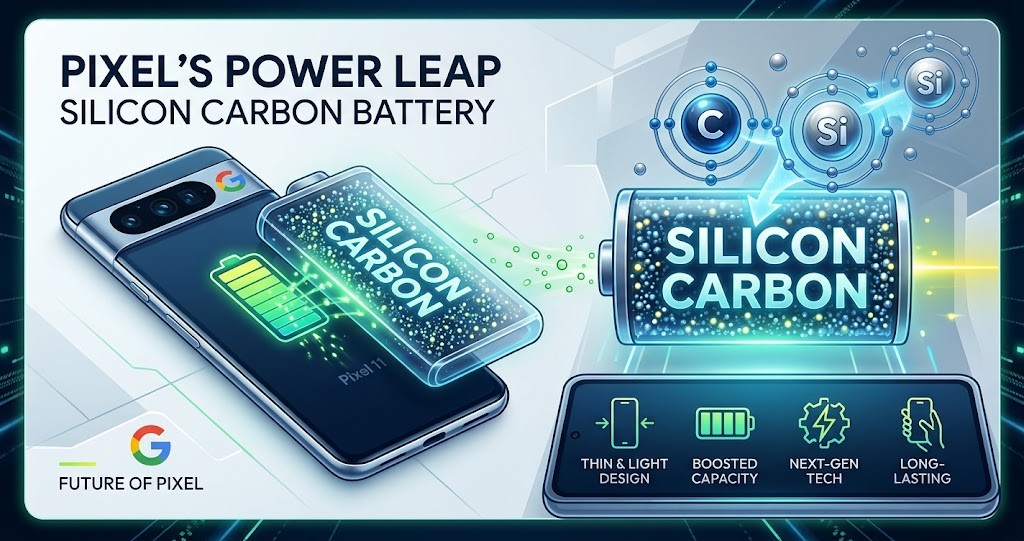
スマートフォンの薄型化・軽量化と大容量バッテリーの両立を目指し、近年「シリコンカーボン電池(負極にシリコン複合材料を用いたリチウムイオン電池)」が注目を集めています。2026年8月に発表されたPixel 11シリーズの発表会にて、Googleが今後のPixelシリーズへの本技術の導入を検討していることが明らかになりました。本記事は、その詳細と背景にある技術的課題、コスト要因などの関連情報をまとめたものです。
1. 発表の背景とPixel 11シリーズのバッテリー状況
- Pixel 11シリーズの傾向: Pixel 10シリーズと比較すると、標準モデル(15 mAh増)を除く主要モデル(Pro / Pro XL / Pro Fold)でバッテリー容量が減少。特にPixel 11 Pro Foldは5,015 mAhから4,806 mAhへと209 mAh減少しており、端末の薄型化に伴うバッテリースペースの確保が課題となっています。
- Google担当者の回答: メディアからの質問に対し、Pixel開発チーム内でシリコンカーボン電池の採用を検討中であることを言及。ただし、具体的な搭載時期や対象モデルについての確約は避けています。
2. シリコンカーボン電池の技術的特徴と関連課題
- 技術的仕組みとメリット: 従来のリチウムイオン電池の負極(黒鉛/グラファイト)にシリコンを加えた技術。シリコンは黒鉛に比べ大量のリチウムイオンを保持できるため、バッテリーのエネルギー密度(単位体積あたりの容量)が大幅に向上します。これにより、厚みや質量を維持したままバッテリー容量を増やせます。
- 技術的課題:
- 膨張問題: 充電時にシリコンが著しく膨張する特性があり、炭素(カーボン)材料との複合化によって抑制を図っています。
- サイクル寿命: 従来の黒鉛負極に比べて充放電サイクルによる劣化が進みやすい傾向があります。
3. 他社(サムスン・中国メーカー)の先行導入と市場動向
- Samsung(サムスン): Galaxy Z Fold 8、Galaxy Z Fold 8 Ultra、Galaxy Z Flip 8の折りたたみ3機種で初採用。Ultraモデルでは本体を薄型化しつつ、電池容量を前世代(Galaxy Z Fold 7の4,400 mAh)から5,000 mAhへ拡大しました。ただし、寿命重視の設計を行っているため、増量幅は慎重にコントロールされています。
- 中国メーカー(Honorなど): シリコン含有率を高めることで、折りたたみスマートフォンにおいて6,000 mAhを超える大容量化を実現し、薄型化とスタミナの両立で先行しています。
4. Pixel 12への搭載に向けたコストと戦略的ハードル
- Proモデル優先の可能性: もし採用される場合、スペースの制限が厳しいPixel Fold系やProシリーズなど上位モデルへ先行搭載される見通しです。
- 部材コスト(BOMコスト)の高騰とトレードオフ: 2027年登場と予想されるPixel 12世代でも、DRAM(メモリ)やストレージなどの部材価格の高止まりが予想されています。
- 次世代SoCである「Tensor G7」でのLPDDR6メモリ採用検討や、製造プロセスの微細化(2 nm化など)により、半導体側のコスト負担が増加する見込みです。
- Googleはこれまでもプロセッサやメモリ容量の調整でコストを抑えてきた経緯があり、高価なシリコンカーボン電池の採用追加コストを吸収できるかが焦点となります。
- メモリ等の性能向上コストが優先された場合、Pixel 12での電池採用が見送られる、あるいは見送らざるを得ない可能性も残されています。
出典:https://gazlog.jp/entry/google-pixel12-new-battery/
Will Google Pixel 12 Adopt Silicon-Carbon Batteries? Expectations for Slimmer, Higher-Capacity Design vs. Lifespan and Cost Barriers
In the pursuit of achieving both thinner, lighter smartphone designs and larger battery capacities, “silicon-carbon batteries” (lithium-ion batteries using silicon composite materials in the anode) have gathered significant attention in recent years. At the announcement event for the Pixel 11 series in August 2026, Google revealed that it is considering introducing this technology into future Pixel models. This article summarizes the details along with related information on the background technical challenges and cost factors.
1. Announcement Background and Pixel 11 Series Battery Status
- Pixel 11 Series Trend: Compared to the Pixel 10 series, battery capacity decreased across major models (Pro / Pro XL / Pro Fold), with the exception of the standard model (which saw an increase of 15 mAh). In particular, the Pixel 11 Pro Fold dropped from 5,015 mAh to 4,806 mAh (a decrease of 209 mAh), making battery space allocation a key issue alongside device slimming.
- Google Representative Response: In response to media inquiries, a Google representative mentioned that the Pixel development team is evaluating the adoption of silicon-carbon batteries. However, they refrained from committing to a specific launch timeframe or target models.
2. Technological Features and Challenges of Silicon-Carbon Batteries
- Mechanism and Benefits: A technology that incorporates silicon into the traditional anode (graphite). Because silicon can hold a significantly higher amount of lithium ions compared to graphite, the battery’s energy density (capacity per unit volume) improves substantially. This allows manufacturers to increase battery capacity while maintaining device thickness and mass.
- Technical Challenges:
- Expansion Issue: Silicon expands significantly during charging, which developers attempt to suppress by compounding it with carbon materials.
- Cycle Life: Degradation over charge-discharge cycles tends to progress faster compared to conventional graphite anodes.
3. Early Adoption by Competitors (Samsung & Chinese Manufacturers) and Market Trends
- Samsung: First adopted across three foldable models: Galaxy Z Fold 8, Galaxy Z Fold 8 Ultra, and Galaxy Z Flip 8. On the Ultra model, the battery capacity was expanded from the previous generation’s 4,400 mAh (Galaxy Z Fold 7) to 5,000 mAh while thinning the body. However, because Samsung prioritized battery lifespan in its design, the capacity increase was carefully controlled.
- Chinese Manufacturers (Honor, etc.): By increasing silicon content, Chinese brands have achieved battery capacities exceeding 6,000 mAh in foldable smartphones, leading the market in combining slim profiles with long battery endurance.
4. Cost and Strategic Hurdles for Implementation in Pixel 12
- Likely Priority for Pro Models: If adopted, the technology is expected to be introduced first on higher-end devices with tighter spatial constraints, such as the Pixel Fold and Pro series.
- Rising Bill of Materials (BOM) Costs and Trade-offs: Component prices for DRAM (memory) and storage are expected to remain high into the Pixel 12 generation (anticipated for 2027). The potential adoption of LPDDR6 memory with the next-generation “Tensor G7” SoC and finer semiconductor manufacturing processes (such as 2 nm) are projected to increase semiconductor costs.
- Cost Absorption Challenge: Google has historically managed costs by adjusting processors and memory configurations. A primary question is whether Google can absorb the additional expense of adopting costly silicon-carbon batteries.
- Potential Delay: If performance enhancements in memory and processing are prioritized budget-wise, the adoption of silicon-carbon batteries in the Pixel 12 may be deferred or bypassed altogether.


コメント